Blog
How Much Does it Cost to Declaw a Cat? Average Costs, Factors

Cat owners often wonder how much it costs to declaw cats, particularly in cases where damage to their furniture or excessive scratching occurs. Although declawing used to be very common, nowadays, attitudes towards the surgery have become more serious. Moreover, many veterinarians nowadays suggest exploring other options prior to deciding to go with surgery. Knowing what declawing involves, its cost, risks, recovery period, and other alternative options can be very helpful for cat owners.
Declawing and Its Nature
Most cat owners have an illusion that when the cat is declawed, all its nails get removed. In reality, however, during the surgery, the last bone on which claws grow in each toe is removed surgically. Besides that, the surgery changes the shape of cats’ feet, as well as it is considered an amputation surgery, and not merely nail removal. For this reason, there have been many controversies associated with declawing, especially among animal rights activists.
Reasons Why Owners Consider Declawing
As part of their instinctive behavior, cats will claw to ensure that their claws are healthy, as well as to stretch and relieve any stress. However, scratching furniture, carpets, or walls can be irritating for owners. Moreover, some families may have children, old people, and even immune-compromised persons in which case they may wish to explore other options, such as declawing. Regardless, many animal behaviorists will advise owners to try other alternatives first before opting for surgery.
What Is the Cost of Declawing a Cat in 2026?
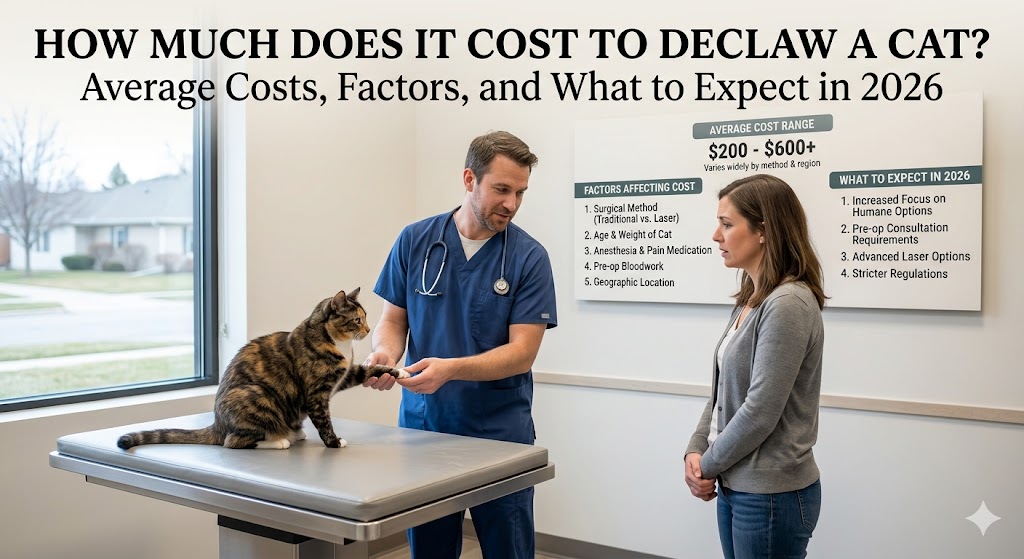
There are several things that go into how much it will cost to declaw a cat. Such factors include where one is, the particular veterinary hospital, the type of surgical procedure involved, as well as the costs of anesthesia. On average, the price of declawing in 2026 may range between $200 and over $1,500.
Average Cost for Declawing at Various Clinics
The cost of veterinary services depends greatly on where you live and the level of expertise and prestige of the clinic. Smaller clinics might provide cheaper services while specialized hospitals tend to charge more because of their superior patient care standards. Besides, metropolitan areas always feature high veterinary costs compared to rural places. Simple declawing operations belong to cheaper options, while full-service packages may substantially elevate overall expenditures.
Cost Factors for Declawing Operations
Various cost factors influence the general pricing of the procedure. These include the cat’s age and health conditions, as well as the surgical method used, pain relief measures, blood tests before surgery, and aftercare expenses. In addition, laser surgery tends to be more expensive than conventional methods. By knowing about these factors, one can make adequate comparisons among various quotes rather than considering only their bottom lines.
The Cost Associated With Anesthesia and Monitoring
The use of anesthesia is an important component in terms of the costs associated with declawing cats. The current medical standards call for careful monitoring of animals during surgeries, hence the additional charges. Other important aspects include monitoring blood pressure and administering oxygen as well as regulating body temperature. It is advisable to ask the clinic about the type of anesthesia used as the best care is often the one that incorporates most safety precautions.
Unforeseen Costs Beyond How Much Does It Cost to Declaw a Cat
When asking the question of How much does it cost to declaw a cat, people often tend to consider the surgery alone while other hidden costs might occur. Extra medication after surgery, additional visits, special kitty litter, and other expenses might be expected. Furthermore, some unforeseen situations requiring additional attention might lead to extra costs as well.
Costs Associated with Recovery and Aftercare
Costs involved during the recovery process may include medication, follow up sessions, specialized cat litter, and pain medication. It is important for the pet owner to monitor closely because complications from the surgery can arise. For those who have no idea what goes on during the recovery period after surgery, learning about the phases of cat spaying wound healing might be of great help.
Complications Following the Declawing Surgery
As is the case with any other surgery, there are risks that come with the declawing process. These may include infections, slow healing, behavioral changes, and painful sensations in the cats. Changes in how the cats walk may also result from structural changes in their feet.
Long-Term Effects of Declawing
A number of potential long-term effects have emerged in scientific literature and clinical practice. For some cats, there can be signs of paw hypersensitivity and altered gait patterns. Moreover, aggression, increased biting, and avoidance of the litter box have also been observed. Although each animal has its own outcome, these should be taken into consideration in the decision process.
Alternatives to Declawing
In most cases, veterinarians prefer other treatment options including scratching posts, clipping, and behavior modification therapy. Besides, it can be easier to handle problematic behavior without the necessity for any medical intervention. In case you want to learn more about surgical procedures, we would like to draw your attention to some information about male cat behavior after neutering.
Selection of an Appropriate Scratching Post
The provision of proper scratching areas is another effective method of cat management. The majority of cats like scratching posts, which are strong and enable them to stretch out their bodies. Scratching areas should be strategically located close to areas where the cat likes spending its time. It is possible to try various types of scratching post and see what suits your pet best.
Nail Trimming as Prevention
Another good preventive approach is clipping cats’ nails regularly. Most cats adapt well to periodic nail cutting if you train them gradually and positively. Moreover, shorter nails cause much less damage to people and furniture. Some veterinary practices and animal groomers provide inexpensive nail-clipping service for those owners who have no idea how to trim their cats’ claws at home.
Determining The Reason For The Behavior In Cats
The reason behind scratching is more than keeping nails in shape. There are many reasons why cats scratch, such as marking territory, signaling other animals, and relieving tension. Furthermore, cats scratch more often when there are changes in the environment and when there is increased excitement. The owner should try and understand the motivation for the cat’s actions.
Restrictions on Declawing Procedures
Several governments throughout the world have either banned declawing surgery or restricted it in some way. Besides, some animal rights groups have been pushing veterinarians not to perform this procedure regularly. There are ongoing changes in regulations because new studies shed light on the potential effects of declawing on cats.
Cost Comparison: Declawing vs. Alternatives
When looking at the costs, alternatives usually come out ahead. Scratching posts, nail caps, training tools, and regular nail maintenance are significantly cheaper than surgery. In addition, these options come without any associated risk and allow the cat to retain its natural behavior. Even if alternatives may need more commitment and effort, owners will usually be very pleased with the results. Overall, a cost-benefit analysis suggests choosing the former.
Professional Opinions on How Much Does It Cost to Declaw a Cat
Veterinarians are becoming increasingly focused on education in the context of How much does it cost to declaw a cat. Not only can they provide insight into the prices, but they can also help you learn more about animal behavior, health, and possible alternatives. Moreover, current standards in veterinary care involve proper pain management and obtaining consent from the owner.
Effect of Age on Surgery Outcome
In general, younger cats tend to recuperate faster from surgeries compared to older patients. Nonetheless, age should not necessarily dictate whether a cat qualifies for an operation. Furthermore, older cats might need to undergo more tests in advance to assess their health condition. Each case is examined in detail by veterinarians prior to offering advice regarding surgeries.
Consultation with Your Vet
Communication is always key when dealing with a vet. Questions about the surgical procedures that are going to be performed and how the cat is going to be administered drugs to manage pain are essential. Requesting an estimate in writing can assist in identifying all possible costs.
Is How Much Does It Cost to Declaw a Cat Relevant Today?
The relevance of How much does it cost to declaw a cat largely depends on particular conditions. For example, there are several alternatives that cost much less while still ensuring better outcomes for cats’ health. Moreover, the increase in information about possible issues associated with this procedure leads people to reconsider its necessity. Taking into account all pros and cons can help pet owners understand which method will be best for them.
Conclusion
Undoubtedly, the process of declawing is among the most controversial procedures used nowadays. Despite the relatively small price ranging from several hundreds to more than one thousand dollars, financial aspects play only a minor role in the process. However, pet owners should consider such factors as recovery time, possible side effects, changes in behavior, and alternative methods of solving this problem. Taking into account all these aspects will help them make rational decisions.