Blog
Cat Spay Wound Healing Stages

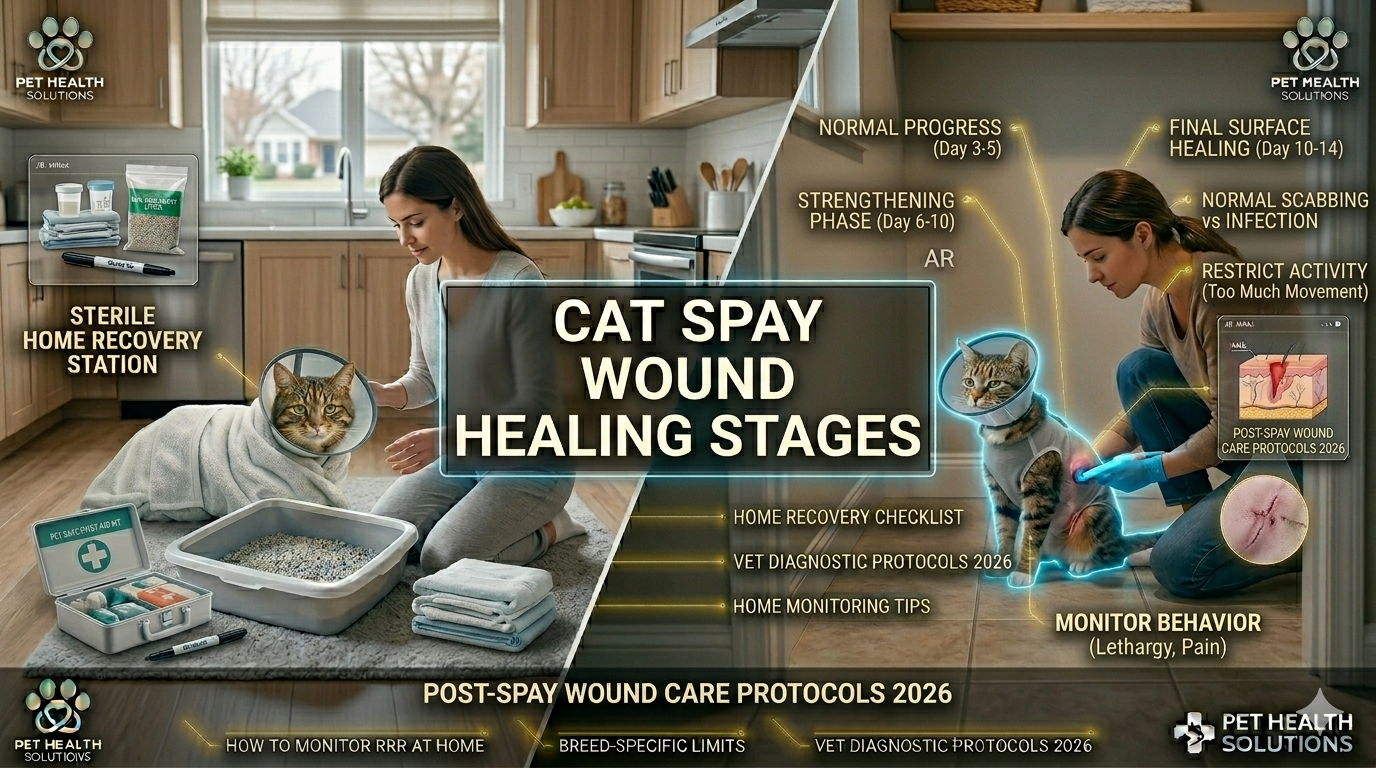
You can play a significant role in helping your cat recover when she gets spayed. You must know the mechanics of the healing process to be able to give appropriate care and know normal changes. A spay wound is subjected to a number of stages and each stage is an indication of the natural healing process of the body. You are to be alert, supportive and regular with care schedules. Explicit understanding of the healing processes can make you less stressed, prevent errors, and guarantee your cat will heal without needless complications and delays.
The First Stage: Instant Reaction
Right after surgery, your cat’s body starts the healing process with an immediate response. At the site of incision, blood starts to clot and this prevents bleeding and helps to protect the wound. You can observe some redness and slight swelling, which indicates that the body responds to tissue damage. Anesthesia can make your cat sleepy and therefore you should provide a quiet resting area. Unnecessary handling should be avoided at this stage. Constant attention and gentle treatment can assist your cat to make a smooth transition into the subsequent stage of recovery.
The Inflammatory Phase Starts
In the inflammatory phase, the body of your cat is busy to ensure that the wound does not become infected. The white blood cells come to the incision point and clear away the debris and bacteria. You might find that it is warm, a bit swollen and reddish. These are the signs that show that the immune system is functional. Your cat might experience slight distress, and you should make her relaxed and comfortable. This phase typically takes a couple of days and good care at this time helps in gaining a good basis towards the following healing phases.
Supporting on the first few days of healing
During the initial post-operative time, you need to concentrate on gentle and regular treatment. Keep the area clean and dry checking the incision every day. Avoid having your cat lick or scratch the wound with a recovery collar. Restrict mobility in order to prevent stitch pressure. Fresh water and nutritious food to aid in healing. Early care is vital in avoiding infection and complications. Your focus and diligence at this level will assist your cat to enter the next level with improved progress.
The Explained Proliferation Stage
During the proliferation phase, the body of your cat starts to repair the lost tissue. New cells develop and collagen is formed to make the wound stronger. The margins of the incision begin to run together, and you might find less redness and swelling. This phase reflects a tangible positive change that provides a hope of recovery. You are to keep on monitoring the wound and keep the environment clean. This is assisted by proper nutrition and rest. This regular attention will assist the body to regenerate tissue and make sure that the healing process does not stop or go wrong.
Indications of well being
You should look for positive signs that show your cat’s wound heals properly. The cut is dry, clean and perhaps firm. The swelling is reduced and the skin surrounding the wound goes back to a normal color. Your cat begins to act normally and has better appetite and energy levels. These alterations reflect that recovery is going in the right direction. You are advised not to stop with your care routine and to not take precautions too early. Giving positive feedback on the healthy progress makes you believe and stay on the correct path during the recovery process.
Avoiding Continuous Problems during Recovery
You need to do what would prevent anything that may disrupt the healing process. Keep your cat at home and have nothing to do with rough play or jumping. Do not bathe your cat until the wound is completely healed. Make sure the recovery collar is left in place to avoid licking. Maintain a clean and clean environment with no hazards. Avoiding disturbances aids in safeguarding the wound and enabling the body to heal effectively. This is because of your proactive approach which will minimize the risk, and make sure that every healing stage goes without any complications.
The Maturation Stage Begins
In the maturation phase the wound becomes stronger and gets better with time. The collagen fibers rearrange and enhance the strength of the tissue that is cured. The incision line fades and the skin slowly heals back to normal. This phase can take a few weeks, and you are advised to proceed with mild treatment. Your cat is back to full energy and normal functions. It is the maturation phase that helps to finish the healing process, and your constant support is what will guarantee that the recovery will be successful and long-term.
Handling of Minor Swelling and Variations
In some instances, you will encounter minor swelling and some firmness in the area where the surgical operation was done. These variations usually manifest as part of the natural body healing process, and therefore, there is no reason to be alarmed when such situations occur. You should be watchful about the variations and ensure that they do not worsen. Minimizing physical activity is essential in minimizing swelling, thus promoting healing. Ensure that you do not apply any unauthorized substances on the affected area.
Identifying Symptoms
When dealing with wound infections, it is advisable for you to be keen and note down some symptoms. You need to act swiftly once these symptoms become evident. Some of the signs include redness spreading, pus production, unpleasant smell, and increasing swelling. You should also be attentive to other behaviors exhibited by your cat, such as discomfort, poor eating habits, and odd behaviors.
The Importance of Healthy Feeding
It is crucial to give your pet proper nutrition that will be beneficial for its quick healing. A diet that consists of proteins assists in recovering from tissue damage, while vitamins and minerals improve the immune system performance. Moreover, you have to make sure that your cat has enough drinking water all the time. Thus, your pet’s healing speed will increase. In case your cat refuses to eat much, give it small portions. As nutrition is vital in the healing process, you should pay great attention to providing your pet with enough nourishment.
Comfort During Healing
You should also provide emotional support to your cat due to the significant influence of comfort on the healing process. Be always there next to your pet and show your care by stroking and touching. Moreover, you should maintain a calm atmosphere around. No noisy sounds and no abrupt changes in anything should distract the animal. The more relaxed your cat will be, the faster it will recover. Create comfortable conditions for your pet to rest.
Healing Monitoring Regularly
Checking the cut on the cat on a regular basis is a necessary step to keep in your care schedule. Pay attention to the size, color, and texture change in the wound when checking it out. Regular monitoring will help you observe how well the process goes, and it is crucial to do so, regardless of how well it seems to be going. Regular observation will help you not overlook something essential in this regard.
When to Turn to a Veterinarian
Contacting a vet should be done if you see some abnormal symptoms at the healing stage. If the wound swells up, there is any type of secretion from the cut or the wound opens again, you should turn to your vet immediately. In case you see some other symptoms such as fever or loss of appetite, you have to seek professional help too.
Conclusion of the Healing Process Stages
Understanding the stages of the healing process will help you take care of your pet appropriately. The stages have their significance in the healing process, and your concern guarantees proper progression. It is vital that you be patient with your pet during the healing process. Never try to hurry things but give your pet adequate time to heal properly. It is only through the appropriate treatment process that your cat will get back to its usual self.