Blog
Cat Wound Healing Stages Pictures: Causes, and What to do

Wounds in cats could result from many types of incidents. These include outdoor fights, accidental injuries, injuries caused by scratches on any object, surgeries, and injuries from other cats through biting. In addition, skin infections and self-mutilations resulting from too much scratching could lead to injury. This is because cats are curious and adventurous by nature, and thus minor injuries are common. Nonetheless, owners must keep track of even minor wounds to ensure proper healing without developing any complications.
Healing Process in Cats
This entails several processes that occur within the body and facilitate tissue healing after an injury. First, the body works hard to arrest bleeding and prevent infections in the area. Then, the immune system comes in and clears away harmful bacteria and foreign matter in the area. The body then starts to form new tissue.
The mechanisms underlying the healing of wounds in cats
Healing goes through a few biological phases, all of which help to heal the damaged tissue. The body’s first priority is to stop the bleeding and prevent contamination. Then, immune cells clean up the debris and harmful bacteria. Following that, fresh tissue starts to grow and the damaged tissue starts repairing itself. Lastly, the wound becomes stronger and matures over time. If owners are aware of these phases, they better understand when a healing change is normal and when it might be a cause for concern that warrants veterinary treatment.
Cat Wound Healing Stages Pictures: The Importance of Visual Monitoring
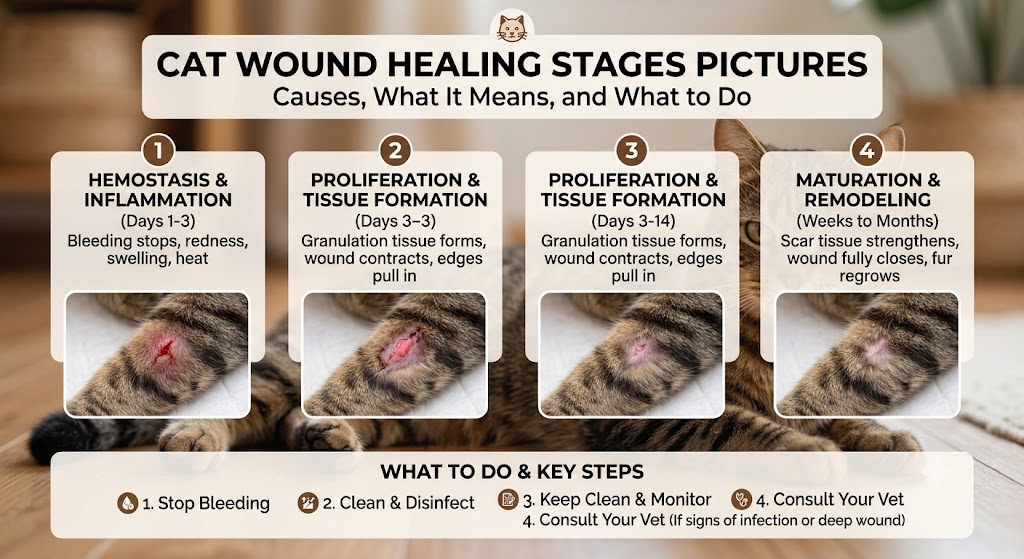
Many pet owners look for pictures of the cat wound healing stages because they can compare his condition with the pictures and determine how far he’s come. Although all wounds heal in their own way, photographs can be extremely helpful in helping to understand what a normal healing wound should look like. Changes in color, swelling, scab formation, and tissue growth can be compared to help owners assess the proper recovery. Visual inspection should always be supplemented by professional veterinary diagnostic and recommendations when concerns are raised, however.
Stage One: Homeostasis and immediate response
The first stage starts right after injury. In this stage, the blood vessels narrow to minimize bleeding and the blood clots to cover the wound. This helps minimize blood loss and bacterial contamination. In addition, the formation of clots provides a basis for healing. Owners might notice fresh blood, slight swelling and sensitivity during this time. These reactions are usually normal and suggest that repair processes have been initiated in the body.
During the first stage, Owners should ensure that they do the following:
It is important to provide the proper care during the first stage, which can have a significant impact on healing. First, owners should carefully evaluate the wound, without causing unnecessary handling. Light pressure can be used to control bleeding if it continues. In addition, maintenance of a clean wound and preventing contamination is also critical. Special attention should be paid to the cat for any signs of discomfort or pain. Proper early intervention can help avoid complications and help ensure a successful recovery.
Inflammation and Immune Activity – Stage Two
Pet owners may be concerned about their pets’ inflammation because the area may be red, swollen and warm. But there is a healthy inflammation, which is the normal process of healing. In this stage, cells enter the wound to eliminate bacteria, dead tissue and debris. This helps the body to create a cleaner environment for tissue repair. Redness and swelling are normal and should not be alarming, but if excessive, it could be a sign of infection and needs to be checked immediately.
The student will be able to identify normal inflammation and identify infection
It is difficult to differentiate normal inflammation from infection. Limited redness, mild warmth and improvement over time is normal healing. On the contrary, infection can lead to more swelling, smelly discharge, increased pain and thickening of the discharge. Further, infected wounds may be darker or have other unusual stains. Owners need to be vigilant about any changes in appearance as the earlier the treatment is started, the less likely more serious complications will arise.
Cat Wound Healing Stages Pictures: Understanding Early Healing Changes
Many cat owners will see when they look at cat wound healing stages pictures that it may be worse before it gets better. There might be a little swelling and redness in the inflammatory stage that may be temporary. This is due to the immune system’s efforts to repair damage. So, turnovers are not necessarily alarming. Rather, consider if the wound gets better over the next few days, or if it gets worse.
The granulation tissue stage represents stage Three
Granulation tissue formation is an important phase of recovery. The new tissue is pink/red and will have a lot of small blood vessels that will bring nutrients to the healing site. Granulation tissue development leads to filling of the wound from within outwards. Additionally, this stage lays the groundwork for regrowth of the skin. Generally, healthy granulation tissue will be pink, smooth and moist, not dark, dry, or infected.
Why Granulation Tissue Matters
Granulation tissue is a transition zone between injury and healing. If proper tissue formation is not allowed to occur, wounds will not heal correctly and may become infected. Also, granulation tissue aids in the transport of oxygen and nutrients throughout the damaged area. This stage signifies active healing and is a positive sign for progress towards recovery, so veterinarians may consider healthy granulation tissue to be a good sign. Regular monitoring will help insure that tissues are developing as intended.
In stage 4, the wound re-epithelial and regenerates skin
After granulation tissue fills the wound, the new skin cells start to cover the surface. It is called epithelialization. In this stage, edges of wounded area close up towards each other, progressing towards the center of the wound. In addition, new skin protects against environmental pollutants and decreases the risk of infection. The size of the wound may decrease and the look of the tissue may become smoother. The changes are usually signs of healing going on well.
Cat Wound Healing Stages Pictures to see what closing wounds should look like
Numerous cat wound healing stages pictures illustrate wounds shrinking over the course of healing. Wounds should close with rounded edges and less redness. Also, the scabs can easily loosen as new tissue grows under it. Owners should not scratch or pick at scabs as this may cause damage to the delicate healing tissues. If you can treat it as it is meant to be done, it will help you recover sooner and better.
The fifth stage of the process is remodeling and scar formation
The last step is to condition the repaired tissue. The wound could look like it has closed but internal healing can take place for weeks or even months. Collagen fibers will reorganise during remodeling for increased strength and flexibility. Also, scar tissue slowly “matures” and becomes less noticeable. Healed skin is not ever as strong as it was before, but the care in earlier stages will help to make a better recovery in the long run and the cosmetics will be better.
There are common causes for delayed healing which can be identified and addressed
All wounds do not heal equally. Factors that can delay healing include infection, inadequate nutrition, underlying medical conditions and repeated trauma. Also, too much licking and scratching can interfere with the healing process. Immunosuppressed cats may need to recover longer. Recognizing and treating early causes helps to efficiently heal and decreases chances of future complications.
Kingdom History and the risks of too much licking
Cats will always lick wounds and too much doing can do more damage. Frequent licking can lead to endospore contamination and the erosion of protective scabs and damage to delicate tissues. This can lead to reopening or infection of the wounds. Many vets prescribe grooming collars or recovery clothing to reduce over-grooming. By keeping the wound closed, natural healing processes can be allowed to take place without the unnecessary interference of other people.
Surgery and Healing: What to Expect
Many pet owners worry about their cats following normal procedures like spaying surgeries. Familiarizing yourself with the healing process of a normal cat spay incision can help ease anxiety during the healing process. The healing process of a surgical wound is generally similar to that of other wounds, but usually is more predictable if the surgical wound is kept under control. Owners will be able to see that the incision is appearing every day and know if they have any fears or concerns early enough before they get worse.
The “post surgery” phase involves recognizing the problems that have arisen
While most surgeries go well, there’s a possibility of complications. There may be some swelling, redness or slight bruising for a short time. If any of these things happens, however, it’s a serious issue and veterinary help is needed right away. Owners should contact their veterinarian immediately if they think their cat may have an infected spay incision as it is highly likely to improve their outcome and avoid worse complications.
When to Contact a Veterinarian
Some symptoms must never be forgotten. If the bleeding continues, foul smell, thick discharge, fever, severe swelling and loss of appetite are all signs of underlying issues. Also, if wounds don’t heal within a few days, they should be seen by a professional. Veterinarians can check to see if infection or tissue damage or other medical issues are slowing recovery. Complications are often avoided and healing is hastened through prompt intervention.
Working to help facilitate a faster recovery at home
Good home care is an important factor in managing wounds. When the environment is cleaned there is less exposure to bacteria and contaminants. Besides that, balanced nutrition can also help tissues to heal and maintain healthy immune system function. Please take care to use vet’s recommendations and do not treat with human medication without veterinary advice. Regular monitoring and responsible care helps recovery to be successful.
Nutrition support during wound healing
Energy, protein, vitamins and essential minerals are needed to heal. Injured cats, then, benefit from giving them good nutrition that helps their tissues heal. Water is also an essential component of rehab. In addition, a lack of nutrients can slow down the healing process and make you more vulnerable to infection. Balance the diet for provision of needed resources for effective repair.
Preventing Future Injuries
Although some injuries can’t be avoided, owners can make their property safer. Minimize injury potential by keeping dangerous objects away from children, supervising outdoor activity and handling aggressive pet interactions. Routine veterinary care will also help maintain overall health and help catch any potential issues that could impact wound healing. One of the best ways to keep cats healthy is to prevent issues from occurring at all.
Final Thoughts
By having pictures of the stages of cat wound healing, owners can better measure the progress of their cat’s recovery with greater confidence and accuracy. Every phase is crucial in healing, from clotting to inflammation, to tissue formation to scar remodeling. Knowing the signs of normal behavior, the warning signs and how to treat them appropriately can help to ensure successful recovery with fewer complications. When in doubt, it’s always best to take your cat to see the vet to ensure their well-being and healing.