Blog
Cats are Autistic: A Cat Owner’s Complete Guide

Pet owners often observe strange behavior in cats and try to get the explanations to the phenomenon. Some cats shun communication, respond aggressively to any noise, tend to repeat particular actions, and experience difficulty adjusting to changing schedules. Hence, the question arises if cats suffer from autism. The disorder has been described among people clearly but the issue appears somewhat different for animals. It will be helpful to examine current scientific findings regarding autism, understand the related cat behaviors, and know how to deal with such problems.
Autism Spectrum Disorder and Cat Behaviors
Autism spectrum disorder is a brain disorder characterized by particular features in the development and behavior of people. At the same time, the veterinary sphere does not yet acknowledge autism in cats as an existing disease. Nonetheless, several cat behaviors can remind scientists the behaviors associated with the disorder among humans. Therefore, talking about feline autism usually implies the problem of autism-like behaviors.
Why do some people think that some cats might be autistic?
Observations of unusual patterns of behaviour give rise to the concept of “autism-like” conditions experienced by cats. Others can refuse physical touch, feel distressed by changes in the environment, repeat behaviors or have difficulty interacting socially. In addition, at times these activities are seen in childhood and continue into adulthood. These behaviors are similar to some of the symptoms of autism in humans, so owners sometimes ask if there’s something like this in cats.
Science now has a lot to say about cats who are autistic
When talking about the “autistic” in cats, it’s important to remember there is still very little scientific proof. Definitive diagnostic signs for autism in cats are not known. Veterinary behaviorists recognize, however, that some cats have neurological and behavioral differences that can affect their behavior in the world. Veterinarians do not typically diagnose autism in cats but are aware that certain animals display distinct behavior patterns that necessitate special treatment and understanding.
Symptoms of Cat Autism
Some autistic cats might have some peculiar behaviors. These behaviors can involve low social interaction, repetitive movements, over-sensitivities to sensory input and challenges with changes. Also, some cats like routine and will become nervous if their daily routine is changed. These behaviors don’t necessarily mean a neurological disorder, but they may make owners think about the behavior and seek advice from their veterinarian.
Social Withdrawal/Limited Interaction
Lots of cats like to be independent. But some cats exhibit an interest in social interaction that is much lower than is normal. May not like to be petted, may resist handling, may prefer to spend most of their time alone. Also, these cats may not ask for attention even from members of the family. Independent behavior is not necessarily a disorder, but if it is a sustained pattern of social withdrawal along with other unusual behaviors, this may be a sign that it should be observed more carefully and evaluated professionally.
Patterns of repetitive behaviors and routine fixation
Repeated actions is often a source of autistic-related issues. Some cats do this over and over, often walking the same path around the house, or licking themselves excessively. Also, such behaviors can last for long periods of time for no particular reason. Routine is important for cats; and over using a routine can be a sign of real behavioural and neurological differences that warrant investigation.
Cats Are Autistic: Understanding Sensory Sensitivities
Some owners may think that cats are autistic due to their bizarre reactions to sensory stimuli. Some cats get easily startled by normal household noises, flashing lights, new fabrics, or sudden movements. They will then be likely to hide, freeze, talk too much, or exhibit stress-related behaviors. Recognizing these sensitivities can help owners provide more comfortable environments and minimize anxiety and contribute to a better quality of life.
Examining the influence of genetics on behavior
There are a number of genetic factors that impact feline personality and behavior. Like other felines, some cats may have a more active disposition and others may be more reserved and sensitive. The comparative study of the genetic basis for neurological development in animals is ongoing. There is no specific gene that has been found to give rise to autism-like behavior in cats, although there are differences in behavior and personality that probably result from inherited factors.
Environmental influences during development
Early life events have a profound influence on behaviour. Stress, insufficient socialization and traumatic experiences can cause kittens to exhibit abnormal behaviors. Also, exposure to limited persons and surroundings at the critical developmental stages can impact on social confidence. Therefore, some behaviors that are similar to autism can be caused by environmental influences, not neurological differences.
Are there similar symptoms that can be caused by trauma?
Behaviours can be similar to those of autistic children caused by trauma. Neglected, abused or frightening experiences in their past can make cats withdrawn and cautious. Additionally, traumatic events can make people more sensitive to other sounds, touches, or new environments. This is why it’s important to have a history of a cat to help owners and veterinarians distinguish between trauma-related behaviors and possible neurological differences.
Cats are Autistic: Tell the Difference Between Medical and Behavioral problems
There are numerous health problems that may manifest themselves in unusual behaviors. Social interactions and routines can be affected by hearing loss, vision issues, chronic pain, neurological issues, and anxiety disorders. Owners should, therefore, schedule an appointment with a veterinarian before assuming that their cats are autistic. The root causes of any medical issues are identified so that any treatable ailment gets the proper attention and care.
Signs that require veterinary attention
Sometimes strange behavior is not a problem, but at times it is. Sudden changes in behaviour, restricted or excessive noise, self harm, high levels of anxiety and the absence of normal activities should never be ignored. Plus, cats that refuse food, are unusually aggressive or show neurological symptoms should be seen by their veterinarian right away. Early intervention can have a positive impact on outcomes and quality of life.
Creating a Supportive Home Environment
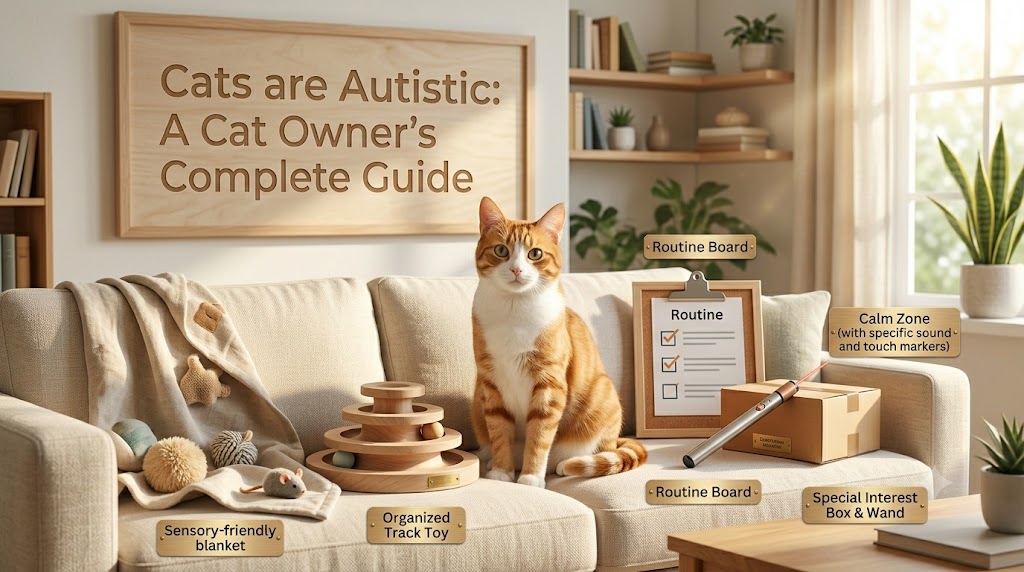
Stable and predictable environments may help cats with autism-like traits. Stress can be minimised with a consistent feeding routine and having set feeding stations and resting areas. Also, routine will help a fussy cat to feel safe. These animals will be able to live their lives without a lot of anxiety because they have had a calm environment in which they can learn how to cope with their life more confidently and comfortably.
The importance of safe spaces:
Having safe spaces to hide can have a significant impact on emotional health. Cats can hide away in quiet rooms, enclosed beds, raised perches and quiet spaces, all of which help them to get away from overwhelming situations. Moreover, providing cats with safe areas allows them to have some control over their surroundings. This feeling of control can help decrease stress and help encourage healthier behaviours in a difficult situation.
Interactive play and mental stimulation
Carefully planned enrichment is essential for all cats – including those with autistic traits. We use interactive toys, puzzle feeders and gentle play sessions to promote mental stimulation without overstimulation of sensitive individuals. Also, structured activities help to eliminate boredom and give positive release for energy. The aim is to provide stimulation, but in a manner that is comfortable and congruent to the cat’s personality and level of comfort.
Understanding Body Language
When it comes to stress, owners can observe this body language closely to identify problem signs early on. Sometimes, ears that are flattened, dilated pupils, tucked tails and avoidance behaviors suggest discomfort. There are also unspecific symptoms, like over-grooming or retreating, that can indicate anxiety. Understanding these signals helps pet owners modify interactions and make more positive experiences for their pets.
How to Support Shy and Sensitive Cats to Thrive
Patience and a slow introduction to new experiences is important for sensitive cats. Owners should not push, but let cats come to them. Positive reinforcement fosters confidence and trust throughout time.
Related Behaviors in Feral and Unsocialized Cats
Some behaviors that qualify as ‘autism-like’ are simply due to lack of socialization experiences. Cats that have feral backgrounds may, for instance, be reluctant to come into contact with people, even though they are healthy. Owners seeking to know these differences may want to read our guide on domestication of a feral cat. Knowing about socialization helps to avoid misinterpreting typical behavioural reactions.
Patterns of Physical Behavior and Body Movement
Some cats exhibit odd behaviors, such as walking on their backs, which draw attention. Others observe repetitive stretching, pacing or very precise movement patterns. These behaviors may not be abnormal, but can indicate questions of neurological differences. If you’re interested in the flexibility and movements of cats, our article on a stretchy cat takes a look at some curious facts about feline body movements and flexibility.
Supporting Long-Term Well-Being
The understanding and acceptance of differences is essential for long-term success. Owners should not only look at the label but at the comfort, safety and emotional well-being. Sensitive cats thrive with regular veterinary checks, routines and positive interactions. In addition, allowing cats to express their individual personalities helps to build better bonds and minimize stress.
Myths and facts about Feline Autism
There are numerous misconceptions about autism and animals. There is a common myth that all cats who are shy are autistic. Another one takes the stance that repetitive behaviours are neurological disorders by default. In fact, feline behaviour is affected by many factors: genetics, environment, health and life experience. So broad assumptions can lead to oversimplification of complex patterns of behavior.
What comes next and what we might learn
The study of animal cognition and neurological development is still on the rise. Further research into differences in behaviour between cats and other animals could yield more information. Scientists are more and more interested in understanding the genetic, brain and environmental influences in behavior. While specific answers are unavailable at this time, some research on companion animals could lead to better knowledge about autism-like characteristics in dogs and cats.
Final Thoughts
There is still much curiosity surrounding cats and autism. Veterinarians are not yet able to diagnose autism in cats, but some cats definitely exhibit behaviors that look like some of the traits of autism. With careful observation, veterinary advice, environmental assistance, and loving care, the owner can make sensitive cats happy and fulfilled no matter what is causing the behavior.