Blog
Cat Renal Failure Symptoms: Causes, and Stages

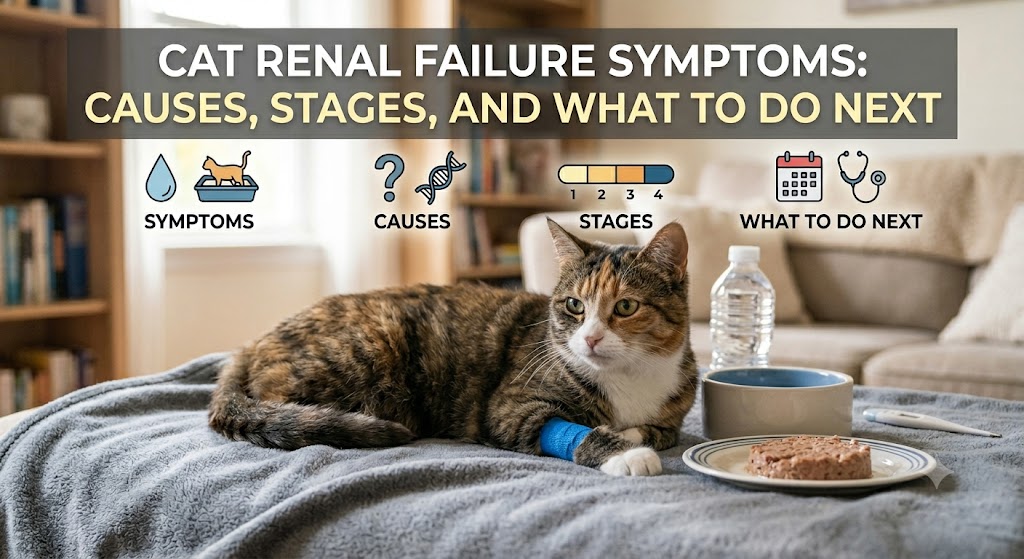
Detecting signs of cat kidney disease early will ensure the well-being of your furry friend. It is important to remember that kidney issues in felines are among the most frequent ones. The trouble is that the symptoms are often slow-developing, thus becoming noticeable when the disease progresses too far already. Having some knowledge about what to look for, the reasons behind the issue, its different stages, treatments and management will allow you to take immediate actions after seeing signs of kidney problems in your pet.
Functions of the Cat Kidneys
It is crucial to understand how kidneys operate to comprehend the dangers of kidney problems better. Firstly, these organs filter out waste products, manage hydration, regulate electrolytes and blood pressure. Secondly, kidneys are involved in the process of red blood cells’ development. Overall, kidneys are responsible for metabolism. As a consequence, decreased kidney function means that harmful substances start accumulating. That, in turn, means that all the body processes might get disrupted.
Renal Failure in Cats – What is it?
Renal failure is when the kidneys do not work properly. This can happen all at once or come on a little bit at a time over months or years. Acute kidney failure is usually caused by poisons, infections or injuries, whereas chronic kidney disease usually affects the kidneys over time. Whatever the reason, less efficient removal of waste products by the body. This results in symptoms becoming evident as toxins build up and physiological balance is disturbed.
What is the reason that kidney disease is common among cats?
Kidney disease is a condition that seems to particularly affect cats. This is due to a number of causes, such as genetic susceptibility, ageing and lifestyle factors. Also, cats have a low thirst drive, and over time can put more stress on kidney function. Chronic kidney disease is more likely to occur as cats get older since many of them live for many years. Regular veterinary check-ups are thus critical in the early diagnosis and management.
The symptoms of cat renal failure that you should be aware of
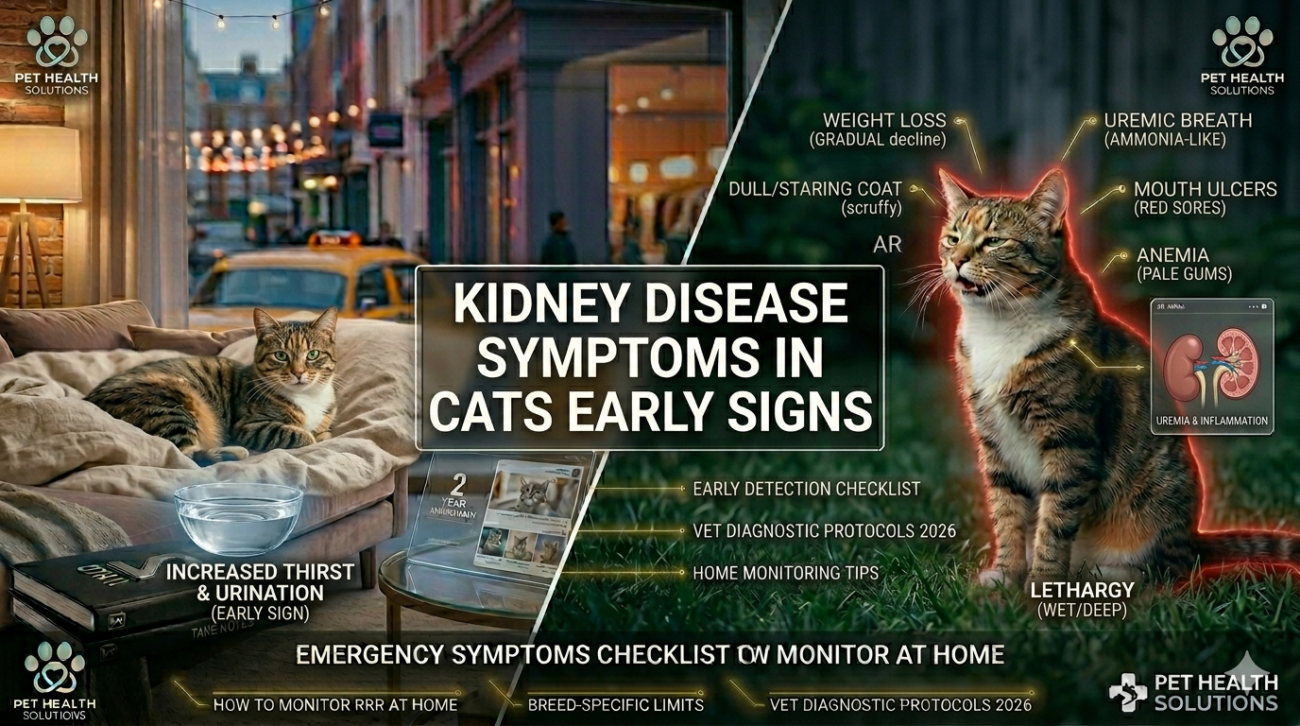
Knowing the symptoms of cat renal failure can help the cat’s owner see that there might be a problem before it becomes too serious. The symptoms may be mild and include polyuria, polydipsia, anorexia, and weight loss. What’s more, cats might be less active or sleep more. As symptoms tend to gradually develop, they may be hard to notice at first. It is still important to carefully observe their behavior to recognize concerns and get veterinary help as soon as possible.
Water consumption and thirst increase
Increased water intake is one of the first symptoms of kidney disease. As kidney function decreases the body is not able to concentrate urine as well. This means that cats will urinate more and have less concentrated urine, which leads to increased water consumption. Owners may notice their cat visiting water points more often or repeatedly visiting water points with empty water bowls. But polyuria (excessive urination) is a frequent symptom of kidney disease, in which an excess of thirst is an indirect symptom.
Frequent Urination
Excessive thirst can sometimes be accompanied by increased urination. The damaged kidneys do not hold on to water and produce more urine. Moreover, the frequency of cleaning litter boxes might be higher with increased output. In some cats, it could even begin to urinate outside the litter box due to urgency or discomfort. Thus, any alterations in urination patterns can offer useful clues regarding health issues, and can help identify kidney issues before they become serious.
Unexplained Weight Loss
As kidney disease worsens, so does weight loss. In the early stages of the disease, affected cats may seem to eat normally, but lose muscle mass. Moreover, over time, the appetite may decrease, also resulting in weight loss. Therefore it is advisable for the owners to check the body condition regularly, not just from appetite observations. As weight loss happens slowly, it can be a sign of health problems that need veterinary attention.
Decreased Appetite
Because of the buildup of toxins in the bloodstream, many cats with kidney disease have decreased appetite. These waste products may lead to nausea, and reduce the desire to eat. In addition, there is often a fussy eating behavior which results in the cat only eating half of the meal or refusing food entirely. Therefore, any changes in appetite should never be attributed to “old age. If food consumption is continually decreased, it is important to investigate this because early intervention may result in positive outcomes and help to limit the disease process.
The symptoms and warning signs of early renal failure in cats
It is best to detect signs of renal failure in cats in an early stage so that management can be most effective. Before the more noticeable symptoms occur, mild lethargy, more sleep and subtle changes in behavior or digestive upset can occur. Furthermore, owners might observe a decrease in grooming or a deterioration in their pet’s coat. Regular veterinary exams are particularly important as these signs are frequently not specific. Diagnosis is often early enough that treatment can commence before significant kidney damage has taken place.
Changes in the mouth and bad breath
The mouth and breath may be affected by kidney disease. Cats can begin to smell like ammonia when they start building up a large amount of waste. Further, in severe cases, oral ulcers can develop resulting in pain on eating. These changes can usually be signs of a high level of toxins in the body. This should not be considered a purely oral problem, especially when accompanied by other symptoms of kidney problems.
Dietary issues include vomiting and digestive issues
As kidney disease advances, digestion problems are a common occurrence. Toxin build-up and metabolic disturbances can cause vomiting, nausea, constipation and diarrhea. Also, stomach issues can lead to a loss of interest in eating and a decrease in weight. Recurring gastrointestinal symptoms, therefore, should be evaluated by a veterinarian. Once the root cause is identified, treatment can be more focused on the problem and more effective and comfortable for the affected cats.
Poor Coat Quality
Grooming is a big part of healthy cats’ lives. But, kidney disease is frequently associated with fatigue and discomfort which decreases grooming behaviour. This can cause the coat to become dull and/or grease or untidy. In addition, chronic illnesses can cause nutritional deficiencies which can impact fur quality. Thus, some visibly apparent changes in the coat may be sign of poor health. Watching a cat’s grooming tendencies can give you a good indicator of how well they’re doing.
Weakness and Lethargy
Kids with kidney disease often have low energy. Weakness and lethargy can be due to anemia, toxin build-up and nutritional deficiencies. As a result, the affected cats will spend more time sleeping, and less time on normal activity. The owner might observe a drop in interest in play, climbing or social interaction. While activity decreases as part of normal aging, any marking of a significant drop in activity should always be assessed by a veterinarian.
In general, the most common causes of renal failure are:
Kidney failure is a possible cause in cats but it can be caused by a variety of things. Chronic kidney disease is most frequently caused by aging. But, toxins, infections, congenital deformity, high blood pressure and some drugs can cause kidney tissue damage, too. Also, there are some breeds that have genetic risk factors. Awareness of these causes increases the value of owners placing preventive health care and regular veterinary monitoring on their cats’ lives.
Acute versus chronic kidney failure
Acute and chronic renal failure have very different onset and progression. AKI is acute and can be caused by a toxin, infection or trauma. Chronic kidney disease can take months to years to develop and typically is seen in older cats. Furthermore, the treatment objectives are different in the two diseases. Although some acute cases may improve rapidly with timely treatment, the main emphasis for chronic disease is on the long-term management and slowing the progression of the disease.
Signs of Advanced Cat Renal Failure and How it Progresses
As renal disease progresses the symptoms of renal failure in cats worsen. They can experience prolonged vomiting and notice a significant loss of weight, along with dehydration, extreme drowsiness and neurological symptoms. In addition, it is also common to experience blood pressure abnormalities, and anemia. Advanced disease has a severe impact on the quality of life and necessitates thorough veterinary care. If the progression is identified, owners and vets can make the necessary adjustments to the treatment plan and pay more attention to comfort-based treatment, if needed.
There are four stages of kidney disease:
Chronic kidney disease is generally broken down into four stages that are identified through a laboratory test. Sometimes the clinical signs are not obvious in stage one, and minor in stage two. In stage three, symptoms will typically be more severe and active management will likely be necessary. Stage 4 is the most serious stage of kidney disease and there is significant kidney damage. Staging, therefore, offers useful information on the prognosis, treatment options and long term monitoring plans.
A veterinarian may use a variety of diagnostic testing to determine the origin of the problem
There are multiple diagnostic tools required for an accurate diagnosis. Laboratory tests assess kidney function markers (creatinine, SDMA) and urine concentration ability and protein. In addition, blood pressure readings and images can be useful. These tests aid in the determination of disease length and in finding out possible factors. Therefore, thorough assessment is the key to the success of treatment planning and subsequent management.
Treatment Options for Kidney disease
There’s no cure for chronic kidney disease, but treatments are available to help control the symptoms and slow the disease from worsening. Quality of life is improved by dietary changes, fluid therapy, blood pressure drugs and treatment of nausea. Furthermore, nutrition is the issue in long term care. As a result, many cats can remain comfortable and functional for long periods of time after diagnosis with individualized treatment plans.
The role of Phosphate Binders in cats
Phosphate binders are often prescribed for cats who have kidney disease and have a problem with phosphorus regulation. High levels of phosphorus can be a factor that promotes disease progression and exacerbate clinical signs. These can be used to lower the amount of phosphorus absorbed from the food, which is important for maintaining kidney function and balancing metabolism. Therefore, phosphate binders frequently play a significant role in managing the entire kidney disease process.
The nutrition management and kidney diets are new
One of the best management tools that are available is a specialized kidney diet. They are usually low in phosphorus, nutritionally balanced and supplemented. In addition, they help to lighten the work of a damaged kidney. As a result, dietary therapy may often improve both the length of life and quality of life. Nutritional management is an essential component of successful treating of chronic kidney disease, for many vets.
Understanding Phosphorus Binders for Cats
Many cat owners also discover about one of the best treatments for renal disease for their cats, which is called a phosphorus binder. These products are similar to the phosphate binders in this respect by regulating the body’s phosphorus levels. Balanced phosphorus levels help minimize stress to damaged kidneys and promote health. Vets often use phosphorus control as part of the long-term treatment plan for felines with chronic kidney disease.
Cats in the home can benefit from these tips for kidney disease
A significant role in disease management is home care. The owner should make sure that fresh water is always available, give medication regularly and watch for signs of appetite changes. Also, periodic weight monitoring can be used to help recognize any weight loss that might be the result of a medical condition that requires treatment by a veterinarian. A stress-free environment is another way of promoting wellbeing. Thus, careful daily management is important in ensuring comfort and long-term welfare of affected cats.
Call your vet if you notice any of these signs
Some symptoms need immediate veterinary attention. If the vomiting persists, the appetite is lost, the animal becomes very lethargic, they become dehydrated, stops walking, or suddenly changes its behaviour, it is never okay. In addition, if symptoms get worse while taking medication, it could mean that the disease is getting worse. Early intervention is frequently helpful for comfort and to avoid complications. So it’s still crucial to maintain open lines with your vet during kidney disease treatment.
Conclusion
If your cat exhibits one or more of these signs of renal failure, it is important to catch the condition early and keep your cat healthy and living a good quality life for as long as possible. Most of the initial symptoms of kidney disease are polyuria, polydipsia, weight loss, appetite changes and lethargy. There is no cure for chronic kidney disease, but most cats are able to live comfortably for years following diagnosis with the use of modern treatment, nutrition and close monitoring. Because a veterinarian will be involved, close cooperation with the veterinarian will ensure optimum care throughout the disease process.