Blog
Cat Blood Pressure Monitor: Everything You Should Know in 2026

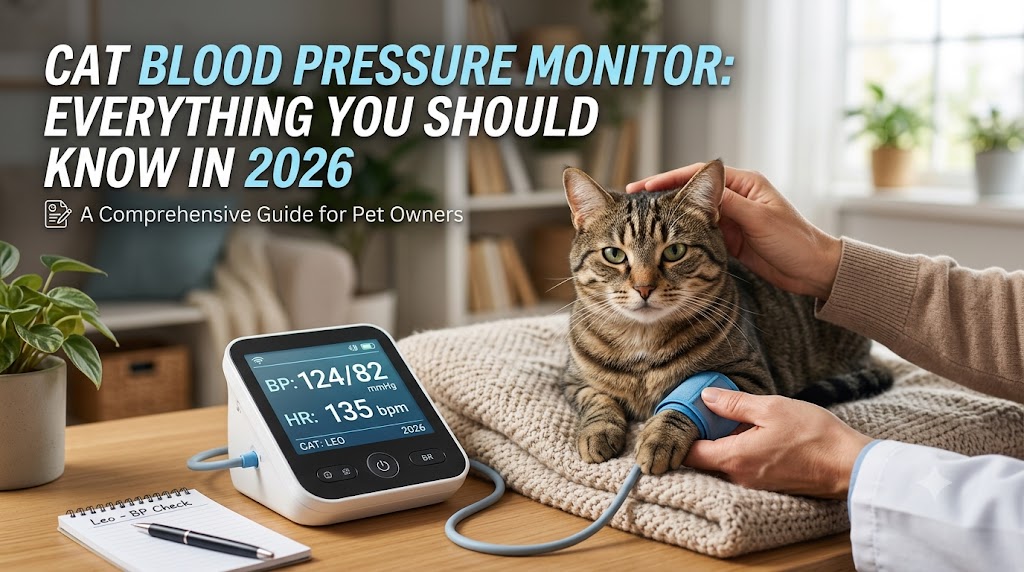
Blood pressure measurement has become an important part of the veterinary practitioner’s routine and monitoring feline health has become more sophisticated than ever. High blood pressure can cause damage to a cat’s eyes, kidneys, brain and heart without cats showing outward symptoms. A blood pressure monitor for cats can assist vets in catching these undiagnosed issues early, so they can be treated before significant complications arise. With knowledge of blood pressure monitoring, owners can make informed decisions and enhance their cats’ long-term health and quality of life.
Blood Pressure in Cats Explained
Blood pressure is the force of blood against the artery walls when the blood flows through the body. Cats, like humans, need the organs to be supplied with enough oxygen and nutrients which is maintained by having the right blood pressure. High or low blood pressure can damage important organs. Hence, measuring blood pressure is now an important part of the modern feline health care plan. Complications may not be identified until they have caused much damage, which can be avoided by early detection.
Why Blood Pressure Matters for Feline Health
Normal blood pressure allows the blood to flow normally around the body. Circulation is important to the heart, kidneys, brain and eyes to function correctly. But hypertension or high blood pressure can put a strain on these organs. This stress can lead to long-term health problems over time. Therefore, frequent monitoring is particularly important for older cats and cats diagnosed with chronic disease which has been associated with hypertension.
Common Causes of High Blood Pressure in Cats
There are a variety of medical conditions that may be responsible for high blood pressure. CKD is also one of the primary causes. Also, older cats often have a condition called hypertension as a complication of hyperthyroidism. Some heart diseases can also affect blood pressure levels. Additionally, certain underlying diseases have an impact on blood vessel function and circulation. By knowledge of these risk factors, your veterinarian can detect which patients are at risk and determine the best monitoring plan in advance of potential complications.
What Is a Cat Blood Pressure Monitor?
A cat blood pressure monitor is a specialised instrument used to take the blood pressure of cat patients. These machines generally apply cuffs to a leg or tail to get readings. Today, the veterinary monitors are highly modern and accurate, with minimal discomfort. Otherwise, there have been innovations in technology that have improved reliability and efficiency. Accordingly, for many cats, blood pressure is now a standard part of preventive care, especially for older cats and those suffering from chronic diseases.
How Veterinarians Measure Blood Pressure
Special equipment and techniques are used by veterinarians to get accurate readings. The first is giving the cat the opportunity to relax in a quiet setting. A cuff is then fitted around a limb or tail that is just the right size. Multiple measurements are typically taken to enhance the accuracy. Moreover, veterinarians take into account stress and movement when assessment. Thus it is essential to have correct equipment and a good clinical judgment in obtaining accurate blood pressure readings.
Types of Blood Pressure Monitors Used for Cats
There are a number of monitoring technologies in veterinary medicine. Doppler devices are still widely used, since they are accurate in cats. Also available are oscillometric monitors which provide automated readings. Both methods have pros and cons, depending on the patient’s size, temper and health. Therefore, veterinarians choose equipment according to the specific needs of each to obtain the most accurate and clinically useful results.
Cat Blood Pressure Monitor Benefits for Early Detection
A cat blood pressure monitor has a lot of benefits, including the fact that it can detect issues before they become apparent. The early signs of hypertension are minimal and often the cat appears to be quite healthy. But damage to the organs can also be taking place inside. Regular blood pressure checks enable vets to identify high blood pressure at an early stage and start treatment as soon as possible. Early intervention can then minimize the likelihood of long-term eye, kidney and heart damage.
Who should have their blood pressure monitored?
A few cats do not need blood pressure readings often. Some groups, however, can gain a great deal from frequent monitoring. Senior cats are more at risk as are cats with kidney disease and cats with hyperthyroidism. Also, any cat with neurological signs or vision changes will need to be evaluated. For this reason, veterinarians may routinely check blood pressure as part of their routine wellness checkup for pets that are at greater risk.
The definition of normal blood pressure ranges
There is some variation in normal blood pressures in cats. Veterinarians typically measure systolic blood pressure as this gives them useful clinical information. Healthy readings are usually within a range that is accepted for good organ function. If measurements are above recommended levels repeatedly, further investigation needs to be carried out. Therefore, it is important for a vet to know normal means and to differentiate healthy blood flow from abnormal blood flow that may need medical attention, such as hypertension.
Symptoms associated with high blood pressure in cats
Hypertension has no symptoms and the routine monitoring is very important. But there are some cats that will have symptoms later on, including vision problems, dilated pupils, disorientation, and behavioral changes. In severe cases, there can also be seizures. As symptoms may only appear after substantial damage has taken place, it is not recommended to wait for the signs. Thus, screening is one of the most important and successful preventive measures in the care of feline health.
The Connection Between Kidney Disease and Hypertension
Cats often have two or more chronic diseases, such as kidney disease and high blood pressure. Blood pressure is high and can impair kidney function, which can also lead to high blood pressure. This cycle can continue to cause health problems when not addressed. For this reason, vets frequently suggest blood pressure monitoring for cats with kidney disease. Cat renal failure symptoms will also not be understood without a knowledge of the role of hypertension in disease progression and management.
Hyperthyroidism and Blood Pressure Problems
Many older cats will be hyperthyroid and these cats are prone to having high blood pressure. Hyperthyroidism stimulates the cardiovascular system which causes the heart to work harder. This disorder is therefore often associated with hypertension. Veterinarians can assess treatment effectiveness and minimize complications by regularly monitoring blood pressure. As a result, cardiovascular health and circulation are often a part of the care for thyroid disease.
Can High Blood Pressure Affect Vision?
Feline hypertension can lead to serious eye complications, one of them being the eyes. High BP can injure fragile blood vessels in the retina, and can lead to a sudden loss of vision. Sometimes a retinal attachment happens all of a sudden. Therefore, early detection is key. With monitoring, veterinarians can detect blood pressure problems early before irreversible vision loss occurs, and can start treatment and enhance outcomes for cats with affected vision.
Cat Blood Pressure Monitor Accuracy and Reliability
When properly configured, modern monitoring equipment can deliver an impressive level of accuracy. Results can be affected, however, by stress, movement and improper cuff size. Vets will therefore usually take a number of readings and take account of the general trend, rather than the single measurement. Also, ongoing monitoring over time offers a better reflection of cardiovascular health. This way, the treatment decision is made based on accurate information of the clinical condition and not isolated measures.
What occurs during a Blood Pressure Check?
Many owners are concerned with the pain or stress of monitoring. Thankfully, BP measurements are usually tolerated without any problems and noninvasive. The process only takes a few minutes to complete. Most cats are calm if handled gently in a quiet setting. Also, there are no needles or surgical procedures required. In conclusion, routine monitoring is a safe and practical way to monitor cardiovascular health as part of routine veterinary care.
Home Monitoring Versus Veterinary Monitoring
There are questions among some owners about if it’s possible to measure their dogs’ blood pressure at home. There is specialized equipment, but a proper reading needs training and technique. Most veterinarians are best suited for determining the level of results and are familiar with equipment operation and result interpretation; veterinary clinics will make the most accurate assessment. Also, clinical monitoring allows the results to be considered in the context of the cat’s health. So, for most feline patients, veterinary monitoring will continue to be the treatment of choice.
High blood pressure treatments
If hypertension is detected, treatment is aimed at reducing the blood pressure and treating the underlying causes. People can usually control circulation with medicines. Also, kidney disease or hyperthyroidism will be better managed and therefore, better outcomes will be obtained. The ability to monitor regularly enables veterinarians to modify a treatment plan if necessary. Cats therefore, can get a stable blood pressure and live a good life with proper medical management.
How to Keep Cats’ Hearts Healthy
BP is not the only measure of cardiovascular health. Hypertension can present a higher risk to cats for heart structure and function. Owners who are worried about the heart disease should also familiarise themselves with the symptoms of heart failure in cats and seek veterinary attention as early as possible. When both blood pressure and heart health are monitored, a bigger picture of a cat’s cardiovascular health will emerge.
Preventative monitoring and senior cats
As a senior cat, you are at greater risk for many health problems such as hypertension. This makes it even more crucial to undergo preventive screening in older cats. Veterinarians can detect subtle changes in blood pressure before major complications arise by performing routine blood pressure checks. Plus, treatment is more likely to yield long-term results. So, blood pressure screening is definitely a worthwhile investment in feline health and longevity, especially within a senior wellness program.
How Often Should Blood Pressure be Checked?
Monitoring frequency will vary from person to person depending on medical history and risk factors. Wellness exams may only be necessary for healthy younger cats every few years. But for older cats and those with chronic illnesses, more frequent checks may be beneficial. Treatment schedules are determined by the veterinarian based on clinical findings and the needs of the treatment. As a result, customized monitoring plans ensure maximum protection without unnecessary procedures.
Preventing Hypertension-Related Complications
The first step towards prevention is awareness and regular veterinary treatment. Regular check-ups are important to look for diseases before they get started. Also, blood pressure measurement enables the identification of hypertension at an early stage, when it can be most effectively treated. Diet and medical care further lower risk of overall health. Therefore, prevention is the key to avoiding organ damage caused by hypertension and maintaining good health in the long term.
What lies ahead in feline blood pressure monitoring?
Veterinary technology is still a rapidly progressing field. Monitoring systems may provide better accuracy, be more convenient and provide better data tracking. Also, new telemedicine and wearable tech innovations may affect feline care. With further advances in innovation, blood pressure monitoring will continue to be easier and more effective. This means that cat owners will continue to see new advances in disease control and prevention in the years to come.
Conclusion
A cat blood pressure monitor is an essential instrument in the modern health care of cats and their blood pressure that can help a veterinarian detect high blood pressure in time to prevent serious complications. Often times, high blood pressure can cause kidney, eye, heart and brain damage without symptoms. Many cats can live longer and healthier lives with regular check-ups, early detection and timely treatment. By appreciating the significance of BP readings, owners can take general action to make sure that their cat is healthy for the long term.
