Blog
Cat High Flow Explained: Tips, Facts, and Vet-Insights

The mention of cat high flow treatment by a veterinarian can be quite bewildering and scary for a pet owner. This terminology is usually introduced when dealing with a life-threatening condition where the cat’s breathing needs urgent intervention. Cat high flow treatment, also known as high-flow oxygen therapy, has become very relevant within the veterinary world due to its ability to stabilize sick cats that struggle to obtain enough oxygen. Having insight into this type of treatment, when and how it is conducted, will enable a better understanding for the owner.
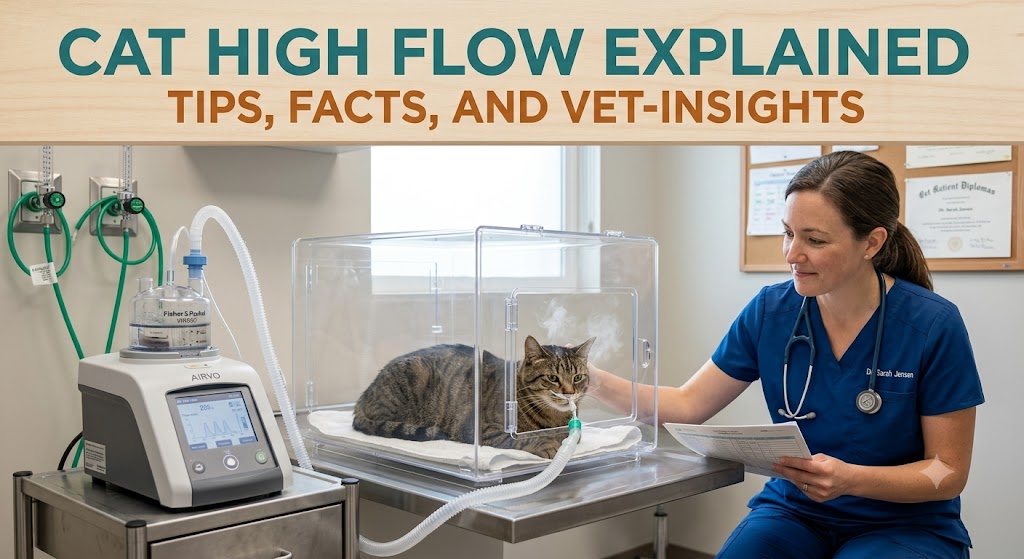
Understanding Cat Breathing Problems
Breathing well is essential for a healthy cat since good breathing is effortless and does not require any noticeable energy on the part of the animal. However, there are many factors such as infection, heart diseases, asthma, and trauma that can negatively affect feline breathing ability. In turn, oxygen level drops and causes severe physiological disturbances. As a result, a veterinarian might need to intervene immediately.
High Flow Oxygen Therapy (HFOT): What is it?
High flow oxygen therapy is a specialized medical process that provides warmed and humidified oxygen at higher flows than conventional oxygen therapy. High-flow systems have small nasal tubes that deliver a continuous flow of oxygen-enriched air, unlike standard oxygen cages or masks. Besides, it enhances oxygen supply while decreasing the breath effort. Thus, if your cat is suffering from breathing trouble he or she might feel better and more stable while your veterinarian’s diagnosis and treatment of underlying conditions.
The uses of advanced oxygen breathing support by veterinarians
Traditional oxygen delivery systems are still useful but may not be sufficient for critically ill cases of respiratory illness. A few cats need extra help to keep them oxygenated. This is because high flow systems can provide accurate oxygen levels and enhance the efficiency of respiration. In addition, the humidified air will help to decrease irritation and prevent airway dysfunction. Hence, advanced oxygen therapy is now a vital means of treating advanced respiratory emergencies in veterinary hospitals.
Cat High Flow Therapy and How It Works
High flow therapy for cats can be achieved by providing a controlled combination of oxygen and air via special equipment. Warm and humidify the oxygen before it is delivered to the patient, enhancing the comfort and improving airway health. In addition, continuous flow decreases the work of breathing and the exchange of oxygen in the lungs. Due to these benefits, high-flow therapy is sometimes recommended for cats with moderate to severe respiratory distress who need intensive medical care.
The science and engineering of high flow systems
Modern high flow systems are equipped with advanced technology that can provide accurate oxygen concentrations and flow rates. The machines are programmed to control the temperature, humidity and oxygen levels based on patient requirements. Moreover, oxygen can be delivered via special nasal cannulas, without invasive procedures. This technology makes a patient more comfortable and offers effective respiratory care. Veterinarians can therefore better determine the course for treatment during hospitalization and track the results carefully.
The process of the body getting oxygen
Each breath brings oxygen into the lungs, the blood absorbs the oxygen, and it is carried throughout the body. If respiratory disease disrupts this process, the tissues may not get enough oxygen. The high-flow therapy allows more oxygen to be inhaled into the body, which can help with absorption. Additionally, better oxygenation helps to maintain the function of the organs and decreases the tension due to airway discomfort. So oxygen therapy can be an essential part of emergency treatment.
This section outlines conditions for which support with high flow may be required
Veterinarians might prescribe high flow oxygen if there are a number of medical conditions. Breathing problems are common with asthma, pneumonia, pulmonary edema, heart disease, airway obstruction and severe infections. In addition, for some patients after surgery supplemental oxygen may be useful for recovery. Thus, high flow therapy has become a safe and effective therapy in a range of respiratory emergencies. The choice of decision will be determined by severity, oxygen level and clinical condition of the cat.
Compared with traditional oxygen therapy, the benefits of NEBEL® Oxygel are proven
Paediatric patients benefit from the use of high flow oxygen therapy as it has a number of advantages over standard therapy. It provides greater oxygen levels, better humidity and lower breathing work, all of which are more effective. Plus, many cats prefer the cannula over masks or closed oxygen cages. As a result, stress levels can be reduced and a person’s breathing can be assisted. These advantages are especially beneficial to patients who need high flow oxygen but don’t yet need to go to more advanced therapies.
Cat High Flow Treatment and Emergency Respiratory Care
Emergency respiratory care treatment is one of the most significant uses of cat high flow treatment. If a cat is extremely dyspneic, it may need to be stabilized before any testing is done. High-flow oxygen is essential to provide during this time to augment oxygen delivery and decrease the work of breathing. This allows veterinarians to make better use of their time to diagnose and treat the underlying cause of the disease, whilst keeping the patient stable and comfortable.
Identifying respiratory distress in cats
Identifying respiratory issues early will make a huge difference in outcomes. Rapid breathing, open mouth breathing, extended neck posture, blue or pale gums, weakness and reduced activity are signs of respiratory distress. Also, cats can become secretive and/or seem extra nervous. Owners should never delay seeking veterinary care for respiratory emergencies as they can quickly deteriorate. Early intervention can expand treatment choices and enhance the chances of successful treatment.
If your cat is breathing heavily, it might be a sign of something wrong
Sometimes owners observe symptoms before a veterinary emergency occurs, including cat heavy breathing. Stress, over heating, respiratory diseases, heart-related illnesses, and other health issues can cause heavy breathing. If heavy breathing occurs occasionally it may not necessarily be a serious problem, but if it continues, it needs to be evaluated. A knowledge of the possible causes assists the owners to identify when symptoms are a concern and perhaps life threatening and warrant a professional assessment and medical intervention.
How veterinarians determine oxygen requirements
There are several ways to assess the need for oxygen. In addition to physical exams, respiratory rates, blood oxygen and imaging are all useful. Also, note the work of breathing to help define urgency of treatment. The results help your doctor determine if oxygen therapy alone is needed, or if a more advanced treatment like high flow oxygen therapy is needed. The accurate assessment means that the patient will be provided the right amount of respiratory care.
All children requiring high flow therapy will be hospitalized
High flow oxygen therapy for cats is generally used for close monitoring and the treatment will likely be carried out in a hospital setting. Regular assessments of oxygen levels, breathing patterns, heart rate and general condition are done on a regular basis. Also, treatment can be adjusted based on the response of the underlying disease to treatment. Under the continuous supervision, adjustment can be done in the case of need. The result is the safest place to care for complex respiratory issues and get well with an all-around medical approach.
The research results might be restricted because of the following:
While generally safe, high-flow oxygen therapy does have some risks. Nasal cannulas may not be tolerated by some cats and may need mild sedation. Also, therapy focuses on treating symptoms, not the disease itself. Thus there is still a need to diagnose and treat the primary condition. Oxygen therapy will be monitored by veterinary staff to reduce any complications and to get the most benefit from the oxygen during treatment.
Cat High Flow Recovery and Long-Term Outlook
The prognosis after cat high flow therapy is largely based on the condition that caused the high flow, not on the treatment of high flow. In some cases, an infection or temporary disease can be resolved, and the cat recovers completely; in other cases, the cat may need to be maintained for a chronic disease. In addition, post-treatment is very important to preventing recurrence. Owners should collaborate with their veterinarian to create a plan of action that is suitable for their animal’s long-term treatment and monitoring.
The common diseases related to Oxygen Therapy are:
Some of the more common conditions that are related to oxygen therapy include respiratory infections, feline asthma, congestive heart failure, pleural effusion and lung injuries. Also, trauma or some cancers can have an impact on breathing function. These diseases can have a wide range of severity and prognosis, so individualized treatment plans continue to be important. Evaluation by a veterinarian assists in determining the best mix of medications, oxygen and continued management.
Learn more about labored breathing in cats
Another serious symptom which could need immediate assessment is the straining of breath in cats. Labored breathing is usually associated with the increased work of breathing and can represent serious underlying disease. Exaggerated chest movements, abdominal involvement in breathing and marked discomfort should be noted by the owner. A timely identification of these warning signs would enable prompt medical treatment and possibly prevent the onset of life-threatening complications.
Transition from Hospital to Home
After they have recovered from respiratory disease, cats may need a quiet and stress-free place to recuperate. Owners need to give medicines according to prescription and keep all appointments with the vet for follow-ups. Also, having patterns of breathing at home being monitored will help identify any potential relapses. Smoke, strong fragraces and environmental irritants can also adversely affect respiratory health, so avoid them. Successful recovery and better long term outcomes are greatly aided by consistent care.
Preventing Respiratory Problems
While some respiratory illnesses cannot be prevented, others can be prevented or minimised by taking some precautions. Regular checkups and vaccinations, parasite control and healthy weight all contribute to respiratory health. Also, reducing exposure to respiratory-irritating particles keeps you from breathing in these irritants. Treatment of respiratory infections early can prevent their progression to more serious disease. As a result, prevention is a crucial aspect of feline respiratory care.
Owners Frequently Inquire About High-Flow Therapy
High flow oxygen is often a concern for owners about discomfort. Fortunately, the majority of cats accept the treatment well after it stabilizes. Others question the need for hospitalisation. However, close monitoring is necessary during treatment in most cases. Also, a lot of owners would like to know if recovery is possible. Results differ depending on the cause of the disease, but most cats will greatly benefit from the effective treatment and management of their respiratory issues at an early stage.
Science and practice for veterinarians seeking to treat successfully
Veterinarians stress the importance of oxygen therapy as a supportive therapy, not a cure. Successful results will rely on diagnosis and treatment of the underlying disease, and appropriate gas exchange. In addition, technology has continued to progress in veterinary critical care, which is improving the survival rates of respiratory emergencies. Thus, high flow oxygen therapy is an important advancement that can be of great assistance in some of the most difficult medical scenarios involving cats.
Conclusion
Cat high flow therapy has emerged as a vital tool in modern veterinary medicine, playing an important role in the management of respiratory distress and oxygen delivery in cats. This treatment is used for cats who are very sick and have a flow of oxygen that is controlled and warmed and humidified, helping them to stabilize until they are diagnosed and treated for their underlying problem. Knowing about high flow therapy, early signs of trouble breathing and the need for timely veterinary intervention can make a huge difference. However, many cats get better and go back to a comfortable life with proper treatment and follow-up care.
