Blog
How Much is it to Declaw a Cat? A Real Breakdown of Pricing

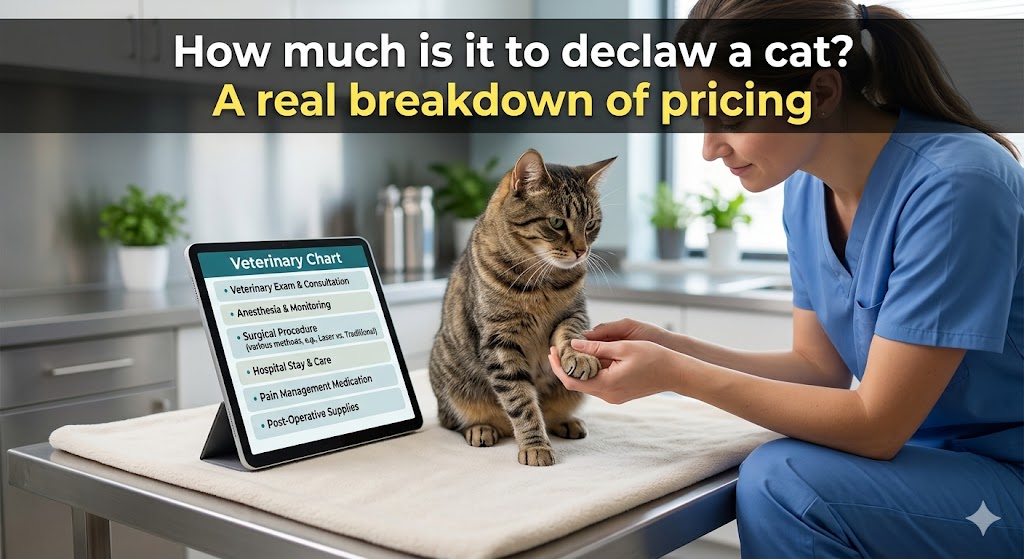
Owners of cats often have to confront the question of how much does it cost to declaw a cat. Regardless of the reasons for choosing such a drastic step – be it scratched furniture or behavioral problems – declawing remains one of the most controversial procedures both among veterinarians and pet owners. While the financial aspect is certainly important, health concerns, possible risks, and post-surgery care should not be overlooked. Therefore, an owner wishing to proceed with the procedure should learn what it is, how much it can cost, and whether there are alternatives.
Declawing: What Does It Mean?
Some people might think that getting their cats’ claws removed means taking off their claws. In reality, this procedure does not look so simple. Declawing includes surgical removal of the bone on which claws grow in animals. Moreover, as this process has impact on bone structure, nerve tissue, and tendons, the postoperative period requires additional efforts from pet owners.
Reasons Why Some Owners Might Consider Declawing
Generally, most people who have their minds set to declaw their cats do so due to scratching issues. The destruction of furniture, injuries caused by such behavior, and even safety concerns in the household are among the main reasons why people consider declawing. Sometimes, some cat owners become frustrated when they cannot manage the problem using other techniques within a short while. As much as these reasons may be true, it is advisable to try other means first.
How Much Does It Cost to Declaw Cats at Veterinary Clinics?
Depending on where you stay, how experienced the veterinarian is, and the type of surgical method used, the price of getting your cat declawed may vary greatly. Many cat owners across the world are likely to pay anything between a couple of hundreds to over one thousand dollars in order to get the procedure done.
The Factors that Impact Pricing
There are many factors that impact pricing. The first one is the geographic location because veterinarians usually have different rates depending on whether they work in cities or countryside areas. Besides, specialized hospitals tend to charge higher prices compared to general practice clinics. Finally, the technique applied for surgery, the method of anesthesia, as well as the monitoring of patients during anesthesia, influences the overall cost as well.
Pre-Surgery Examination Costs
Veterinarians always conduct preliminary examinations to find out if cats’ health is good enough to use anesthesia. Also, blood tests may be needed to evaluate organ function and detect possible complications. Although such examinations add to expenses, they are necessary to ensure patient safety and surgery success.
Anesthesia and Monitoring Costs
Declawing is a complex procedure that requires anesthesia administration. Specialists need to calculate the amount of medication that would not cause negative effects. Moreover, there are sophisticated pieces of equipment used by veterinarians to monitor cats’ heart rate, oxygen concentration, blood pressure, etc.
Variation in Surgical Methods and Associated Costs
Variances in methods of declawing may be associated with differences in costs. Conventional surgical techniques, laser, or other methods differ in terms of equipment needed and surgical operation times. Some vets also consider certain surgical procedures to lower the risk of pain during the period after surgery. Discussing various options can help owners comprehend the connection between costs and procedures used.
Pain Medications
It is an important aspect in cat surgery. Pain management drugs are included in most estimates in veterinary surgeries. Some cats may require several different types of drugs to ensure that the pain is controlled throughout the entire process of recovery.
How Much Does It Cost to Declaw a Cat Including Recovery Expenses?
While most people only think about surgical costs and do not consider recovery costs, the latter might play a big role in total expenses. Many people are not aware of the fact that there might be other aspects of declawing costs which should be considered.
Requirements for Postoperative Recovery
Recovery involves careful surveillance and the creation of an environment conducive to healing. Cats are often required to stay quiet, rest comfortably, and be watched out for possible difficulties. Furthermore, it is essential that litter boxes be kept clean and suitable for sensitive paws.
Time-frames for Healing
The amount of time it takes a cat to heal depends on various factors. While some may feel comfortable after just a few days, there are those who may take a longer time before recovering fully. The same applies to behavioral changes. Therefore, patience plays an important role in the healing process.
Complications Leading to Extra Expenses
Complications may lead to higher costs associated with recovery. Issues like infections, slow healing processes, pain, and problems with the incision wound may necessitate further medical intervention. Additionally, follow-up appointments may become necessary.
Long-Term Consequences of Declawing
In addition to the immediate post-operative period, there is a risk of long-term physical or behavioral alterations in some cases. The cat can walk differently, refuse the litter box, or become more sensitive. On top of that, removing claws means the permanent inability of a cat to interact with its environment in a certain way.
Behavior After the Surgery
Each cat copes differently after the procedure, with some being quick learners. Moreover, scratching plays an important role in a cat’s well-being both physically and mentally. Declawing surgery can influence the animal’s behavior, confidence level, and ability to communicate.
Other Options Than Declawing
Declawing is becoming less popular today as veterinarians focus on preserving a natural body structure in their patients. Scratching posts, nail trimming, nail caps, environmental modification, and training can help keep your pet happy.
Scratching Posts and Environmental Enrichment
A scratching post will greatly reduce the likelihood of furniture being damaged. Cats usually favor scratching substrates according to their own preferences. It is also important to ensure that the posts are placed close to spots where the cat spends its time. Regularity and positive reinforcements will be key.
The use of Soft Nail Caps
This is a non-surgical option for those who would like to prevent any form of damage. The caps are placed on the cat’s nails and limit any damage from excessive scratching. They are easily accessible and temporary.
Behavior Modification Training Methods
In many cases, behavior modification has proven extremely effective. Positive reinforcement is used as an effective way to change negative scratching behaviors. It is also vital to understand why the cat engages in scratching.
How Does the Cost of Getting a Cat Declawed
Putting the cost of declaw surgery into context involves comparing the expense involved with other feline surgeries that may also be considered more routine. Spaying and neutering can be two examples of procedures involving different costs and consequences than declawing. In fact, people who research costs of surgery for cats often learn about issues associated with cat spay recovery.
Declawing Laws and Ethics
Laws pertaining to declaw surgery can differ from one location to another. Declawing is prohibited or restricted for ethical reasons in some areas. Moreover, veterinary associations encourage exploring alternative solutions when possible.
Questions to Discuss With Your Vet Prior to Declaw Surgery
Owners considering the procedure have several questions to ask before making a decision. Among them is how much does it cost to declaw a cat? Another important point to clarify involves getting an estimate in writing.
Cost of Declawing a Cat and Is It Worth It?
The cost of the surgery and its overall value are different cases, and they depend on particular conditions of each cat. While financial issues should be considered, quality of life should not be underestimated. Moreover, in many cases, there are other ways of solving the issue and getting the desired results with less harm done.
Importance of the Owners’ Responsibility
Being an owner of a pet always means finding the necessary balance between convenience and welfare of the cat. Furthermore, devoting some extra time to behavioral management may result in the decrease of necessity of conducting any surgeries at all.
Scratching and Family Conditions
Owners sometimes express concern regarding scratching behavior when it comes to children, elderly relatives, or other pets. This factor should be taken into account. On the other hand, speaking with a vet may give you new ideas.
Support and Monitoring in the Process of Recovery
It is essential that cats undergoing surgery are kept in a peaceful environment and under constant monitoring. Monitoring the cat’s feeding habits, mobility and general level of comfort helps identify potential issues sooner. Also, adhering to your vet’s directions will enhance the recovery process and minimize complications.
Other Surgical Procedures Relevant to Pet Cats
Owners looking for information about a specific surgery often explore related procedures. Information on male cat before and after neutering helps understand the effects associated with different surgeries. Comparing different operations gives more context when making decisions about veterinary procedures.
Financial Preparation for the Procedure
Emergency situations in regard to your cat’s well-being might appear unannounced. Creating an emergency fund for your pets or exploring options such as insurance might help you plan for the future.
Conclusion
When you wonder how much it costs to declaw a cat, there’s definitely a lot more to it than just a price. Different prices apply based on factors like your location, method of surgery, anesthetic use, post-op care and treatment, and other related elements. Moreover, as a cat owner, it would be best for you to think about not only the cost of declawing your kitty but also its impact on his well-being.