Blog
Why Does My Cat Drool When I Pet Her? A Complete Guide

It is only after years of caring for their furry friends that many cat owners come to think, why does my cat drool when I pet her? Seeing your cat enjoying the time in your lap and seeing small amounts of saliva coming out of its mouth could be quite a strange experience for some people. Fortunately, drooling when being petted usually means that your cat feels comfortable and relaxed. However, in certain cases, drooling can be the symptom of a particular condition. Therefore, it might be good for you to know about the causes and actions you should take in such a situation.
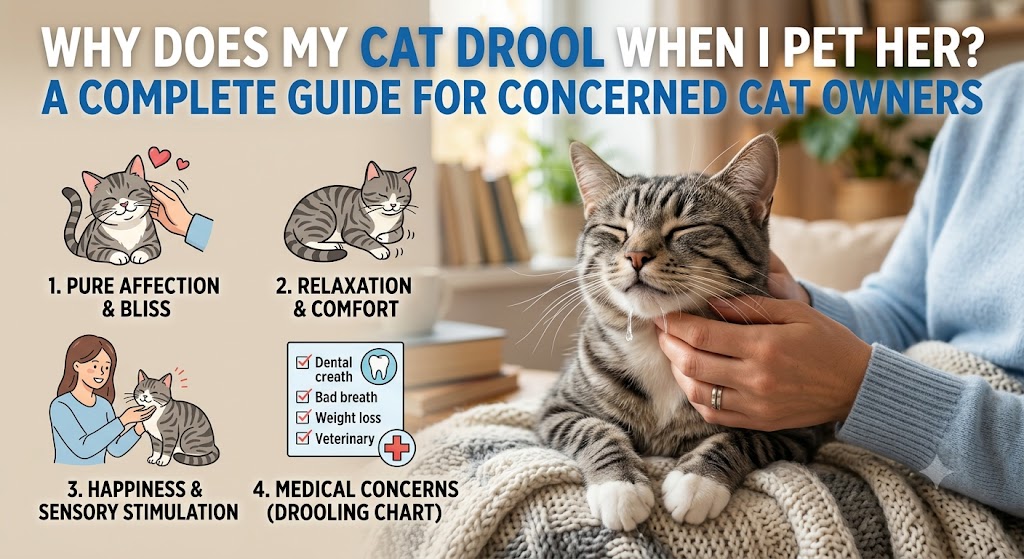
Cat Drooling Explained
When saliva leaves the mouth of your cat instead of being swallowed, it is called drooling. It is a natural process which plays an essential role in the digestive system of your pet. Most of the times, a cat swallows its saliva without giving it any special attention. However, there are several factors which can trigger saliva production and make drooling apparent.
Drooling Is It Normal in Cats?
It is natural for some cats to drool once in a while. There are some cats which drool when they have a feeling of being very relaxed, safe, and happy. Such cats will normally have positive associations with the petting process and develop an extremely relaxed body posture that allows them to drool. However, not all cats drool when being petted. As such, it is imperative for a cat owner to assess the particular cat’s history and symptoms before worrying about its health.
Petting and Drooling
Cats leads to the occurrence of both physiological and psychological changes in them. Petting brings feelings of safety and warmth associated with nursing from mother cats at infancy. According to some veterinarians, petting makes adult cats revert back to childhood and become extremely relaxed, a condition that might make them drool.
Why Is My Cat Drooling When I Pet It for Relaxation Purposes?
One of the most common answers to why is my cat drooling when i pet her, in particular, can be relaxation. There are cases where cats become too comfortable during petting and relax entirely. As their muscles start relaxing, saliva may form and come out from their mouths. Moreover, cats usually purr during such moments. Thus, light drooling that happens solely during petting and showing affection is seen as a positive sign of emotional comfort and deep bonding between the feline and its owner.
What Happens When Cats Are Happy and Content
Generally speaking, happy cats show several different symptoms of affection, such as purring, kneading, slow eye blinks, as well as drooling. All of these signs signify that the cat is feeling good emotionally and physically satisfied. Besides, cats may start drooling because happiness triggers certain physiological reactions associated with relaxation. Not all cats drool when they are happy; however, drooling cats usually show several other affectionate signs.
Kittenhood Memories Related to Petting
According to many veterinarians, drooling when petted may be related to the association with something good and positive experienced during kittenhood. The sensation associated with feeding includes warmness, care, safety, and being near the mother cat. In some cases, adult cats remember and have emotional connections with these sensations. Hence, when petted, they recall these experiences, which triggers similar emotional reactions, such as drooling. It seems that there is not enough scientific evidence, but this theory can clarify this behavior pattern in cats.
Cats’ Personalities May Differ
All cats do not demonstrate similar reactions to petting. First, some breeds are considered more attached to humans and affectionate than others. Second, every cat has its own personality; hence, there are highly sociable and affectionate pets and rather independent and aloof ones. As a rule, a high level of sociability may cause cats to want physical attention and drooling.
Indications That the Cat Dribbles due to Emotional Reasons
In general, emotionally caused dribbling takes place in predictable situations. The cat looks calm, constantly purring, closing its eyes, seeking additional caresses. Moreover, dribbling ceases right after the cat gets stroked. Appetite, activity, grooming are normal. Thus, these symptoms usually point to positive emotional arousal rather than health problems as the cause of dribbling. In other words, considering the background of dribbling is very helpful in diagnosing the condition.
Why Does My Cat Drool While I’m Petting It but Never Otherwise?
If you want to know why your cat starts to dribble while you pet it but does not dribble otherwise, the emotional relaxation is usually the cause. Cats that have health issues usually dribble in many different situations and not only when caressed by the owner. If the cat dribbles exclusively when petted and the process stops after that, the problem is likely to be behavioral. Still, you need to monitor your cat carefully for any new symptoms.
Other Reasons Behind Drooling Are Dental Issues
While emotional relaxation can be responsible for excessive salivation, dental issues cannot be ignored either. Diseases like gingivitis, cavities, infections, or injuries to the mouth can increase saliva flow. Also, the cat would experience some pain during the act of eating or grooming itself. Unlike drooling due to emotional factors, this will happen without any particular pattern. Hence, it is wise to watch out for other symptoms, such as halitosis, or difficulties in chewing.
Common Cat Diseases – Gingivitis and Oral Infections
The problem of periodontal disease is quite common among adult cats. Due to the accumulation of bacteria between the gum and the teeth, an inflammatory process develops in the gums. As the infection increases, so does the saliva flow. Cats are good at hiding the symptoms of the problem, and hence drooling becomes one of the main signs of a developing problem.
Foreign Body in the Mouth
In some instances, cats become droolers due to the presence of a foreign body inside their mouth. Strings, plant matter, tiny toys, and food bits may be causing irritation to oral tissue and resulting in excess saliva production. Apart from this, cats that suffer from such an issue usually engage in peculiar behavior like pawing and excessive mouth movements. When drooling develops abruptly, cat owners need to pay close attention to their pet’s behavior.
Nausea
Nausea is one of the common reasons why cats drool. Motion sickness, inappropriate food, poisoning, or stomach issues can lead to increased production of saliva. Generally speaking, nausea goes hand in hand with vomiting, loss of appetite, and lethargy. As a result, other symptoms should be taken into consideration during the assessment of the possible reason for a cat being a drooler.
Toxic Poisoning
Several house products can result in rapid overproduction of saliva in cats. These include plants, cleaning materials, medication, and various human foods that are capable of irritating the mouth as well as causing an internal disorder. In addition, the sick cats show additional symptoms such as vomiting, weakness, trembling, or behavioral problems. Considering that poisoning poses a risk of rapid progression into a dangerous condition, the owner should take the animal to the veterinarian as soon as possible to avoid any complications.
The Connection Between Drooling and Kneading
It is common for cats to drool when kneading the soft surface with their paws. Known as biscuit-making for cats, this behavior signifies comfort and contentment in the cat’s mind. Just like drooling when the pet is stroked, kneading behavior appears to come from the period of nursing in the kitten. Thus, if the cat drools when stroked, he or she most probably also kneads the blanket, lap, or cushion.
Understanding Normal Drooling
Pet owners who keep on wondering if their pets are healthy because of why does my cat drool should find out more about is it normal for a cat to drool under specific conditions. Normal drooling happens when there are positive interactions like being stroked, kneaded, and expecting food. Nonetheless, drooling which persists or is not clear should be looked into further.
Medical Reasons Why Does My Cat Drool When I Pet Her
In most cases, drooling in the presence of the owner is due to the comfort the pet feels; however, there are times why does my cat drool when i pet her is medically caused. Stroking could possibly trigger sensitive parts in the mouth, jaws, and neck area, thereby making underlying health problems in those regions very apparent.
Neurological Disorders and Drooling
Some neurological disorders affect normal salivation and swallowing. Though rare, such disorders can cause an increase in drooling. Other signs associated with neurologic issues include problems with coordination, unusual behaviors, weakness, or abnormal face shape. Thus, if your cat is exhibiting neurological symptoms along with drooling, then immediate consultation with a veterinarian is needed.
Stress-Induced Drooling
Drooling does not always mean your pet is happy. In some cases, drooling occurs due to stress and anxiety felt by the animal. Stressful events for cats include visits to the vet office, travelling, loud sounds, and being in an unknown place. It should be noted that, unlike with relaxing drooling, anxious drooling occurs with enlarged pupils and tense body language.
Why Visit Your Vet?
The need to consult a veterinarian is present in cases where salivation happens unexpectedly or in larger amounts than usual or is accompanied by any symptoms. They could include the lack of appetite, vomiting, foul breath, discomfort in the mouth, fatigue, swollen face, unusual behavior, or persistent salivation even if the cat is not being petted. Diagnosis at an early stage will contribute greatly to effective therapy and prevent small problems from becoming severe.
Tests That Could Be Recommended by Your Vet
Your vet has access to different ways to diagnose your cat’s condition. The physical examination can reveal much about the health status of the animal, including its mouth. Based on the results of the physical examination, further testing can be done, which can involve looking for the reasons behind the disease. Blood tests, X-rays, or neurological tests could also be considered.
Advice for Controlling a Salivating Feline
Control is dictated by the reason behind drooling. In case a cat exhibits drooling when pleased, there is usually no need to provide any form of treatment. The owner only needs to place a towel nearby whenever he or she is fondling the feline. For medical reasons, one should intervene. Taking proper care of a cat’s oral health, feeding it properly, and ensuring regular visits to the vet are vital.
Conclusion
Generally, drooling while being petted is common among pets who feel comfortable around their owners. Most domesticated cats get used to being petted because the experience is usually associated with comfort and safety. Consequently, many cats drool while being touched as they have attained a state of complete relaxation. Other causes of drooling include dental problems, nausea, stress, and many others.
