Blog
How Many Teeth Does A Cat Have? Causes, And Symptoms

The teeth play an important role when it comes to the feeding, grooming, hunting, and self-defense of the felines. Good dental health ensures that the cat enjoys its meals and remains healthy throughout life. Moreover, the cat’s quality of life is influenced by the state of the teeth, because any pain in the mouth can result in problems while eating as well as infections. Many people ignore the importance of proper dental hygiene in cats until serious problems arise. In addition, felines tend to conceal pain in their mouths. Thus, knowing more about the cat’s teeth will allow the owners to avoid unnecessary dental problems.
How Many Teeth Does a Cat Have?
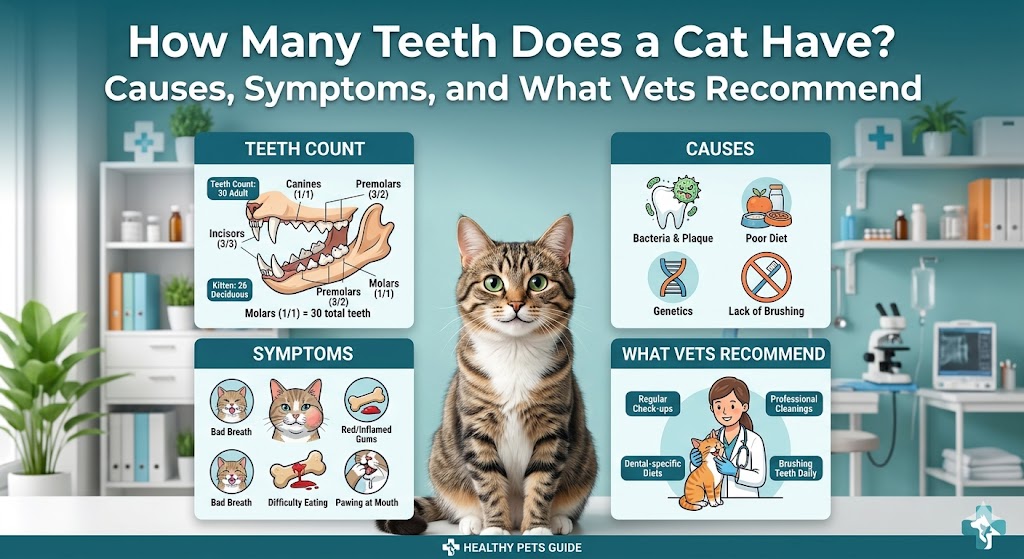
There are 30 adult teeth and 26 baby teeth in a cat. Incisors, canines, premolars, and molars compose the cat’s teeth. The cat’s canine teeth help it to tear the meat, whereas the premolars are used in the process of chewing. The baby teeth of kittens start falling out at 3 to 4 months as new ones grow slowly. Cats reach full dental development by the time they are 6 months old.
The Various Kinds of Cat Teeth
Cat teeth play specific roles in daily life. The small teeth at the front are known as incisors and aid in grooming and grabbing small items. In addition, canine teeth are longer and sharper and enable cats to seize and rip their prey effectively. Premolar and molar teeth located further back in the mouth help break down foods when chewing. Moreover, good teeth contribute to correct jaw development and proper feeding behavior. As a result, all cat teeth play a critical function in ensuring your pet is comfortable, well-fed, and behaves like a cat should.
Teeth of Kittens and the Development Phases
Kittens are not born with teeth, but baby teeth begin emerging two to four weeks after birth. Baby teeth assist young cats to wean and switch from milk to solid foods slowly. Besides, kitten teeth are sharper and more miniature than adult teeth because they help in chewing exercises. Adult teeth begin replacing kitten teeth between three and six months old. Lastly, mild tooth irritation and chewing behaviors occur when baby teeth fall out and adult teeth emerge.
The Importance of Good Teeth in Cats
Good dental health is not only about the condition of the cat’s mouth; dental diseases can potentially lead to other severe disorders. For instance, if a cat’s teeth have bacteria on them, it will eventually affect internal organs like kidneys or heart. Moreover, if the teeth cause the cat any pain, it is likely to suffer from loss of appetite which would inevitably result in weight loss. In addition, dental issues could prevent the cat from grooming itself properly, thus leading to an unhealthy coat. Lastly, constant inflammation decreases overall well being and vitality. That is why it is essential to maintain healthy teeth.
Dental Conditions Common in Cats
Cats tend to have certain oral conditions throughout their lives. First of all, it should be mentioned that periodontal disease is very common among older cats. Another frequent issue is the accumulation of tartar which irritates gums and causes gradual destruction of oral tissue. There is another painful problem known as tooth resorption which affects felines’ teeth from the inside. Besides, there might be issues such as fractured or infected teeth caused by injuries or neglecting dental problems. Sometimes, cats have problems with inflamed gums called gingivitis.
Plaque and Tartar Formation
It is formed when bacteria combine with food residue and saliva. Plaque is likely to form in the mouth daily. When plaque is left untreated, it can mineralize and turn into tartar. The formation of tartar makes it more difficult to eliminate. Moreover, tartar causes irritation to the gums and leads to infections near the teeth. In addition, cats that consume soft food exclusively tend to develop plaque more rapidly than other cats due to a lack of natural brushing by chewing. Poor dental hygiene also leads to halitosis and other oral health problems.
Cat Gingivitis
Gingivitis is an inflammatory condition in which the gums surrounding the teeth are inflamed. It usually occurs when plaque and tartar accumulate in the mouth. As a result, the gums become inflamed, swollen, and tender, causing pain while eating. Some cats also show excessive salivation or avoid hard foods. Moreover, gingivitis may develop into periodontal disease and lead to tooth loss. Gingivitis may also cause damage to gum tissues if left untreated for prolonged periods.
What Is Tooth Resorption?
The tooth resorption problem refers to a dental issue that is quite common among adult cats. The disease causes degradation of tooth tissue followed by its disappearance. In addition, affected teeth might look perfectly healthy outside while being destroyed under the gums. Affected animals suffer from intense pain. At the same time, cats try not to show signs of problems. Some cats start chattering their teeth or avoid using the right or left sides when eating food. As tooth resorption cannot be treated and has to be addressed via extraction, proper veterinary checkups become crucial.
Factors Causing Dental Issues in Cats
Several issues lead to dental diseases in cats. Genes play a role in predisposing cats to dental issues, particularly gum disease and tooth resorption. Poor nutrition habits, along with improper dental hygiene, will only promote the buildup of dental tartar in a short period. Age is another cause as the amount of dental tartar increases over time. Moreover, specific diseases make it easier for bacteria to attack an animal’s immune system. Finally, physical trauma when chewing hard objects results in broken teeth.
Signs of Dental Issues in Cats
A cat suffering from oral health issues often demonstrates certain symptoms that can be difficult for owners to detect at first. Bad breath is among the most prevalent indicators of the presence of oral problems. Moreover, the animal may exhibit excessive drooling, scratching at its mouth area, and difficulty eating. In addition, some felines prefer eating softer foods since biting dry kibble hurts. Another sign includes bleeding gums and tooth tartar buildup. Changes in behavior, such as irritability and hiding, also happen. Thus, identifying these symptoms timely will help prevent severe dental pain and related complications.
Problems With Eating and Weight Loss
Pain in the mouth often negatively impacts a cat’s appetite and feeding pattern. Animals with sore teeth will eat their food slower and even drop food out of their mouths. In addition, some felines cry when they are eating due to the unpleasant sensation. As a result, they may have lower appetites that eventually cause weight loss. Therefore, changes in a cat’s eating pattern should always be taken seriously since they can indicate serious dental health concerns.
Bad Breath vs Oral Odor
Consistent bad breath typically suggests dental problems and not natural cat smell. The bacteria that grow under the layer of plaque and infected gums give an unpleasant smell in the mouth. In addition, infections cause foul smell that can be noticed from afar. Sometimes people ignore their cats’ halitosis, assuming that this condition is absolutely harmless, but in fact, the infection can easily spread further and deeper. As such, consistent mouth smell must be paid attention by a veterinarian since it suggests that there are painful diseases that affect oral health.
Dental Care Recommendations Provided by Veterinarians
The importance of regular dental care provided to your kitty is emphasized by veterinarians because it significantly reduces oral diseases in cats. Brushing teeth should become a daily routine to get rid of plaque accumulation and keep the gums healthy. Moreover, veterinarians always recommend dental treats and special diets that protect feline teeth. Cleaning of tartar that forms underneath the gum line is also very helpful to maintain oral hygiene and prevent diseases.
Teeth Brushing Techniques That Are Safe for Your Cat
Cleaning your cat’s teeth might be a challenge at first, but it becomes much easier when training is done gradually. Firstly, one must remember to use a product that is specifically made for pets because human toothpaste has several chemicals that are dangerous for pets. Besides, soft brushes should be used in order not to hurt your pet. Gradual learning includes tasting the toothpaste and getting acquainted with a gentle touch near the mouth area. Consequently, regular brushing helps keep tartar under control and promotes good oral hygiene.
Professional Dental Cleaning Services for Your Pet
Professional cleaning allows you to make sure that all the tartar is safely removed from your pet’s mouth, including both surfaces – above and under the gumline. Besides, veterinarians use anesthesia, which makes this procedure comfortable for your pet. Moreover, using anesthesia allows the doctor to examine your pet’s mouth using X-ray pictures in case there is something wrong. Finally, tartar accumulation might lead to tooth loss if left untreated. Thus, professional cleanings are necessary to ensure good oral hygiene of your pet.
Choosing the Optimal Dental Diet for Felines
There are special diets that promote healthy teeth and mouths in cats by decreasing natural plaque buildup. Many dental kibbles have enlarged structures to stimulate chewing and teeth cleaning in a safe way. Moreover, certain veterinary diets include special components that minimize tartar buildup efficiently. Special water supplements or dental treats can also be helpful as an addition to standard oral care procedures. Nonetheless, diet cannot substitute thorough brushing and dental examinations. Fresh water intake promotes good oral hygiene as well. Consequently, proper nutrition and dental care prevent numerous diseases and dental problems among cats.
Dental Problems in Senior Cats
Plaque and inflammatory processes intensify with age, leading to serious problems. Older cats can be easily exposed to infection, which is hard to fight due to weakening of the immune system. Senior cats sometimes suffer from natural loss of teeth caused by periodontal disease or resorption. Chronic oral pain affects appetite, general activity, and appearance. Regular visits to the veterinarian become crucial at senior stage.
Signs Your Cat Requires Veterinary Care Right Away
Some dental conditions demand immediate attention by a vet to avoid dire consequences. Excessive salivation, facial swelling, blood in the mouth, and reluctance to eat are important indicators. Also, fractured teeth and foul breath may imply painful infections that need urgent attention. Similarly, weight loss and hypersensitivity in the mouth may suggest the need for a quick check-up. Besides, untreated oral diseases can transmit bacteria to other body parts in a dangerous way. Hence, visiting a vet in time is critical in alleviating pain, enhancing healing, and safeguarding your cat’s wellness in the long run.
Conclusion about Dental Health and Cat Teeth
Healthy teeth play a vital role in the cat’s feeding, hygiene, and general wellbeing. The average adult cat possesses 30 teeth, whereas the kitten has 26 deciduous teeth. Moreover, dental disease is highly prevalent and frequently occurs asymptotically at first. Good oral care practices, such as brushing, regular cleanings, and appropriate nutrition, significantly contribute to optimal dental health. Also, the early identification of dental issues can help avert excruciating pain and tooth decay. Consequently, proper dental care ensures the cat enjoys healthy gums and teeth for an extended period.