Blog
Reverse Sneezing in Cats: Causes, What it Means, and What to do

Sometimes, a cat experiences a sudden honking or snorting sound, which might frighten its owner at once. Such symptoms, accompanied by stretching of the neck and rapid breathing in the cat, may look very scary to pet owners. Nevertheless, such problems may be connected with so-called reverse sneezing in cats, which is an irritation in the throat and/or in the nasal cavity. If these symptoms occur occasionally, there is no reason for excessive worries about your pet’s health state. However, knowing all the details about causes of reverse sneezing, signs, and methods of treatment, one can easily deal with the problem.
What Is Reverse Sneezing in Cats?
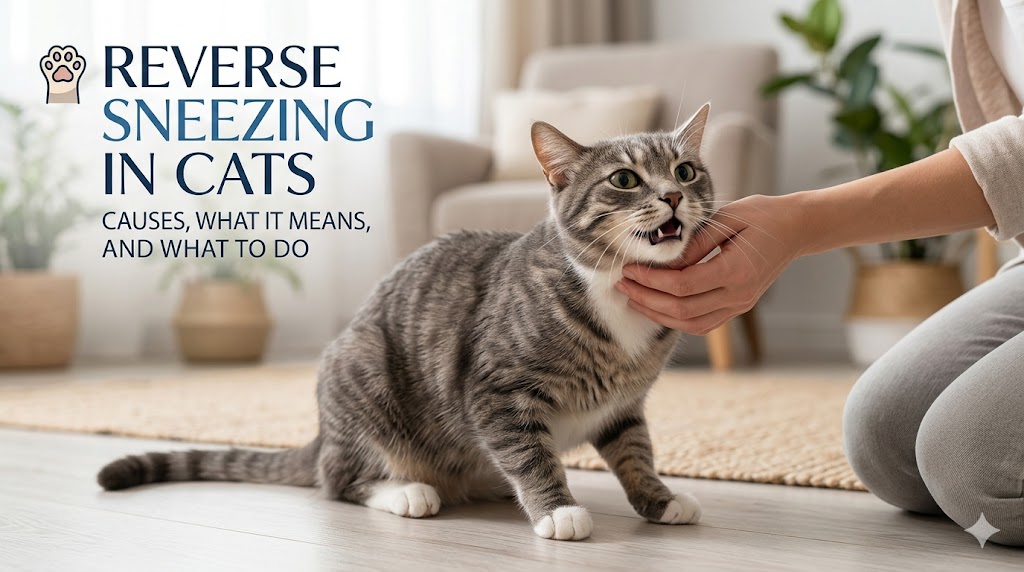
By definition, reverse sneezing happens when a cat starts pulling a large volume of air inward, through the nose, because of irritation or inflammation in the upper airways. Unlike common sneezing when a cat forces air out of the body abruptly, reverse sneezing is marked by repeated sounds of inhalation; they may even remind choking and gasping sounds. Furthermore, a cat usually freezes and makes peculiar movements with its neck during reverse sneezing attacks. They end rather soon on their own.
Reverse Sneezing Triggers in Cats
There are various possible causes which can irritate the respiratory tract and result in reverse sneezing episodes in cats. Dust, pollen, fragrances, smoke, or harsh cleaning agents can irritate the sensitive nose lining. Also, allergies and slight respiratory problems may lead to inflammation of the throat and breathing difficulties. Often the owners recognize the problem by noticing that their cat is sneezing. They only realize later that my cat is sneezing as part of more complex breathing disorders. Furthermore, any foreign objects lodged in the nasal area can trigger a bout unexpectedly.
Allergies and Irritants
Both indoor and outdoor allergies can lead to respiratory irritations for cats. Dust, mold spores, cigarette smoke, scented candles, and air fresheners may irritate sensitive nasal membranes easily. Moreover, changing seasons and increased pollen concentration in the atmosphere may aggravate breathing issues. Exposure to such allergens causes chronic inflammation of the upper respiratory tract. The owners need to look out for sneezing attacks when the animal is exposed to these irritants. Limiting the irritant sources will reduce inflammation and respiratory stress effectively.
Respiratory Infections and Conditions
Respiratory infections are yet another frequent cause of cats showing abnormal respiratory behavior. These can lead to congestion, sore throat, eye discharge, and sneezing, but may also cause loss of appetite, lethargy, and fever in sick animals. Researching causes of cat sneezing and watery eyes can reveal that infections are known to affect more than one symptom at once. In severe cases, the inflammation in airways can lead to recurring reverse sneezing attacks due to irritation. Seeking professional assistance allows to prevent further infection complications and protect respiratory health of cats.
Symptoms Related to Reverse Sneezing in Cats
Symptoms related to reverse sneezing in cats include sudden and repetitive episodes of inhalation that last from several seconds to minutes. During an attack, the animal will pull back its head with an extended neck and stand up straight or crouch down slightly. Sometimes, cat watery eyes and slight nasal discharge are observed depending on the exact nature of the condition. Some cat owners assume their pets keep sneezing even though they do not appear ill after a couple of attacks. Nevertheless, regular occurrences require close attention.
How Reverse Sneezing Is Different from Regular Sneezing
While regular and reverse sneezing sound similar to some extent, the two breathing phenomena differ greatly as they entail distinct processes. In particular, regular sneezing involves expelling irritants from the nose through a powerful expulsion of air, whereas reverse sneezing occurs because of irritation and entails a rapid intake of air into the body. What is more, reverse sneezing tends to produce stronger sounds compared to ordinary sneezing fits. Felines that experience reverse sneezing may look disoriented during episodes of this kind. Proper knowledge in this regard can help pet owners address the issue efficiently and avoid causing themselves additional stress.
Indicators of the Medical Condition Causing Reverse Sneezing in Cats
Although not all cases of reverse sneezing prove to be medically significant, one should be particularly cautious about prolonged or recurrent episodes of the phenomenon. Moreover, reverse sneezing may become an indicator of a certain underlying disease, which demands professional assistance in case symptoms worsen over time. Frequent breathing attacks, breathing difficulties, loss of appetite, as well as changes in gum color (blueness) are among such warning signs. In addition, coughing, wheezing, and increased number of episodes following physical activity deserve close attention.
Diagnostic Approaches Used to Determine Respiratory Problem in Cats
Vets apply various approaches for diagnosing the exact reason for breathing problems and other related symptoms in cats. They can perform physical examinations that can show if there is nasal inflammation, problems with breathing, or irritation of the throat. Depending on the symptoms’ severity, blood samples, nasal swab, or x-ray examinations may be recommended by veterinarians. Allergy or endoscopic examination might be used if the problem is related to hidden obstructions in the body or infection. Diagnosis is very important since symptoms usually vary from one disease to another, and therefore proper examinations should be conducted.
Methods of Treatment of Reverse Sneezing in Cats
The course of therapy for reverse sneezing in cats will depend on what causes the problem of breathing difficulties. Minor cases can be treated simply by limiting cats’ exposure to smoke, household fragrance, or dust. Medications can be prescribed for cases caused by allergic reactions or infections in the airways of a cat. Sometimes humidification can help eliminate the effects of dry indoor conditions. Knowledge about reverse sneezing in cats will help owners to control symptoms of the condition better at home.
Home Care and Prevention Tips
The establishment of cleaner home surroundings will help improve the condition of your pet’s respiratory system. The owner needs to vacuum regularly and prevent the accumulation of dust in the house. Besides, it is necessary not to use scented products to improve air quality. Proper ventilation is helpful too since it will provide better conditions for breathing. Using unscented litter will contribute to the improvement of respiratory well-being as well. Drinking plenty of water and eating a healthy diet will allow you to have a robust immune system and improve recovery after any respiratory illnesses. It is also significant to visit the vet regularly since timely examination is beneficial for your pet.
Stress and Respiratory Well-Being
It seems that the development of some behaviors may be associated with the state of the respiratory system. Indeed, stressful situations at home can lead to the appearance of new behavioral patterns. For example, stress will negatively affect immune functioning and lead to more serious health problems. Sometimes, sudden changes, noise, and new pets in the family can make your cat anxious and nervous. Cats suffering from stress usually spend much time grooming themselves and hiding in order to escape from people.
Supporting Your Cat During an Attack
As already mentioned above, an owner must stay calm while observing an attack as panicking will only add stress to the animal. Whispering soothingly to the pet can help relax it during the episode. Some owners choose to gently stroke their pet’s neck and even block its nostrils in order to induce normal breathing and swallowing. It should be mentioned that physically restraining the animal is never a good idea since this action will only exacerbate the problem or even trigger a more severe breathing attack.
Prognosis for the Cats
The prognosis of the cats suffering from occasional attacks is favorable for the most part. Mild symptoms caused by transient irritation are known to be relieved with environmental modifications or allergy elimination. Besides, with proper treatment the pets can live healthy lives and avoid any future breathing disorders. Regular monitoring of the disease symptoms can also ensure early detection of possible worsening which, in turn, will positively influence the results of the treatment process.
Conclusion
Even though reverse sneezing is shocking at first, understanding what triggers and how the condition presents itself can provide pet owners some peace of mind. Among others, environmental triggers, infections, or airway irritation often lead to this peculiar coughing that appears in cats. Moreover, being able to identify the signs early on leads to faster treatment and better health outcomes. Professional veterinary assistance is crucial if signs do not go away or become worse with time. With proper prevention methods such as providing a clean environment and reduced stress levels, owners can safeguard their cats.