Blog
When Are Cats Fully Grown? A Complete Guide For Cat Owners

All cat owners have wondered at some point in time whether their feline friend will grow more. Cats experience an accelerated growth rate within the first year but continue to develop even further. Therefore, knowing more about the process can help pet owners make sure they give their cats proper care. Other factors like breed, feeding, and overall health affect how soon the cat reaches a particular stage. Since all cats grow differently, knowing what you need to look for becomes essential. Here is everything you need to know about cat growth in detail.
What Does Fully Grown Mean?
When we refer to a cat as fully grown, we mean two things – size and maturity. In terms of size, physical attributes like height, length, and weight count. Regarding maturity, behavioral characteristics come into play. Generally speaking, the average cat is fully grown physically in around one year. Their behavioral development takes somewhat longer. Not only do these two phases not coincide, but they might actually differ significantly. Therefore, knowing the difference is very important for cat owners.
Growth Stages in a Cat
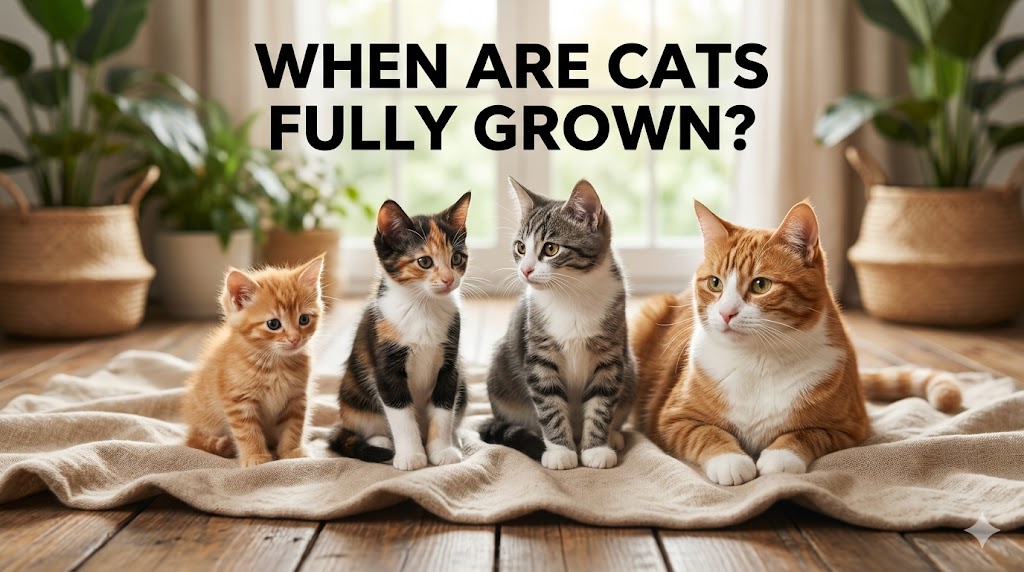
The life cycle of a cat begins from birth and extends up to adulthood. First is the kitten stage, which starts from birth and continues up to six months. This is followed by the adolescent stage, which goes on until the cat is one year old. During this time, there is a slowdown in growth. Next, there is the adult stage, where the cat reaches its full size. As each growth stage requires special attention, taking care of the cat at this time becomes important.
At What Age Are Cats Fully Developed?
Most cats attain full growth within 10 to 12 months. At this point, their bones and muscles become completely developed. However, some cats might continue growing and gaining muscle mass until they are 18 months old. Due to variations in growth periods, smaller cat breeds tend to grow faster than bigger breeds. Thus, knowing the growth rate of your cat becomes necessary to cater to it accordingly.
Growth Patterns Based on Breed
The breed of a cat has an important influence on the time it takes for it to grow up completely. In general, smaller cats tend to develop more quickly than larger ones. For instance, large cats such as Maine Coons can still grow at the age of three or four. Furthermore, hybrid cats normally grow in accordance with the typical pattern. Since every breed is distinctive, knowing the breed of your cat will help determine realistic expectations.
Differences Between Physical and Behavioral Maturity
Even if cats stop growing physically by one year old, they will continue developing behaviorally. Physical maturity refers to the point when their bodies stop growing, while behavioral maturity is related to personality development. For example, an energetic kitten might turn into a quiet cat over time. Moreover, the cat will adopt different social behavior and habits. This process requires patience since it will happen slowly.
Cat Growth Factors
A number of factors affect the growth rate of cats. The nutritional habits of kittens determine whether they will develop physically in the correct manner. Moreover, genetic factors affect body mass and height. In addition, environmental factors affect the cat’s health condition. Finally, health problems reduce the rate of growth. Therefore, veterinarians should examine a cat regularly to monitor its health status. As a result, it becomes possible to ensure healthy growth and development.
The Importance of Nutrition for Cats’ Growth
Nutrition should be considered an important aspect during the kitten’s growing period. It is vital to remember that the first year of a cat’s life is particularly important. Hence, kittens need food with sufficient protein, vitamins, and minerals. Feeding high-quality cat food will help develop its strong muscles and bones. Moreover, poor nutrition can result in inhibited growth. Therefore, proper portions will ensure the development of a healthy adult cat.
What Weight Should Your Cat Have
Having information regarding the weight and size that your kitten should reach will enable you to monitor its growth appropriately. Most fully-grown cats will have an average weight ranging between 8 and 12 pounds. Nonetheless, some large breeds might reach much more. Another thing worth noting is that male cats are bigger than females. Due to the fact that each kitten is unique, growth needs to be monitored on an individual basis. Thus, weighing your kitty regularly is important.
Why Is Exercise Important for Kittens?
Exercise is a crucial element when it comes to the growth of cats. Playing around not only builds muscles but also enhances the coordination of the cat. What is more, exercising helps prevent excess body weight and obesity. Cats are naturally playful and curious animals, and therefore it will not take much to make them exercise. Not only will it improve your cat’s health, but also provide her with some mental activity.
As Cats Enter Adulthood
The growth pace of the cats starts slowing down as the cats grow towards their adulthood period. This is because the cats normally enter into their adult life after six to nine months of growth. During this time, cats can only continue gaining weight, but their growth becomes slower as compared to earlier stages. Therefore, there can be a need for changes in diet for the cats. It is important not to overfeed the cat since overfeeding leads to unnecessary weight gain.
Indications That Your Cat Has Reached Full Size
There are various indicators that will help you notice whether your cat has entered into its adult life. One of the main indicators includes stabilized weight. Another one is that the cat will not undergo any further growth in length or height. Besides that, the behavior of the cats can show that they have grown fully. For instance, adults normally have thick fur and well-developed muscles.
Growth Difference Between Indoor and Outdoor Cats
There are some differences between the growth of indoor cats and that of outdoor cats. The reason is the difference in lifestyles. Indoor cats are likely to have their eating and exercising monitored by their owners, leading to uniform growth. On the other hand, outdoor cats might experience different results because of their activities and food access. Moreover, there may be certain risks affecting development because of the outside environment. To avoid this problem, it is necessary to monitor the process carefully no matter where your cat lives. Thus, you will provide him with proper growth.
Health Problems Leading to Growth Impairments
There are several problems affecting cat development and growth processes negatively. It includes parasites, infections, genetic abnormalities, and lack of nutrition. Some diseases might slow down or impair development, which is not good at all. Therefore, it is vital to visit a veterinarian from time to time and get appropriate vaccinations. In addition, it will help avoid various risks related to the growth of your pet.
Suggestions for Assisting Your Cat’s Growth
Assisting your cat to develop and grow needs proper measures that include providing quality food, allowing proper exercise, and creating a conducive environment. In addition, regular vet visits help keep track of the growth pattern. Since the cat requires some form of interaction from her owner, it helps in developing emotionally. Furthermore, keeping a consistent schedule keeps your cat less stressed. As such, by adhering to these suggestions, your cat is likely to develop into a healthy cat.
Myths Concerning Cat Growth
Several myths exist concerning cat growth, including the misconception that all cats stop growing at one year. Another myth involves believing that increasing feeding helps increase the growth rate and as such feeding your cat more than necessary results in obesity. As such, the myths surrounding cat growth can have adverse impacts to your cat’s health. This makes it crucial to know the facts about cat growth.
Consultation With a Veterinarian
However, you need to consult a veterinarian in case of some growth abnormalities in your pet. You should watch out for things like weight loss, stunted growth, unusual size, among other signs. Behavior changes might also occur due to underlying problems. Early detection and treatment help avoid any serious complications. Thus, you will ensure that your cat’s growth rate remains healthy with consistent visits to the vet.
Conclusion: Helping Your Cat Grow Healthy
Knowing the age at which cats mature completely will help you take care of your pet properly throughout its life span. Although most cats become physically mature after reaching the age of one, the process of maturation may continue due to certain aspects. Moreover, behavioral and psychological maturity may require some time. Since each cat is different from others, it is necessary for owners to keep track of the maturation process.