Blog
When is a Cat Fully Grown? Everything You Need to Know in 2026

Most cat owners are curious to know at what point their adorable pet reaches its final growth. Even though the initial stages of growth take place within the first year of the kitten’s life, the total duration of growth is much longer than most people think. The process of growth depends on various factors like the genetic background of the cat as well as its overall state of health and nutrition. Therefore, some cats stop growing sooner whereas others keep growing throughout several years. Knowing cat growth stages is vital in order to ensure that a pet receives adequate nutrition and care at each stage of its development. Furthermore, it helps detect potential health issues early on.
Cat Growth Stages Explained
A cat passes through several growth stages before becoming an adult animal. These stages include numerous physical and behavioral changes that transform kittens into adult cats. Initially, newborn kittens are completely dependent on their mother for warmth and nourishment. Yet, as the cat grows, it becomes increasingly independent. It starts moving around much more actively. The bone, muscle, dental, and internal organ systems develop rapidly. Thus, appropriate nutrition and veterinary care become critical at this stage.
From Birth to Two Weeks
Kittens at birth stage are very small, delicate, and fully rely on their mother. The main activities during the first two weeks include sleeping and nursing since rapid development necessitates lots of energy. Kittens’ eyes and ears stay shut during the first days, though they soon start opening. Besides that, kittens become fast growers in the initial two weeks. They are not able to walk but start crawling and investigating the surrounding area. So, kittens require constant heat, cleanliness, and feeding.
From Two to Eight Weeks
The period from two weeks to eight weeks is characterized by intensive growth and development. Kittens’ eyes fully open, hearing becomes better, and coordination develops well. Hence, they can start running, climbing, and playing together with other kittens. Another change is that kittens begin the weaning process and start eating solid food at the same age. They also become more active socially and gain proper behavior during the period. Besides that, their teeth become visible during the second to eighth weeks.
Two to Six Months
Between two to six months old, kittens start the rapid development stage when they experience great strength in their bones and muscles that result in an increase in their body size and height. Moreover, kittens at this age develop curiosity and become adventurous enough to explore everywhere. Cats begin growing their permanent teeth, which is gradually replacing their baby teeth. Also, improvement in agility and coordination becomes significant for their development at this age. High-quality foods containing proteins are required by kittens to promote development during this stage.
Six Months to One Year
After reaching six months of age, cats start resembling small-sized adults. However, they still have some developmental work to do even though they look mature enough. High energy levels and playfulness characterize kittens’ development from six months to one year. Cats begin developing defined muscles as well as achieve proportional balance between their bodies and sizes. For instance, some breeds may experience growth spurts during this time frame, depending on the species. As such, owners of kittens should continue giving them kitten-formulated foods as long as suggested by veterinarians.
When Does a Cat Become Matured?
Most cats can be categorized as mature at the ages of 12 to 18 months. The reason for such an assessment is that by this age, cats’ skeletons become almost fully developed, and their body sizes stabilize. Nevertheless, some cat breeds grow bigger and develop muscles until two years of age. Even though smaller breeds are known to mature earlier, it is essential to note that larger ones can spend extra time maturing physically. In such a way, there is no exact pattern that can describe the maturity process of all cats.
Maturity of Large Cat Breeds Takes Long Time
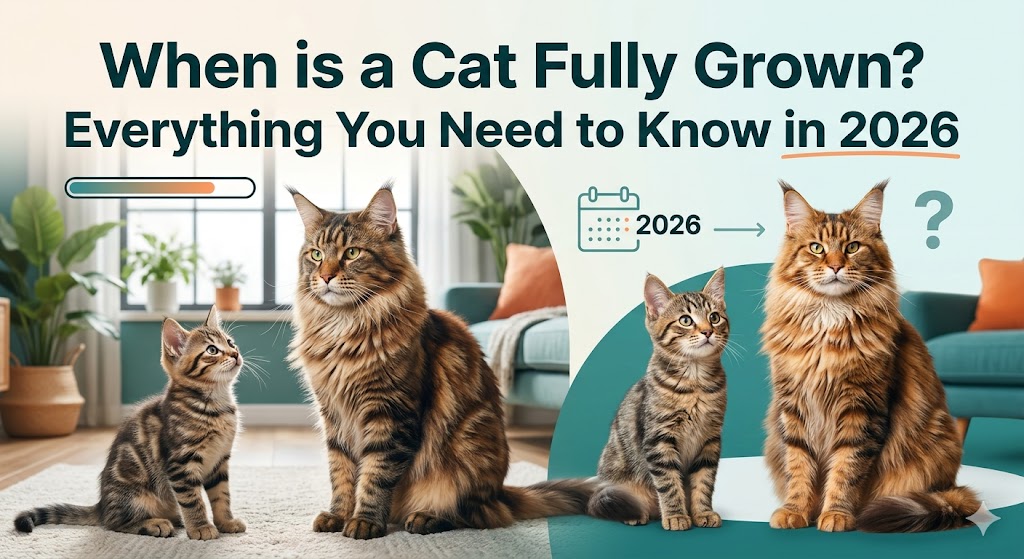
The most significant thing that should be mentioned regarding large cat breeds is that they need more time for maturing compared to other breeds. For instance, breeds such as Maine Coon may reach adulthood only after three or even four years. This happens due to the fact that these breeds are quite larger, which means their bones and muscles will develop slowly to ensure the adult body size. Moreover, larger breeds accumulate muscles even if their size stops changing.
Maturity Rate of Petite Cats
Petite cats typically grow up at a much faster rate compared to large cats. Most small cats achieve their full growth after their first birthday. In some cases, they even continue growing until before their first birthday. Due to their shorter growth periods, small cats are able to achieve physical and psychological maturity faster. Small cats are also known to become calmer when they reach their mature age. Nevertheless, it is important to give them proper nutrition and exercise in order to ensure their health and wellness.
The Effects of Nutrition on a Cat’s Development
Good nutrition is critical to the growth and development of cats. For example, kittens must eat foods rich in proteins since their bodies need extra energy for the development of tissues, muscles, and internal organs. Improper nutrition can affect the growth of kittens in a negative way. It can result in poor health and other issues. Therefore, it is very important to feed them high-quality food. Fresh water should also be readily available for their use.
The Influence of Genetics
Genetics play an important role in determining a cat’s ultimate size, physique, and development pace. There are cats that naturally possess a large body structure and musculature, while other felines stay relatively petite. In this regard, offspring from large cats tend to grow up big and mature slowly. Moreover, such features as fur density, eye pigmentation, and skull shape are genetically predetermined. Owners have no way to affect genetic factors, but they can assist in ensuring optimal development by providing adequate nutrition and care. Familiarizing yourself with the breed characteristics will help establish realistic expectations in terms of adult size, growth, and appearance.
Indicators That a Cat Is Not Growing Anymore
There are several indicators that a cat is no longer growing physically. For example, weight gain slows down, and there are no abrupt growth spurts observed in the animal. The cat will also look proportionate with a good musculature and no long legs and a small head. Lastly, there are behavioral changes in adult cats because they get less active compared to kittens. It is worth noting that vets can determine when a cat reaches its skeletal maturity during regular checkups.
Changes in Behavior During the Adult Stage
Physical maturity in cats also means changes in behavior. As kittens, cats tend to be active, energetic, and curious creatures. As they progress to adulthood, cats will show signs of being more calm and independent. However, individual personalities of cats can differ significantly from one another despite similarities in breed. While some adult cats remain energetic throughout life, others prefer peace and relaxation over activity. Moreover, mature cats develop routines and learn how to be more independent inside their homes. Thus, knowing behavioral changes during maturation allows cat owners to properly cater to their pets’ needs.
Effects of Spaying and Neutering on Physical Maturation
Many owners wonder if spaying and neutering can interfere with a cat’s physical development. Generally, these procedures will not inhibit healthy growth, especially when done at an appropriate age. On the other hand, the absence of hormones could result in a bit of increased height in cats. Besides, the metabolism and appetite of spayed and neutered cats will change due to hormonal changes. Therefore, cat owners should monitor their pets’ dietary and exercise regimes to avoid obesity in adulthood.
Exercise for Healthy Development
Regular exercise contributes to good growth since it makes muscles stronger, improves coordination, and helps to prevent obesity. The natural way for kittens is to be active and exercise by playing, climbing, and exploring the environment. For that reason, owners must give toys, scratching posts, and opportunities to climb to help kittens become more physically active. Exercise plays an important role in cognitive stimulation and allows for forming healthy relationships with people. Physical exercise is also important as it helps to maintain proper body weight when the cat grows up.
Growth Problems That Might Require Veterinary Care
Sometimes some health issues associated with the growth process might appear in cats. Such issues include delayed growth rate, rapid weight loss, loss of appetite, brittle bones, and obesity. Obese animals may be subjected to extra strain on their growing bodies and internal organs. Regular visits to veterinarians allow monitoring and timely solving problems concerning your cat’s growth process.
Adult Cat Food Transition
As the cat transitions to adulthood, a transition must be made from kitten food to adult cat food. Kitten cat food contains higher amounts of calories and nutrition for fast growth, whereas adult cats require well-balanced maintenance diets. As such, changing the diet slowly prevents any problems in digestion and enables a successful transition. Most veterinarians agree that changing the diet between 12 months and adulthood should be sufficient; however, larger breeds may require kitten food for an extended period. Furthermore, portion sizes become increasingly significant due to reduced metabolism.
Conclusion
Knowledge about the cat’s maturation process allows owners to take adequate care of their furry friends through different stages of their development. While many cats mature completely within one year of age, others may take significantly longer depending on factors such as breed and diet. Larger cats, in particular, take several years to fully mature. As such, patience and proper care play an integral part in raising cats that will grow up to be healthy, fit, and happy pets.