Blog
How To Stop Cat From Scratching Furniture?

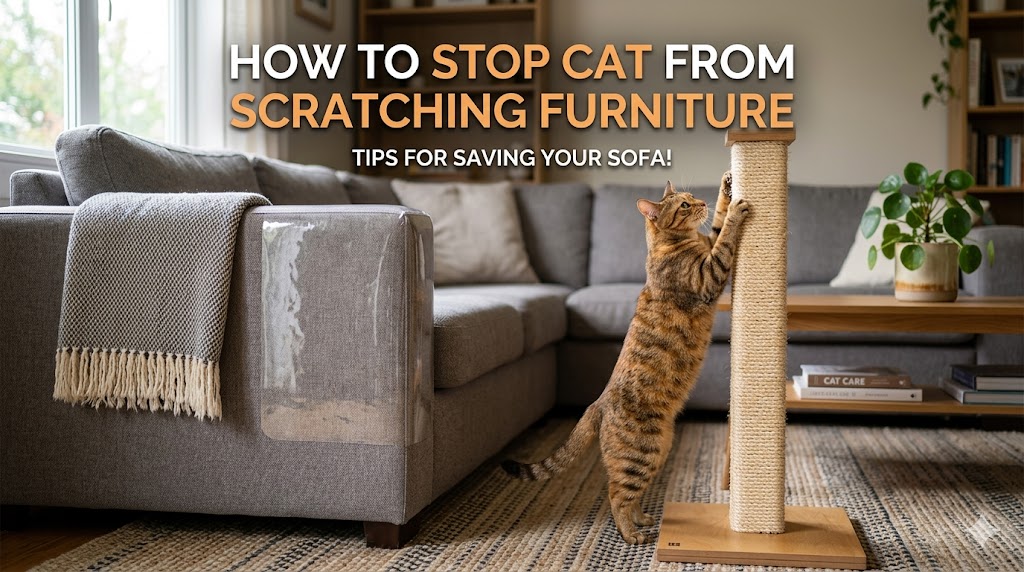
Cats scratch due to a combination of physiological needs like stretching and marking territory. Nevertheless, this is an unpleasant habit for homeowners as cats cause damage to furniture. Rather than attempting to prohibit a cat from scratching, owners should try to redirect this instinctual behavior to appropriate objects. It will be easier to deal with cats’ scratching if you know how to do it properly and realize why cats scratch. You will also be able to create a safe environment where a cat will not harm any furniture.
Why Do Cats Scratch Your Furniture?
Furniture serves as a convenient spot for cats since scratching is a natural activity for them. It includes not only marking territory but also stretching muscles and removing old layers of claws. The main reason why cats scratch furniture is that it is usually similar in texture to natural scratching posts. This is why scratching gradually turns into a habit for cats, and you should be aware of these reasons if you want to control it.
Providing Appropriate Scratching Posts
It is recommended to provide appropriate scratching posts to encourage good behavior in your cat. When placed in certain locations, your cat automatically uses scratching posts rather than furniture. Moreover, posts made up of sisal rope and rough texture prove to be more attractive for cats. Placing scratching posts in locations that cats frequently scratch also ensures proper behavior in the future. Consequently, your furniture will remain protected and your cats’ instincts will be satisfied.
Selecting The Most Effective Material
The material used for scratching posts can be considered crucial for solving the problem under discussion. Your cat prefers a rough surface; therefore, sisal rope posts would prove to be more effective compared to smooth materials. Cardboard posts would also be preferred due to roughness of its surface. Experimentation with various materials allows knowing about preferences of your cat.
Effective Positioning of the Scratchers
The positioning of scratching posts will impact how frequently cats will use them. Cats scratch when they wake up, and that is why scratching posts need to be near their sleeping areas. Also, placing scratching posts next to areas where cats already scratch furniture will improve their effectiveness. In other words, it will be easy for a cat to move its behavior to the correct spot since it does not require much effort on your side.
The Role of Reward
Positive reinforcement is one of the best ways to train a cat. If the cat uses a scratching post, then the cat owner must reward the pet. The rewards are important since they make cats associate positive actions with a reward. It is recommended not to punish cats since it causes more stress and frustration than anything else.
Immediate Redirection of Your Cat’s Behavior
Immediately direct the behavior of your cat once you catch it furniture scratching. It will learn the right behavior by being directed to the scratching post without fuss and anger. Also, consider playing with toys that will help you direct attention towards the right places. Time is crucial here since your cat begins to know what it is allowed and encouraged to scratch on. Redirection becomes vital in order to avoid building habits.
Attraction of Scratchers Using Catnip
The use of catnip will assist in attracting cats to the scratching posts. Once the scratching surfaces have been treated with catnip, the cat becomes curious about them. Moreover, it will help increase positive behavior. Therefore, your cat will become interested in scratching the post rather than furniture. Catnip does not work for every single cat, which means you need to pay special attention to its behavior.
Cutting Your Cat’s Nails
It is important to cut your cat’s nails to minimize scratching damage. When you maintain your cat’s nails to be trimmed and short, there will be no much scratching damage on furniture pieces. Additionally, by doing so, you reduce the sharpness of claws, hence minimizing scratching damages. It is advisable to take your time to train your cat to allow cutting of its claws so that it will be easy for future purposes.
Using Furniture Covers
These protectors work to make the furniture less appealing. This means applying things such as tapes, covers, or even plastic sheets to make your cat feel uncomfortable approaching such areas, and therefore it will not scratch there. This approach is very effective when used in the initial stages of training.
Scratching Patterns Recognition
It is essential to analyze scratching patterns of your cat in order to know more about their behavior. Cats tend to scratch right after waking up, after a meal, or after playing. Moreover, there are some textures and spots that cats prefer. With this knowledge, you will be able to put scratching posts where they are needed. As a consequence, you can avoid any unwanted behavior before it occurs.
Multiple Scratching Posts
One more thing that may help you is giving your cat several scratching posts. Providing multiple posts allows your cat to use various options. Furthermore, it will help when you have more than one cat because they will not compete for using one post. Consequently, every cat will find the desired scratching spot.
Employing Deterrent Sprays
The employment of deterrent sprays plays a significant role in discouraging furniture scratching among domesticated cats. Once applied on the surface of the furniture, the cat tends to avoid the area due to its smell. Moreover, using this technique along with scratching posts is more effective. Consequently, it encourages natural behavior change towards acceptable surfaces. You should select products that do not cause adverse effects.
Disinclining the Furniture
Furniture should become less attractive for scratching activities. Once covered with substances that the pet finds distasteful, the activity level goes down. Additionally, employing temporary covers is beneficial when teaching appropriate behavior. Consequently, it helps break old habits associated with the activity. It is crucial to combine this technique with rewarding your cat.
Inviting Your Cat to Play
Playing can help release energy that causes a cat to scratch. By inviting your cat to participate in playing, you will not only reduce its stress level but also ensure that your pet is engaged in activity. Moreover, interactive toys entertain your cat, which minimizes boredom-induced scratching.
Establishing a Stable Environment
Creating a stable environment can help decrease anxiety-induced scratching in cats. By having regular routines for your cat, you will not only create an atmosphere of security and comfort for your cat but also minimize its stress level. Stability in the surrounding environment can help reduce destructive tendencies.
Punishment Avoidance
Avoid punishment while trying to correct your furniture from scratching. Punishing will only increase the level of fear in your cat, and its behavior will become even worse. You should be using redirections and rewarding to correct this problem. Moreover, being calm will allow your cat to learn quickly. Ultimately, your cat will develop a certain level of trust in you, making it easier for you to train your pet.
Development of Long-Term Habits
Instead of thinking about the fast correction of your cat’s inappropriate behavior, you should concentrate on creating lasting habits. It is important to constantly reward positive actions and use redirection for those actions that should not be performed. Repeated practice will improve learning abilities in your cat.
Conclusion
Preventing your furniture from being scratched involves knowledge, patience, and appropriate training methods. As you introduce your cat to the scratching post, reward good behavior, and adjust the environment, your cat will instinctively modify its behavior. Consistency is equally crucial to ensuring that your efforts are sustainable. By adopting the correct training method, not only do you safeguard your furniture, but you allow your cat to scratch naturally.