Blog
Cat Limping Front Paw: Causes, What it Means, and What to do

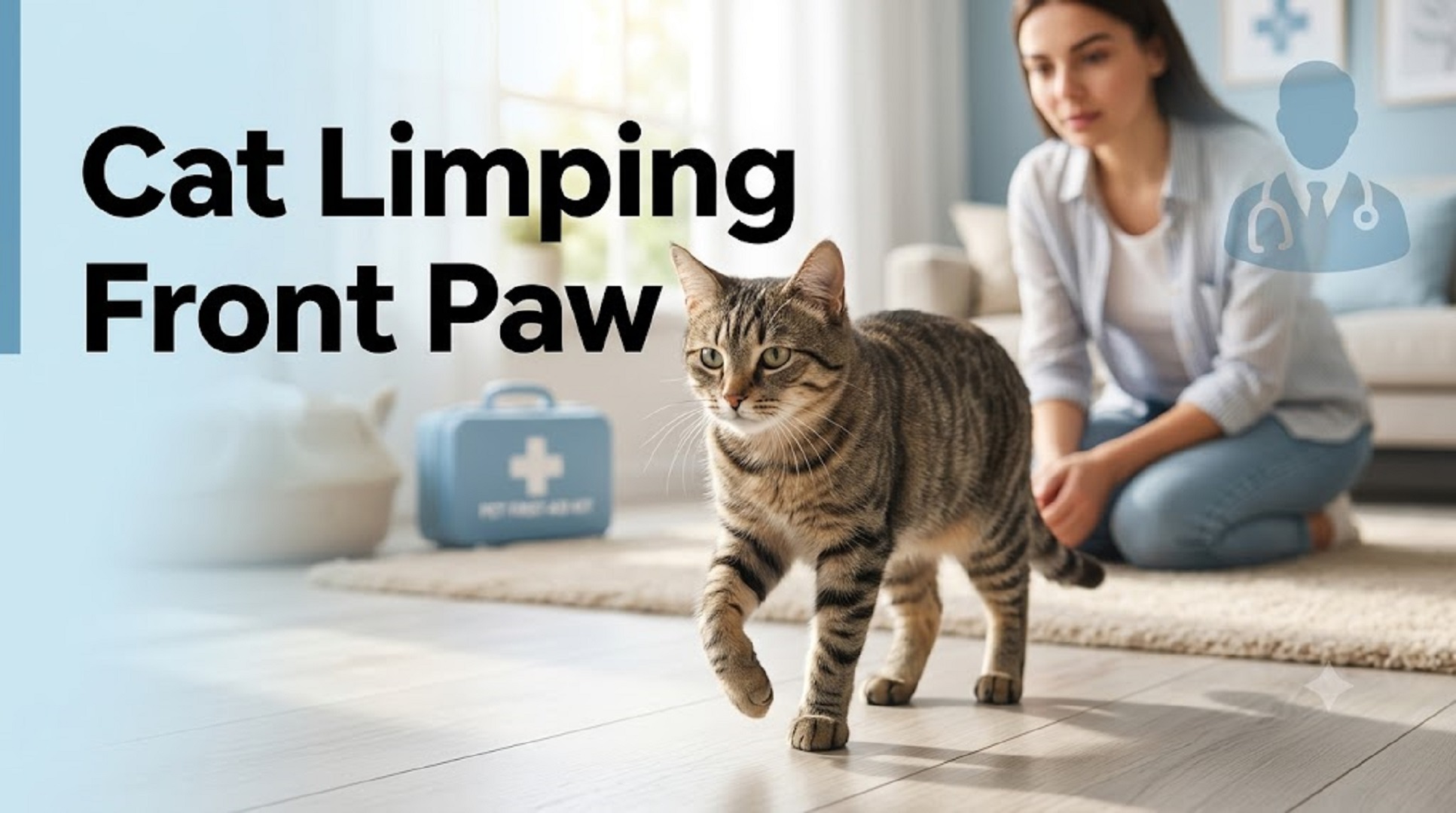
Noticing that your cat suddenly cannot put any pressure on its leg can be quite frightening. Most cat owners get concerned about the limping front paw in cats because limping usually means that there is something wrong with the animal’s body. In spite of the fact that not all causes can be treated easily and immediat
What Is a Limp?
Limping is a change in your cat’s walk due to discomfort, pain, and weakness in some way. The cat might put less weight on its leg or not use that leg at all. Also, a limp can be either mild and occasional or more serious and persistent. Since there are so many conditions associated with limping, it is necessary to find out the root cause of the problem. So, an owner should not take for granted that limping will go away on its own.
Cat Limping Front Paw: What Does It Mean?
In case of limping front paw, the reason can vary from muscles to bones, joints, ligaments, nerves, or the paw itself. Sometimes the problem is connected with some injury, sometimes the reason is infectious disease or arthritis, sometimes – a fracture. Also, the symptoms of the condition may differ based on the specific disease.ely, it is still important to know the reasons for limping, signs to pay attention to, and steps to take to prevent your pet from getting worse.
How Do Cats Walk?
Cats are naturally agile animals with flexible joints and well-developed muscles. Their front paws perform many functions related to supporting the animal’s body weight, landing after jumps, and helping to keep the balance while walking or running. Also, most of the time cats try to hide their pain due to instinctive behaviors. Thus, even slight limping can mean that the animal feels much worse than you think.
Most Common Reasons for Limps in the Front Legs
There are several possible reasons that could lead to a limp in a cat’s front leg. Injuries are one of the most common ones, since active animals that like to climb, jump, or explore things are more prone to suffering from them. Infections, foreign objects, and problems related to joints might also be the cause of discomfort. Each of these conditions needs a different approach to treatment, which means that paying attention to accompanying symptoms will help diagnose the condition.
Injuries and Strains
A cat may sometimes hurt its muscles or ligaments while being too active. This may happen as a consequence of awkward jumps, playing, or landing wrong. Moreover, these strains usually do not lead to serious inflammation or visible wounds, which results in just causing the animal to limp. However, this kind of injury tends to go away on its own with proper rest.
Paw Cuts, Scrapes, and Injuries
The paw itself may be a source of limping. Injuries caused by sharp objects and rough surfaces may produce wounds that will cause limping from pain. Also, paw pad damage will cause difficulties in weight-bearing. Since cats hide their wounds in fur, it is recommended that owners pay attention to them. Thus, finding out about any injury at an early stage provides an opportunity to clean and treat it before any problems like infection occur.
Objects That Have Become Trapped Under a Cat’s Paw
Various sharp objects like thorns, splinters, pieces of glass, and other debris become trapped under a cat’s paw. Such objects may cause pain and limping. Also, swelling and over-licking usually appear when such an injury occurs. Since these objects may cause infections, their removal is highly recommended.
Cat Limping Due to Jump Injury on Front Paws
It is common for pet parents to notice their cats limping on front paws after jumps off pieces of furniture, shelves, or outdoor structures. In some situations, there may simply be an injury caused by the impact. Nevertheless, a poor landing might cause sprains, bone fractures, or even joint injuries. Besides, symptoms may become worse gradually over the course of several hours. Thus, paying attention to movement can help assess the necessity for veterinary assistance.
Sprain and Ligament Injuries
Ligaments connect two bones and keep joints together. If ligaments get stretched or torn, a cat may experience limping and pain. Moreover, a twist or awkward landing might cause sprains in cats. There will be swelling near the joint, and mobility will decrease. Since ligament injuries can differ greatly in their severity, veterinary examination will help assess whether rest alone will be enough.
Fractures and Broken Bones
Broken bones represent one of the more serious causes of limping. Falls, vehicle accidents, and significant trauma commonly contribute to fractures. Additionally, affected cats may refuse to bear weight entirely on the injured limb. Visible swelling, abnormal limb positioning, and severe pain often accompany fractures. Consequently, immediate veterinary attention is essential whenever a broken bone is suspected. Delayed treatment may worsen injuries and complicate recovery.
Joint Problems and Arthritis
Although arthritis is more common in older cats, it can affect cats of various ages. Joint inflammation creates discomfort, stiffness, and reduced mobility. Additionally, symptoms may worsen after periods of rest or during cold weather. Because arthritis develops gradually, owners sometimes mistake early signs for normal aging. Therefore, recognizing subtle changes in movement helps identify joint problems before they significantly impact quality of life.
Infections Affecting the Paw
Bacterial infections result from trauma, lacerations, or injuries sustained from foreign bodies. In cases of infected paws, there will be swelling, warmth, and pain in the paw. Discharge or bad smell is another symptom that occurs in advanced stages of the infection. Since infections spread if left untreated, it is advisable to seek veterinary assistance when infection is suspected. This way, the chances of further complications are minimized.
Nail and Claw Injuries
Torn claws are one of the common reasons why cats limp. Nails can tear, crack, or get stuck in carpets and furniture. Moreover, overgrowth of claws leads to curling into adjacent tissues and resulting in pain and inflammation. As some nail injuries occur out of sight, it is important to conduct careful examinations. Regular claw care prevents a number of painful diseases.
Abscesses and Bite Wounds
Outdoor cats sometimes get abscesses from being involved in fighting with other animals. The bite wound might seem superficial but infections can be present below the skin. Also, swelling and limping typically appear after some days of the injury. In light of the fact that abscesses normally need draining and antibiotic therapy, the cat usually needs to be taken to a veterinarian. This is why any form of limping in an outdoor cat needs to be looked at with care.
Neurological Causes of Limping
Limping does not always occur because of injury or joint problems. There are also cases where neurological problems cause a problem in the limb. Also, limping may occur along with weakness, coordination problems, or odd positions in the paws. Due to the specialized nature of neurological diseases, it becomes important for the vet to see the cat.
Cat Limping Front Paw and Pain Hiding Elsewhere in the Body
Sometimes when a cat limps on front paw, it may have pain elsewhere in the body. The cat may change its gait due to pain experienced in areas such as shoulder, neck, chest, and back. Further, pain referred to another area may complicate identification of the affected area, hence the need for veterinary examination. Therefore, thorough vet examinations are still important even if there is nothing wrong with the paw.
When Limping Is an Emergency Situation
Some signs show that the cat needs immediate veterinary help. These include excessive swelling, deformed paw, bleeding, cat unable to stand or experiencing pain and limping after injury. Prompt action can save a lot when treating the condition since the conditions may get worse.
How Veterinarians Find Out About Limping
Several techniques exist which help veterinarians discover the cause of limping. Physical examination gives them an ability to assess muscles, joints, and bones. Moreover, diagnostic imaging like X-ray helps detect bone fractures and joint problems. Some times more advanced techniques have to be used. Professional diagnosis is vital to prescribe the proper treatment, that’s why it is one of the key procedures in case of limping.
Possible Ways to Treat Front Paw Limping
Treatment depends on the reasons of limping. Mild limping can resolve itself after taking some rest and not exercising. On the other hand, infection may be treated with antibiotics, and sometimes fractures are treated with the help of surgery and immobilization. Pain relief is another issue that needs attention.
Helping a Limping Cat to Recover at Home
Owners can assist cats with recovering in their homes by providing them with a peaceful atmosphere and restricted physical activities. In addition, soft beddings and easy access to food, water, and litter boxes are beneficial. Do not force a cat to move around or give him any medication without consulting your veterinarian. As inappropriate treatment can make some health problems worse, consulting a vet is crucial. Thus, additional help should be used as an addition to professional advice from veterinarians.
The Causes of My Cat Is Limping Problems
When owners start to see signs of mobility problems in their pets and ask, my cat is limping, what should I do, the first thing they need to do is look at the symptoms and assess how serious they are. In addition, one needs to consider whether the pet got any injury or changed its routine recently.
Other Related Medical Problems
Sometimes there can be additional conditions that accompany limping. It is because many injuries and inflammatory problems affect various systems of the body. Moreover, those people who search for information about movement problems can find out something else such as ear hematoma in cats. This type of condition also involves various kinds of swelling and inflammation in different parts of the body.
How to Prevent Front Paws Injuries
Even though it is impossible to prevent all injuries from happening, but there are some ways that will minimize their occurrence. Creating a hazard-free environment at home, cutting claws frequently, and controlling outdoor activities will keep a cat safe. Besides, keeping an optimal body weight makes movement easier for a cat and minimizes the risk of getting any injury.
The Long Term Prognosis of a Limping Cat
Generally, the prognosis is usually good in cats that receive the right treatment of any underlying cause of the problem. The minor injuries may heal fast, but sometimes, complicated problems need more time. In addition, continuous monitoring will help manage the condition of cats suffering from chronic joint diseases. Early diagnosis and the right treatment become the key elements of successful recovery from any kind of this problem.
Conclusion
There are numerous possible causes of limping cats front paw including minor and complicated conditions. Some of the situations may be resolved at home with proper rest, but in other cases, it is necessary to visit a veterinarian as soon as possible. This means that the cat owners should pay enough attention to the limping of their pets and observe any symptoms.