Blog
Cat Collar Size Chart Kitten To Adult

It’s important to get the right size collar because an ill-fitting one can be uncomfortable or even dangerous. If a collar is too small, it could rub against your cat’s skin or limit his or her movements. However, if it’s too loose, the collar could fall off or get caught. So, a cat collar size chart ensures you get the right fit. Also, a properly fitting collar leaves room for growth, particularly for kittens. Cats wear collars every day, so getting the right size will provide better comfort, safety and durability throughout their lifespan.
Understanding Cat Collar Measurements
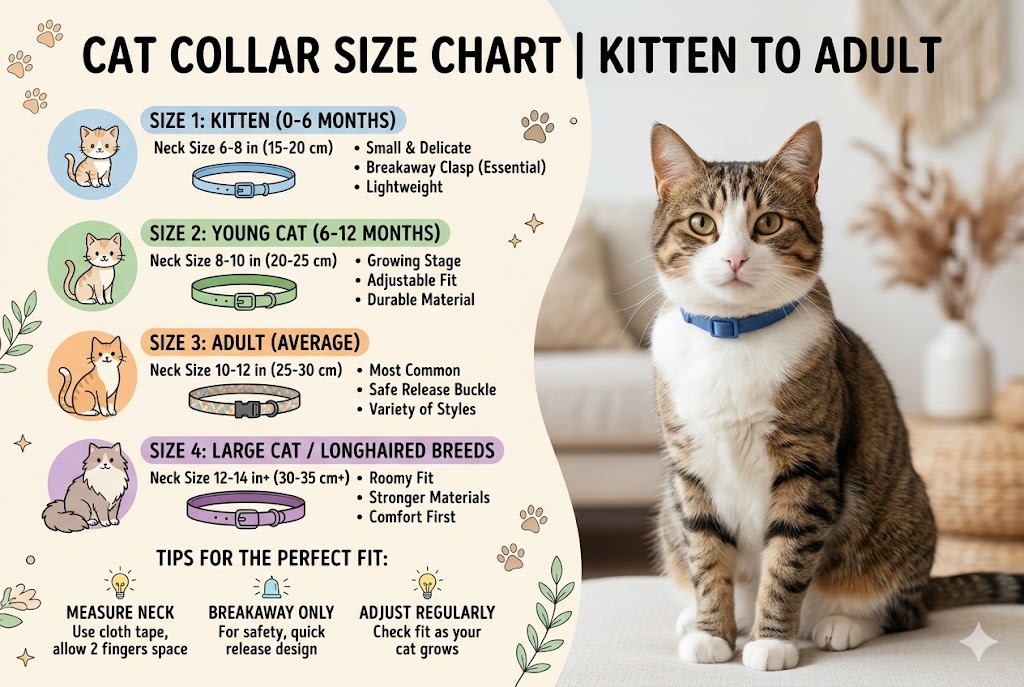
To ensure a proper fit, measure your cat’s neck. You can use a flexible tape measure and measure around the neck at the collar placement. Then leave room for two fingers. This is a typical method to ensure collars don’t feel tight. And taking measurements before you shop allows you to comparison shop. It’s good to check size charts because sizes vary. Having the right measurements is a good foundation, whether you’re looking for a cat collar for a kitten or an adult cat.
Basic Cat Collar Size Chart
A typical cat collar size chart ranges from kittens to adults. Very young kittens might require sizes 6 to 8 inches. More mature kittens may prefer 7-9 inches. Adult cats can wear collars ranging from 8-12 inches, depending on size and breed. Some larger cats may require larger sizes. But each cat is unique, so use sizing charts as a starting point. Also, adjustable collars are available, which can be helpful if your cat doesn’t fit the standard sizes.
Kitten Collar Sizes by Age
Collar sizes may change in a few months as kittens grow. Collars may not be advisable for very young kittens until they are big enough for safe buckles. When they are ready, young kittens typically begin with lightweight adjustable collars. You may need to adjust frequently. So, frequent inspections are necessary. What’s more, kittens may grow quickly and find a collar that once fit them snug becomes too tight. Given their rapid growth, cat age charts for sizing are useful, but measuring is safer. Regular collar changes promote comfort and safety throughout growth.
Collar Sizes for Adolescent Cats
During adolescence, kittens’ necks may grow larger while their body shape continues to develop. At this point, adjustable collars are still helpful as they can be adjusted. Additionally, teens tend to be more active, so collar fit is even more important. An ill-fitting collar may distract or irritate your cat when moving about. So, measure every month or so. Young cats may still be growing, so avoid the assumption that the collar will be suitable for long. An adjustable collar and periodic measuring ensure you keep a safe fit during this growing period.
Adult Cat Collar Sizes Explained
The size of collars for adult cats depends on their weight, breed and shape. A typical adult cat collar size ranges from 8-10 inches, but large cats require 10-12 inches or larger. For instance, massive cats may need wide adjustable collars. Also, coat thickness may impact the fit, particularly in long-haired breeds. So, measure from under the fur. Adult cats can fluctuate in weight so it’s worth re-measuring occasionally. Accurate sizing not only aids comfort, but also keeps ID collars in place.
Collar Sizing For Different Cat Breeds
Collar size can vary by breed. Lighter and narrower collars might be needed for smaller breeds, but stronger and wider collars are essential for larger breeds. For instance, a tiny cat may not require the same adjustment range as a large breed. Further, size is not all about weight. Other cats have thick necks on average bodies. So, breed assumptions should complement, not substitute measurements. Because physical differences affect fit, it’s better to consider both breed and neck size. It allows you to prioritise comfort, as well as function.
Why Adjustable Collars are Great
Adjustable collars are flexible, making them a favourite among kittens and grown cats alike. Cats might grow or gain weight, and adjustable collars adapt to those changes. What’s more, they allow for adjustments to sizing, avoiding frequent replacements. Some have easy-to-adjust sliding features. But keep adjustments in check to ensure a proper fit. And ensure hardware is secure. When fitted correctly, adjustable collars make sizing easier, help with comfort and provide cost savings, particularly for growing kittens or fluctuating weight conditions.
Breakaway Collars and Safe Fit
As important as size is safety, hence the popularity of breakaway collars. They’re designed to break apart when snagged on furniture, trees or other items. But fit matters with breakaway collars, too. An ill-fitting collar can be too loose (release too easily) or too tight (discomfort). So, use safety features and proper sizing. Also, perform release mechanism tests. Cats climb and roam, so a breakaway collar that fits protects both during these normal activities.
How to Check the Two Finger Rule
The two finger rule is a good test. With the collar buckled, insert two fingers between the collar and your cat’s neck. If you can, the collar is likely to be safe. But avoid a very loose fit. Also, do this frequently as fit may alter. To make sure that the thickness of the coat is not skewing the fit, check the neck under the fur as well. This trick is an easy way to check collar comfort and fit in day-to-day life.
How to Tell If a Collar Is Too Tight
Collars can be too tight and present with obvious or subtle signs. For instance, you might see areas of hair loss, irritation, or your cat may flinch when you touch the collar. Your cat may also frequently scratch the area. So, check the neck often. Also, see if you can still apply the two finger rule. Kittens grow quickly and tightness may not be so apparent. Early detection helps prevent discomfort. If you notice marks or tightness, adjust or replace the collar to ensure safety.
How to Tell If a Collar Is Too Loose
Loose collars can cause various issues. The cat may be able to easily remove the collar, which defeats the purpose of using it. A loose collar may also more easily get caught or become mispositioned. A collar can even become caught on a jaw or paw, posing a safety issue. So, the fit needs to be snug but not tight. Because cats are in constant motion, check the fit during everyday movements. If it spins too much or slips off, it’s too big. It should be secure and allow freedom of movement.
How to Pick Collar Width
Size is not only about the length. For small kittens, light and narrow collars with minimal bulk may be best. While the bigger adult cat may need a slightly wider one. And wider collars may accommodate ID tags more easily. But wide collars may not be comfortable for smaller cats. So consider size, as well as neck circumference. Comfort is important when considering collar wearability, so choose width carefully. The right width collar allows your cat to move freely and is less likely to irritate.
How to Measure Long-Haired Cats
Measuring long-haired cats can be difficult as their fur may bulk out. So, push measuring tape under the fur, rather than just over the fur. This provides a better neck measurement. Also, after attaching the collar, ensure it doesn’t excessively press on the fur. To rule out tightness, check the skin when grooming thick-furred cats. Also, thick coats can alter the visual appearance of collars, so prioritise measurements. Proper measurements ensure comfort for cats with long hair, avoiding hidden tightness.
When to Replace Your Cat’s Collar
Collars should be replaced periodically. Collars may become too small as cats grow or become worn with wear and tear. Also, worn buckles, frayed collars and poor breakaway systems compromise safety. So, review collars regularly for wear. Owners can also swap collars for new tags or when the fabric gets older. Collars can also become less comfortable due to changes in size, so replacement may improve comfort as well. Replacing a collar may sound minor, but it aids safety and identification. It’s important to update the collar to keep it effective.
Collars Fit for Indoor Cats
Many pet parents don’t think indoor cats need a collar, but many do wear them as ID. An ID collar will help if an indoor cat escapes. So, fit is still important. Also, indoor cats should be considered for comfort. Many will wear collars all the time, so ill-fitting collars can irritate them. Break-away collars work well. Measure carefully and check regularly, and indoor cats can wear collars safely while having identification back-up in case of emergencies.
Final Thoughts on Cat Collar Size Chart Kitten to Adult
A good cat collar size chart kitten to adult ensures that your collars promote comfort, safety and functionality. But it’s best to use it in conjunction with neck measurements and regular fit assessments. Kittens grow and may not be the same size as adult cats. Also, using adjustable breakaway collars is often beneficial. Collar size, the two finger rule and more all play a part. With careful consideration, your cat can wear a collar comfortably until his or her last days.