Blog
Can Cats Get Lice From Humans? A Vet-Backed Guide For 2026

Many cat owners worry if they find lice on themselves or hear of an infestation at school, work, or home. Naturally, they wonder if their feline friend could catch lice from them. Fortunately, lice typically stay with their preferred host. Learning about lice transmission, differences between feline and human lice, and signs to look out for will keep your kitty safe. Here’s a simple guide with essential info for pet owners based on 2026 veterinary knowledge and practical prevention tips.
The Lowdown on Lice
Lice are super small, wingless bugs that live on an animal’s skin and hair. Depending on the kind, they feed on flakes of dead skin, fluids, or blood. These critters spend all stages of life on their host and barely make it when off of one. Since lice stick close to their chosen host, they’ve evolved into very specific types. That’s why certain lice tend to stick with humans or prefer cats and dogs.
Can Cats Get Lice From Humans? The Scientific Answer
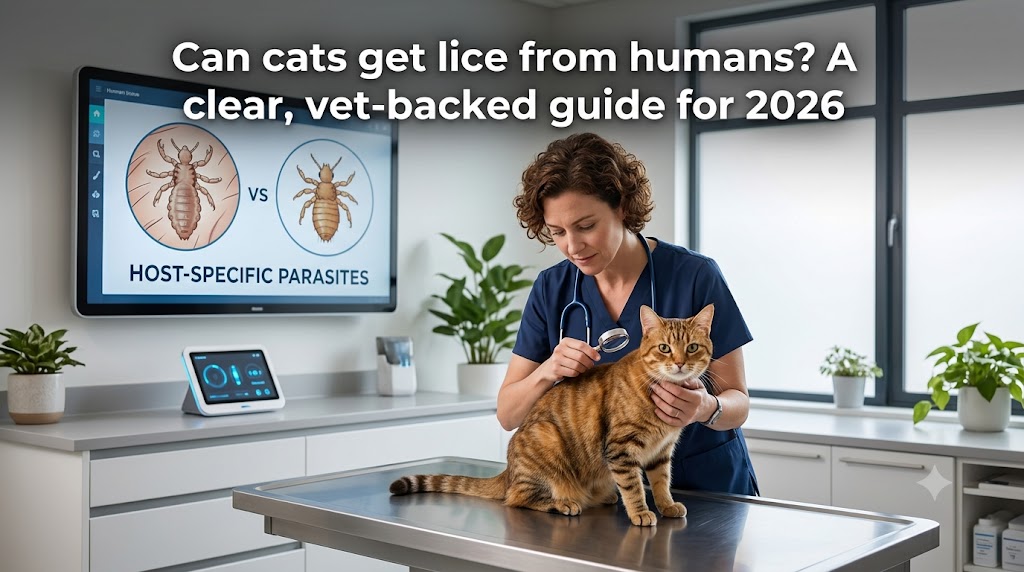
When folks wonder if cats can get lice from humans, the typical vet response is reassuring. You see, human lice are specialized for living on us and can’t really make themselves at home on cats. Our furry friends have different hair and skin, plus they’re warmer, which throws off lice used to humans. If these bugs end up on a cat, they probably won’t stick around long-term because they likely won’t live or reproduce successfully.
Lice Have Their Preferred Hangouts
These critters evolve to fit their spots perfectly over millennia. Their mouths, life cycles, and tricks to survive all match up with their favorite hosts. Human lice want human blood and skin conditions. Cat lice, on the other hand, are made for our pets. Even with lots of inter-species cuddling, the lice usually won’t switch teams for long. That’s why it’s rare for vets to see cases where human lice actually make themselves comfy on cats or the other way around.
Types of Lice Found in Cats
Cats can get lice. The kind of lice they get is different from the kind that people get. The common kind of lice that cats get is called Felicola subrostratus. This kind of lice eats the dirt and oil on the cats skin. It does not drink blood like some kinds of lice do. When these lice move around on the cats skin they can cause irritation. Cats that are indoors and well taken care of do not get lice.. Cats that are old, stray or sick might get lice. It is an idea for cat owners to know about lice so they can catch any problems early.
How Common Are Lice in Domestic Cats?
Lice are not as common in cats as fleas, mites and ticks are. This is because people take care of their cats now and cats are mostly indoors.. Lice can still be a problem in some places like in shelters or where a lot of cats live together. Cats that are already sick might be more likely to get lice. It is important to find lice because if they are not treated they can get worse over time.
Signs Your Cat May Have Lice
If you notice that your cat is scratching a lot or that its fur is falling out it might have lice. Cats with lice often scratch much and their fur can get messy. In cases you might see tiny white eggs on your cats fur. These eggs are called nits. Because these signs can also mean skin problems you should take your cat to the vet to find out what is really going on.
Lice Versus Fleas: Knowing the Difference
A lot of people get lice and fleas mixed up because both can make cats scratch.. Fleas are much more common and they can jump really far. Lice cannot. Fly. Fleas move fast through the cats fur. Lice move slowly. If your cat is scratching a lot you should learn how to tell if it has fleas. Knowing the difference can help you figure out what is wrong with your cat.
Can Cats Get Lice From Humans Through Close Contact?
Some people wonder if they can give lice to their cats when they cuddle or sleep together.. This is not usually a problem. Even if a human louse gets on a cats fur it will not usually stay there. So the answer is no cats usually do not get lice from humans. Just keeping yourself and your cat clean is usually enough to prevent this.
Can Humans Catch Lice From Cats?
Some cat owners worry that they might get lice from their cats.. Lice that live on cats are not good at living on humans. Even if you touch lice when you are grooming your cat they will not usually stay on you. This means that cat owners do not usually have to worry about getting lice from their cats.
Conditions That Increase Lice Risk, in Cats
There are some things that can make it more likely for cats to get lice. If a cat does not eat well or if it lives in a place it might get lice. Cats that are already sick or that are stressed might also get lice. Haired cats can get lice more easily because their fur is thicker. Sometimes cats that are adopted from shelters have lice. Their owners do not know it. Taking your cat to the vet regularly can help you find any problems early and prevent lice from becoming a problem.
How Veterinarians Diagnose Cat Lice
Veterinarians figure out if cats have lice by doing thorough physical exams and checking under a microscope. At appointments, they look for lice or eggs on the coat, skin, and hair shafts. They often use magnification since lice might be mistaken for other stuff in the fur. This is key because symptoms can be from fleas, mites, allergies, fungi, or other skin issues. Getting a pro’s opinion means the right treatment for the actual problem.
The Life Cycle of Feline Lice
Understanding the life cycle of feline lice helps explain why consistent treatment is necessary. Adult lice lay eggs right on the cat’s hair shafts, near the skin. These eggs then hatch into immature lice called nymphs, which eventually grow up to be reproductive adults. This whole cycle happens on the cat itself, not in its surroundings. Sometimes, the eggs can survive the initial treatment, leading vets to suggest follow-up treatments to kill any new lice that emerge. Proper timing really boosts the effectiveness of the treatment and keeps reinfestation at bay.
Treatment Options for Cat Lice
When it comes to treating lice, modern veterinary medicine has you covered with several effective options. Depending on how bad the infestation is and the general health of the cat, the vet might prescribe a topical med, shampoo, spray, or a spot-on parasite control product. Sometimes, trimming matted fur helps the treatment work better by giving it more access to the affected skin. It’s super important for owners to strictly follow the vet’s instructions since products made for dogs or humans could be dangerous for cats.
Why DIY Treatments Can Be Risky
DIY remedies often claim to zap parasites in a snap, but here’s the thing—they aren’t always safe for kitty cats. Oils, home-made sprays, and stuff made for humans can actually make your cat super sick. Cats process chemicals in a totally different way from us and dogs, which makes them extra sensitive to harmful stuff.Before you try any home remedy, please get your vet’s green light first. It only takes one quick phone call to avoid some serious health problems. The pros know what really works and is safe for your pet.
Preventing Future Lice Infestations
Stopping future lice problems is way easier than dealing with them once they hit. Running a fine-toothed comb through your cat’s fur during regular brushing is a smart move; you catch issues early this way. Also, feeding your cat the right food keeps their immune system strong. Don’t forget those routine visits to the vet—they’re crucial for catching anything before it turns into a bigger issue.To lock down the safety net, keep your cat’s bed fresh and clean, and try to keep them away from other animals who might be infested. Using preventive products the vet says are good will give your cat an extra shield against lice and other pests.
Multi-Pet Households and Lice Control
When one cat gets lice, it’s wise to check your other pets too. Feline lice typically pass through direct contact, so if you’ve got multiple cats, they probably need checking and treating as well. Separating the infected ones could help while the treatment is going on. Also, cleaning stuff like grooming tools, beds, and napping spots will make your effort more effective. Taking care of the whole house this way ups your chances of getting rid of the lice for good and staying that way.
Indoor Cats Versus Outdoor Cats
Where a cat hangs out makes a big difference in their lice risk. Indoor cats usually have less to worry about because they don’t meet as many animals. Cats that go outside a lot come across strays, feral groups, and wild creatures that might carry lice. Still, even indoor-only cats aren’t safe from it. You gotta watch out when bringing new cats into the house or using possibly contaminated grooming gear. Regular checks are key no matter what—indoors or out.
When to Visit a Veterinarian
Ongoing scratching could signal bigger issues, so if your cat just won’t stop scratching—along with signs like hair loss, parasites, or changes in behavior—it’s wise to get a vet checkup. They can catch problems early, which prevents even more serious stuff, like infections from all the scratching. Plus, many skin issues look alike, so pros can figure out the real cause quicker. Getting that help fast means kitty feels better sooner.
Understanding the Difference Between Cat Lice and Other Parasites
Figuring out info on fleas, mites, ticks, and lice can be tough. And each one needs its own special fix. So, learning about lice, specifically for cats, is good for owners who wonder how cats catch lice from other creatures or places. Now, while lice aren’t as common as fleas, knowing what makes lice tick lets you react correctly. Being smart about it helps keep your pet from being itchy and miserable longer than necessary.
Common Myths About Cat Lice
There’s plenty of mistaken ideas floating around online too. Some folks think lice hop from animal to animal like fleas do, while others say lice just go anywhere between humans and pets. In truth, lice don’t have that kind of jumping skill. Usually, they stick to their specific host type. Another myth says only dirty animals get lice. Though looking after your pet well cuts down the chances, sometimes parasites still appear. Sorting the real facts from the myths helps owners base their care choices on real science not some random web claim.
Conclusion
The good news for pet owners is that cats basically can’t get lice from us. Human lice and cat lice are super picky about which hosts they live on, so they usually don’t switch. While lice could accidentally land on your cat, successfully setting up shop there is really rare.That said, keeping an eye on your kitty’s coat, staying on top of their check-ups, and tackling any irritation ASAP is crucial. With this kind of watchful care, your cat will stay comfy and parasite-free.