Blog
When is a Cat Full Grown? A Complete Guide for Cat Owners

A very common question asked by new cat owners is “when is a cat full grown?” Despite the fast growth rate observed in the initial stages of their life within the first year, owners still struggle with determining the time when their cats become fully grown adults. By learning the growth rate of these animals, owners will be able to determine how to take proper care of them regarding diet, healthcare, and other aspects. There are various factors that determine when growth is achieved.
Cat Development Stages
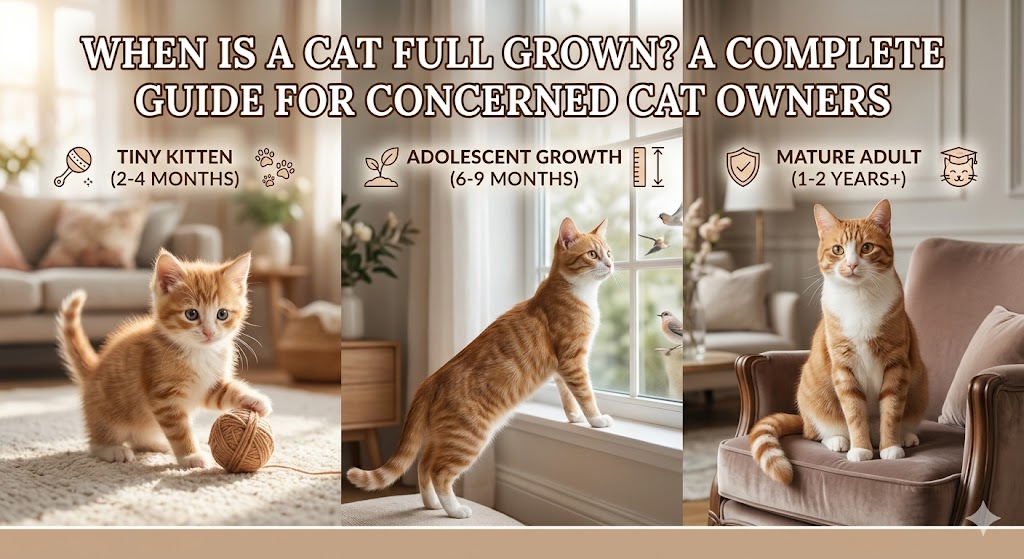
From birth till adulthood, there are some important growth stages that a cat goes through. In the early stages, kittens get everything from their mothers as far as nutrition is concerned, and they need to be protected by them. They also become aware of things around them and start gaining coordination. Moreover, bones, muscles, organs, and immunity of kittens continue to develop during these initial stages. Growth takes place quickly in the first six months but continues thereafter.
Development in the First Three Months of Life
In the early months of life, there is an accelerated rate of feline growth. The body weight of the kitten usually doubles or even triples within weeks. This is accompanied by increased muscle strength, improved senses, and mobility. During this stage, nutrition becomes very crucial since the energy requirements of the body are quite high. Veterinary care and immunization are other equally important factors during this stage.
Growth From Three to Six Months Old
From three to six months old, kittens tend to be very active and inquisitive about their surroundings. Their bodies will still be growing very fast, while the development from baby teeth to adult teeth occurs gradually at this point. Moreover, coordination skills improve considerably, so that a kitten will be able to jump and climb things more confidently. This is one of the phases where pet owners can observe significant body changes within their pets. It is essential to maintain proper nutrition during this time.
When Is a Cat Full Grown?
Many cat owners find themselves asking what age is considered to be a fully grown cat. In most cases, a cat reaches physical development at the age of one year. Some breeds will develop slower, while others will take longer in terms of gaining weight and developing muscular mass. Although most breeds grow until twelve or eighteen months old, there are breeds that continue to gain additional weight even past this stage of development.
Growth from Six to Twelve Months
The latter part of a kitten’s first year sees further growth and physical maturation. Despite apparent slowdown in growth compared to previous stages, substantial development takes place. Moreover, muscles develop and body proportionality improves. At this age, most cats demonstrate adult-like social and behavioral traits. Cat owners need to ensure that their pets receive nutritious foods suitable for growing kittens. Veterinary consultations facilitate proper development monitoring.
Variations in Growth Rate Based on Breed
It is not true that all cats grow at the same rate. Kittens of small breeds tend to mature sooner than cats from large breeds. Moreover, genetic disposition plays a role in determining final body weight and length. While some cats stop growing after reaching twelve months, others require more time to attain full maturity. Information about the breed can give cat owners realistic expectations.
Maine Coons and Other Large Breed Cats
The larger breed cats often need extra time for maturing. Maine coons, for instance, can take about three to five years before attaining full maturity. Another thing is that the breeds such as the Norwegian Forest cats and Ragdolls often have growth spurts for much more extended periods. Larger breeds tend to add muscle and become taller well after other breeds attain their adult height. It is vital to be patient and not expect immediate results. This is entirely normal for such animals.
Importance of Nutrition on Growth and Development
Nutrition plays a crucial role in ensuring the right growth and development. Growing cats require nutritious foods that contain enough amounts of proteins, vitamins, minerals, and good fats. Also, the right nutrition ensures the proper development of the bones and muscles as well as the development of the immune system. Unbalanced nutrition might cause some developmental issues and malnutrition problems. Pet owners must choose quality cat food for kittens.
What Influences When Is a Cat Full Grown?
Apart from the breed, many other factors can influence the timeline of a cat’s development into adulthood. These include genetics, nutrition, overall state of health, living conditions, and even whether your pet is sexually intact. Also, certain diseases during kittenhood may negatively impact the pace of development. Providing your furry friend with adequate veterinary and nutritional care will help promote healthy development.
The Effect of Spaying/Neutering
These procedures are known to interfere with hormone levels which contribute to growth and development. Moreover, since spayed or neutered cats close their growth plates a bit later, they can grow for a longer period of time. However, it does not mean anything except that the process of growth might last a little bit longer than it does for an unsterilized cat. The main advantage of getting your cat sterilized is its numerous benefits for overall health and behavior.
The Differences between Weight and Growth
Owners often consider cats’ increased weight as continued growth, but cats reach maturity physically and can continue gaining weight even after they have matured. Moreover, excess weight can mislead you into thinking that your feline friend is growing because no change has been noticed in its body measurements. Checking body condition as opposed to weight will be better for your cat’s well-being since maintaining proper body condition ensures its health.
How You Can Tell if Your Cat Is an Adult
Several signs may indicate that your feline pet has grown into an adult animal. The cat’s physical growth, such as increase in height and body length, slows down significantly or ceases altogether. What’s more, its face becomes distinct, and body proportions stop changing. It may become less unpredictable concerning its energy level than it used to be in its childhood period.
Cat Growth Timeline Explained
Individuals interested in understanding feline growth timelines often refer to other materials on how long do cats grow since there are numerous differences in growth rates among different breeds and individual kittens. Information on growth timelines will enable owners to know what is expected from their pet and at what stage veterinary examination should be sought out.
Why Do Some Adult Cats Stay Small?
It is not necessarily the case that all adult cats are large animals. Genes determine the future body size in many cases. Also, there are several types of breeds that stay small throughout their lifetime. Good nutrition is important for proper growth; however, genetics cannot be overlooked. The most important thing is the good state of health.
Monitoring Cat Growth With Vet Assistance
Cat health check-ups offer useful insights into the cat’s growth process. Vets monitor cat growth and developments in terms of body weight, health, and muscular development. Also, some growth problems can be detected before they develop further. Cats should have regular vet appointments to monitor their development, diet, and preventive medical care. This way, many problems can be handled at an earlier stage and thus contribute to proper growth.
When Is a Cat Full Grown Physically and Mentally?
Physical maturity and mental maturity are not necessarily achieved at the same period. Even though owners usually wonder how to tell when is a cat full grown, there are other aspects of felines’ behavior that continue to change even after their physical growth ends. In fact, many felines start to behave calmly at ages between two and four years.
The Transition From Cat Kitten Food to Regular Food
Nutritional needs change during this process, which is why most experts suggest switching from kitten food to regular cat food once your pet reaches about one year old. In addition, bigger breeds can also benefit from eating kitten food for a longer period because of the slower growth process. Slow changes are important when switching between types of cat food in order to minimize digestive issues.
Myths About Cat Growth Rate
Many misunderstandings arise concerning cat growth rates. For example, some owners think that cats stop growing after the first year. Another misconception is connected to uniformity of growth; there is an assumption that all breeds have the same growth rate. Lastly, some owners are convinced that body mass equals growth. These are just several examples of popular feline growth myths that should be debunked.
Senior Cat Age
Development and aging can be seen as two extreme poles of the process of living a cat’s life. While many people inquire about kitten development, others try to find out when a cat is considered a senior as well. Learning about each stage of growth helps to manage an animal’s health in a more efficient manner.
Health Maintenance After Maturity
Upon reaching its complete maturation, the priority shifts towards keeping a pet healthy for the rest of its days. Healthy nutrition, regular physical activity, preventive medicine visits, mental stimulation, and monitoring body mass are some key factors contributing to overall well-being. It is important to ensure that adult cats are provided with the proper nutrition and environmental stimulation.
Conclusion
Knowing when cats reach physical maturity is essential for giving adequate attention to their developmental needs at all stages of life. As a general rule, cats normally reach physical maturity between the ages of twelve and eighteen months; however, variations due to breed and other factors may exist. Moreover, the process of attaining full behavioral and psychological maturity typically does not end once the physical development process ends.