Blog
Can Cats Catch Lice? Facts, Myths, and Safety Tips Explained

When cat owners see their pets scratching more than usual, losing hair, or if their pet has skin irritation, many become concerned. These symptoms may raise an important question: can cats get lice? Lice are not widely talked about, but they are sometimes observed on cats, under the proper conditions. But there are quite a few misconceptions about cat lice problems. Learning more about the facts, distinguishing between fact and fiction and knowing what measures to take to prevent an infestation are crucial to keeping cats safe and helping to resolve issues when they arise.
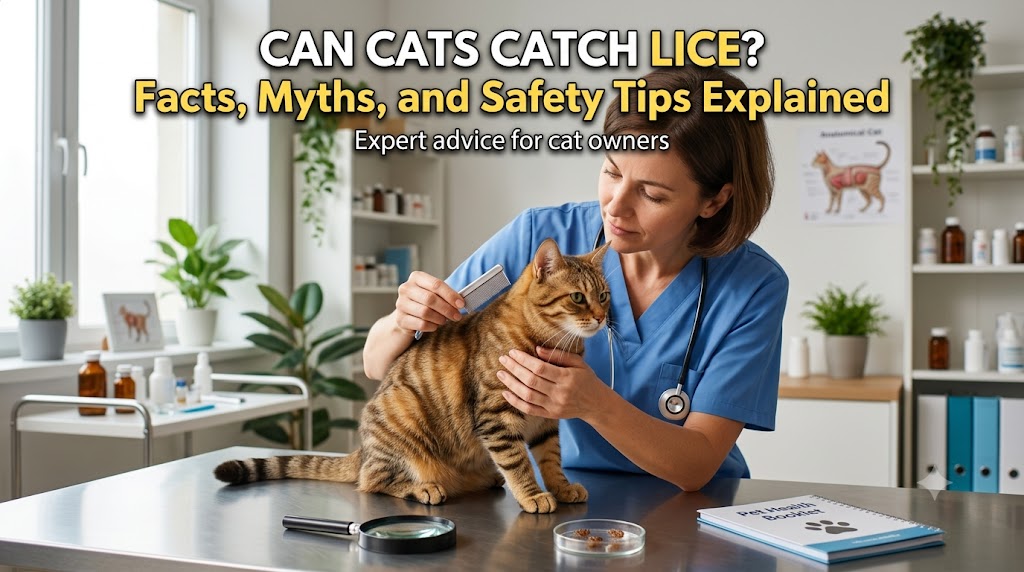
Do cats get lice? Understanding the Basics
Yes, cats can get lice, but it’s a relatively rare occurrence. Lice inhabit a cat’s skin and are tiny, wingless parasites that feed on cat skin debris or secretions. Lice are not jumpers or flyers like fleas are. In contrast, they are slow to move around in the coat, and stay near the host animal. Lice in the cat, fortunately, is much less common than flea infestation in cats, particularly if the cat is a healthy indoor cat.
Feline Lice – What are they?
Lice are very specialized parasites that live on a host animal throughout their lives. There are different types of lice that attack other animals. The species that causes disease in cats, is feline specific. This means that feline lice are not the same as human lice and canine lice. They must stay on the host and feed frequently to survive. They rarely survive without being supported by an appropriate host, and generally perish within a fairly short time.
Types of Lice That Affect Cats
There are several species of lice found in the animal kingdom, but only a few can infest cats. Knowledge of these species sheds light on the difference between infestation of cat lice and other animal and human lice.
Chewing Lice on Cats
The most common type of feline lice is known as chewing lice. These parasites do not eat blood, but rather the flakes, skin oils and debris in the cat’s coat. This means that cats that are affected tend to have itchy skin, irritation and coat problems. Chewing lice don’t produce as serious health problems as blood-feeding parasites but they can certainly cause discomfort.
May cats become infected with lice from humans?
One of the most prevalent of all the myths is the transmission of humans to cats. A number of pet owners are afraid that their cat can catch the lice if their child has an infestation. Thankfully, this worry is mostly baseless.
Species-Specific Parasites
Human lice are adapted for living on humans. Similarly, cat lice only live on cats. Since they have evolved to live on certain species they are not able to establish long-term infestations on other species. As a result, people don’t get infected with feline lice and feline lice don’t infect people. The biological specialization of this species restricts cross-species transmission.
Are there any lice that cats can catch from other animals?
Cats are not susceptible to catching lice from people, although it may happen in some cases from cats to animals. Knowing what these risks are can enable homeowners to better manage their multi-pet household.
People who come into contact with these are at higher risk
The main mode of transmission of lice is close personal contact. Cats in multi-cat homes, rescue centres and shelters are at greater risk. Also, sharing of eating, sleeping quarters or physical contact can help spread the disease from cat to cat. In such households with several animals, it is even more crucial to monitor health regularly.
These cats are exhibiting symptoms of lice infestations
Early diagnosis makes for more prompt treatment and more comfort for the pets that are affected. Symptoms can occur in different combinations depending on the extent of infestation, but a few of the more common symptoms can be recognized.
Excessive Scratching
One of the initial signs is often to see the animal scratching persistently. The motion and feeding action of lice irritates the skin, resulting in discomfort. This sometimes leads to an increase in the number of times they scratch. If left untreated, excessive scratching may result in skin damage and secondary infections.
Poor Coat Condition
Lice is one of the issues that may impact coat appearance. The owners might observe that the coat is dull, that there are rough spots, or that the coat is uneven in distribution. When the problem is bad enough, too much grooming or scratching can lead to hair loss. So it is common to get a good idea of the skin issues by the quality of the coat.
Hair loss and skin irritation
As the lice increase in number, the irritation of the skin increases. The constant scratching and grooming can lead to the damage of the skin barrier, which can aggravate inflammation and infection.
Areas Commonly Affected
Lice tend to be found around the neck, shoulders, head and back. The most apparent symptoms tend to occur in these areas. Over time, they can develop with areas of loss of fur, skin that becomes red and scaly. So, frequent examinations of the coat will help detect issues before infestations become too large.
Do Cats Catch Lice? Risk Factors You Should Know
Any cat may develop lice, but there are some factors that make some cats more susceptible to lice. The knowledge of these risks helps the owner take steps to prevent them.
Poor Grooming Habits
Grooming is an important part of the cat’s daily routine. This is a natural activity that removes debris and parasites from the coat. But cats who are not able to groom themselves because of illness, obesity, arthritis, or age may be susceptible to a higher level of infestation. Consequently, grooming limitations often contribute to parasite problems.
Compromised Immune Systems
Pets with any of the following conditions have a reduced ability to fight off parasites: illness, malnutrition, or immune suppression. The need for extra surveillance and supportive care often occurs with these animals. Good general health is important in minimizing lice and other parasites.
Here are some popular misunderstandings regarding cat lice
Pet owners can be unnecessarily anxious due to misinformation. It’s helpful to know the difference between fact and fiction when it comes to common myths, so they can make better decisions.
Fact: Indoor cats can get lice
Many cat owners think that their feline pets are safe from risk when indoors. Although exposure is much less high in an indoor environment, infestations can still happen under certain conditions. Some pets that have recently been taken in, or animals that have come into contact with parasites, can bring them into the house.
The following are myths about lice and fleas:
Both parasites of cats are different in appearance, behavior, and treatment. Fleas jump and feed on blood while chewing lice crawl and feed on skin debris. Correct identification is still crucial for successful treatment.
Lice diagnosis is not difficult
Diagnosis leads to appropriate treatment of cats. Veterinary evaluation is still required when itching persists for a number of skin conditions have similar symptoms.
Physical Examination
Vet’s first step is a thorough examination of the skin and coat. Occasionally, lice and eggs are present and can be seen with the naked eye. In general, though, magnification aids in the detection of accuracy. Careful inspection will help identify lice from other skin conditions and flea and mites.
Microscopic Evaluation
Sometimes, veterinarians take hair or skin samples to examine under a microscope. This helps to accurately identify parasite species and make treatment recommendations. Correct diagnosis avoids treatments and enhances results.
Treatment options for flea lice on cats
Fortunately, there are effective treatments for lice today that can be used by veterinary medicine. The vast majority of cases will respond to treatment if it is done promptly and properly.
Prescription Parasite Treatments
A lot of products for the control of lice also work to kill fleas. Treatment varies by veterinarian and the severity of the infestation as well as the cat’s age and health, and may include oral medications, topical medications, or other cat parasite control products. When done professionally, it helps to achieve good results without any risk.
Environmental Cleaning
Cleaning the environment will be important although most of the time lice spend their life cycle on the host animal. Regular cleanings of bedding, frequent vacuuming and sanitizing of grooming equipment minimize reinfestation risks. The most effective treatment options are usually a combination of treatments.
Do Cats Catch Lice? Prevention strategies that work
It’s easier to keep lice from getting on you than it is to get rid of them. There are several measures that can be taken to minimize the chances of parasite problems.
Maintain Regular Grooming
Regular grooming enables owners to observe the health of their dog’s coat and identify issues early. Brushing will get rid of loose hair and any debris and make your relationship with your pet stronger. Also, grooming sessions can be used to detect parasites early before infestations get out of hand.
Make regular check-ups with the vet
Veterinary checkups contribute to good health and help find parasites early. Minor problems are sometimes detected in preventive healthcare before they become major ones. Thus the need for regular examinations remains one of the most useful preventive measures at his disposal.
Lice vs Fleas: What’s the Difference?
Owning can sometimes mistake the symptoms of lice for those of fleas due to the similar appearance. Understanding the difference in these parasites will help to prevent the right treatment.
Movement and Appearance
Fleas are fast and jump far! By comparison, lice creep slowly through the hair. Also, flea dirt is often found as small black particles while lice eggs may look like small white particles on hair shafts. These differences are important to note to help identify.
How to Check if your Cat has Fleas
However, many owners that are looking for lice often find flea infestations. Understanding the signs of flea infestation can help you differentiate the flaky, itchy skin irritation caused by fleas from the others. Flea dirt is often present, and fleas bite, making them very itchy, and are usually seen darting around in the fur. By recognizing these indicators, owners can take appropriate actions in their treatment approach.
Why Accurate Identification Matters
The wrong parasite treatment will be a waste of time and can lead to discomfort lasting longer. Thus, accurate identification is always vital. The best way to diagnose and treat is by veterinary advice.
Lice and the effects on cat health
A lice infestation can have a negative impact on quality of life, but is not likely to cause life-threatening illness. If it is not resolved, it can result in changes in behavior, stress, and secondary skin problems.
Secondary Skin Infections
Too much scratching may cause skin to crack and allow bacteria to enter. Thus, secondary infections occasionally occur in very heavy infested cats. These complications can also necessitate extra care and extend the healing period.
Stress and Discomfort
Chronic itching is not a physical pain. Restlessness, withdrawal or decreased activity may be observed when cats are constantly irritated. When parasite problems are treated promptly they will help restore comfort and normal behavior patterns.
How to prevent lice.Preventing Lice in Multi-Cat Households
When living with more than one cat, special attention needs to be paid as parasites can be transmitted more easily. Each pet in the home is safe with preventive strategies in place.
Isolating Infected Cats
Separating infected cats decreases the opportunities for transmission. Isolation is a component of treatment and environmental cleaning that will help to more effectively control outbreaks. Gradual reintegration can take place after treatment.
All household pets must be monitored
If one cat gets lice, it’s necessary to inspect every pet in the house. Larger infestations can often be avoided and treatments easier if they are caught early. Long term parasite control is achieved with consistent monitoring.
Do Cats Catch Lice? What research and experts say:
A cat can get lice, but it is not a common occurrence; research and experience from veterinarians have proven this. Infestation is most common in older animals, poorly managed animals, sick animals and animals that are kept in close quarters. Healthy indoor cats will be at fewer risks. However, awareness is useful as it means discomfort and complications can be avoided if treatment is carried out promptly.
The Good News for Cat Owners
Lice infestations are easier to control today than ever before due to modern products for parasite control. Most cats will recover rapidly and completely if they receive appropriate veterinary treatment. Therefore, it is important to see lice as a health problem to be controlled, not an emergency.
Conclusion
Then, do cats get lice? They can, but feline lice infestations are not that common, and are very treatable if caught early. Knowing the symptoms, risk factors, treatment and prevention helps owners know exactly what to do if problems do occur. Lice cause discomfort and irritation of the skin, but for the most part are not a serious health threat if treated properly. With proper grooming, frequent veterinary check-ups, and attentive monitoring of their cat’s condition, these steps can help keep their feline companion healthy, comfortable, and parasite-free all year long.
