Blog
How To Introduce Kitten To Older Cat?

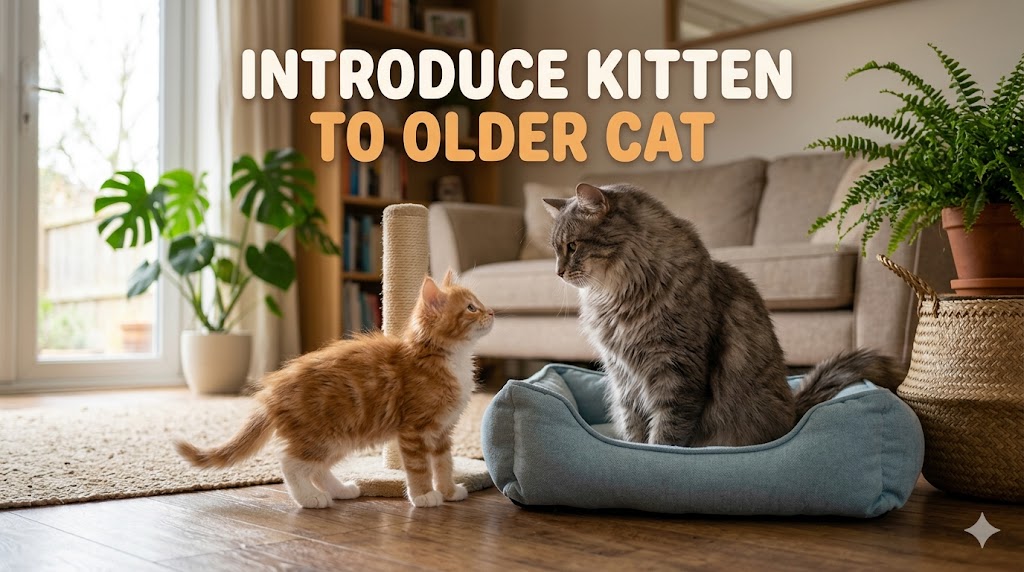
Introducing a new kitten to your household is always an exciting moment, but it also means changing the daily life of your existing pet. As territorial creatures, cats need special treatment during such situations. By taking the appropriate measures, you minimize the risk of stress and create positive conditions for further relations between two animals. Otherwise, your rush might lead to negative outcomes. Thus, introducing your kitten to an older pet requires careful planning and following a set of certain steps.
Considering Cat Behavior First
As part of a preparation step, you have to consider how these animals behave in a particular situation. Generally, the older cat sees its home as a territory that cannot be easily shared with someone else. At the same time, a kitten remains rather naive and tries to explore its surroundings, which may seem dangerous to an older cat. By understanding these behavioral traits, you can plan the introduction better.
Creating a Separate Area for the Kitten
It is important to remember that the first thing you need to do is create an area for the kitten. Such a move will be quite comfortable for your new pet. Also, this step is very important for your cat, as it will give her more time to adapt and get used to changes. To ensure that your older cat stays calm and does not suffer from stress, keep her in another room while the kitten adapts to the changes around.
Exchange of Odors
It is important to note that odor exchange between pets is a great way to help your new kitten get along with the older cat. To achieve this, you need to take some steps, such as switching beds or even rubbing each pet with a cloth. These actions will allow your pets to smell each other, and soon they will get used to this new smell and learn to accept each other.
Visual Controlled Introduction
Following the process of scent introduction, you are advised to let the two cats visually meet. You may consider using a baby gate or opening the door partially to enable the cats to view each other at a distance. The older cat will exhibit wariness, whereas the kitten will be curious. Nevertheless, it is prudent to keep the two cats away from each other in the early stages. In the course of time, both felines will get used to seeing one another, which is essential for establishing trust before physical contact takes place.
Supervised Meetings
As soon as both cats remain calm during the visual contact, you are advised to have controlled meetings between the two cats. It is critical that such meetings are brief, and they should be supervised by their owners. You must ensure that both cats can move around freely but should not try to make the animals interact physically. In case either cat displays signs of distress, you should separate the two immediately.
Positive Reinforcement
The use of positive reinforcement can help your kittens to connect with each other on a more positive note. You can provide your kittens with some treats, some praise, or time to play during their interaction. Positive reinforcement will encourage your older cat to behave amicably around the kitten, and when your older cat acts calmly around the kitten, make sure that you reward her. Rewarding your kitten for behaving calmly will be helpful too. Gradually, your kittens will learn to connect with each other through the process of association.
Dealing With Your Older Cat’s Emotions
Your older cat might feel jealous of the new arrival. You must give equal attention to your cat to ensure that she does not feel jealous. Feeding, playing, and talking to your older cat just like you did before will be beneficial for your older cat. Not doing so will make her feel that she is now out of the picture.
Helping Your Kitten Settle In
Additionally, your kitten requires some assistance adapting to its new surroundings. New environments may be stressful, and you need to help your kitten adapt to the environment in a calm manner. It is essential that you spend some quality time with your kitten each day and ensure that you interact with it in a gentle manner. In doing so, your kitten will be encouraged to gain confidence and not be fearful. Moreover, let your kitten move slowly in its new surroundings rather than quickly all over the house.
Observing Body Language
Knowledge about body language is important in avoiding unnecessary conflicts between the two cats. For instance, when the other cat flattens its ears, hisses, or moves its tail rapidly, you know it is stressed or uncomfortable. On the other hand, if the cats have a relaxed posture and are blinking their eyes gently, then you know they feel comfortable.
Feeding Each Other Nearby
Your task is to create positive feelings in the minds of your two pets by feeding them nearby. First, you place the bowls far away from each other, where both cats can eat without stress. Then, you gradually move them closer. By doing so, you teach both cats to associate the appearance of another cat with good things such as food. Therefore, they will be more tolerant towards each other because of the food factor, which is emotionally very powerful.
Increasing the Time of Interaction Gradually
You slowly increase the amount of time that your cats interact. At first, it is only for a few minutes, and you extend it gradually. In this way, you do not cause additional stress to your pets but let them get used to each other naturally. In case one of the cats starts feeling uncomfortable, you decrease the interaction period and continue slowly.
Promoting Play Sessions
You alleviate stress and establish a healthy rapport between cats by engaging in play sessions. You stimulate both cats using toys such as feather sticks and balls in supervised play sessions. Play diverts the feline attention from territorial instincts, leading to interaction between them. Nonetheless, you refrain from initiating rough games. On the contrary, you ensure that the play sessions remain relaxed and fun-filled for both cats.
Offering Vertical Spaces
You promote the safety of the felines by offering vertical spaces. You incorporate cat trees or shelves within your residence for both cats to perch and observe each other at safe distances. The older cat always selects the high ground while the kitten moves to the lower positions. Therefore, you eliminate conflicts arising from territorial claims and allow the two cats to coexist harmoniously within the same premises.
Not Forcing Interaction
You do not force any physical interaction between cats. Doing this will cause them more stress and lead to further aggression between the two animals. This is because you allow the cats to interact by themselves. It is always a matter of showing respect and waiting for the right timing as it will foster trust. This way, they accept each other without feeling any form of fear or resistance.
Dealing With Aggression Calmly
You handle aggressive behavior from both cats calmly. You do not react angrily and make loud noises. Rather, you keep calm and separate the two to have peace. Then you go back to introducing them again. This is because cats display aggression out of fear rather than hate or dislike for each other. The calm approach helps to lower future aggression levels.
Establishing Consistent Stability
By establishing routines for your cats, you ensure that they feel comfortable and safe. By keeping the same meal times, playing periods, and sleeping periods constant, you reduce any anxiety they may have during the entire introduction period. Both the kittens and older cats should become used to their schedules before being introduced to one another, as any change can cause additional stress and make things worse for everyone involved.
Observing Closely
Observation is crucial during the entire introductory period. Since different cats have different reactions and responses to being around others, careful watching is essential. While some cats accept others faster, others need more time, so it is crucial not to rush or compare the two pets. Signs of improvement include less hissing and fewer aggressive body poses from both cats.
Creating Lasting Harmony
Even after successful introductions, you continue fostering the relationship between the two cats. You provide equal focus on both cats, arrange opportunities for them to play together, and provide different spaces for rest. Sometimes, there might be tensions even when the cats have accepted each other; therefore, you need to maintain consistency. Eventually, most cats develop a close bond with one another, even grooming and sleeping side by side. When you show patience and consistency, you ensure that the environment is peaceful and comfortable for both cats.
Conclusion
You introduce a kitten into the life of a senior cat patiently, thoughtfully, and considerately. When you follow the gradual introduction process, you avoid stress and develop trust between the cats. All the stages are equally significant and help create a harmonious atmosphere. Despite taking more time than expected, the process is rewarding in the long term. Both cats eventually live peacefully and happily together.