Blog
How To Treat An Open Wound On A Cat

An open wound in a cat may occur due to physical fights or accidents involving sharp objects within the environment. An injury that exposes skin or even tissues increases the chances of infection, thus it is important to consider this type of condition seriously. It is important to keep in mind that cats like to venture around the surrounding environment, thereby increasing chances of coming into contact with various pathogens that may result in infections. Ignoring any open wound could lead to a worsening of the situation.
First Measures after Identifying the Open Wound in Your Cat
In case you find out that your feline pet has an open wound, try to keep yourself calm and evaluate the situation thoroughly. Make sure that you restrain your animal to avoid any further harm. Talk to your pet softly to lower the stress level since stressed animals may become aggressive. Examine the area of the wound, its depth and size. In case bleeding continues, you need to put gentle pressure with a clean cloth on it. Make sure that the material is comfortable for your pet’s sensitive skin. Try to avoid any situations when the wound might get worse due to your surrounding environment.
Managing Bleeding in Your Feline Pet
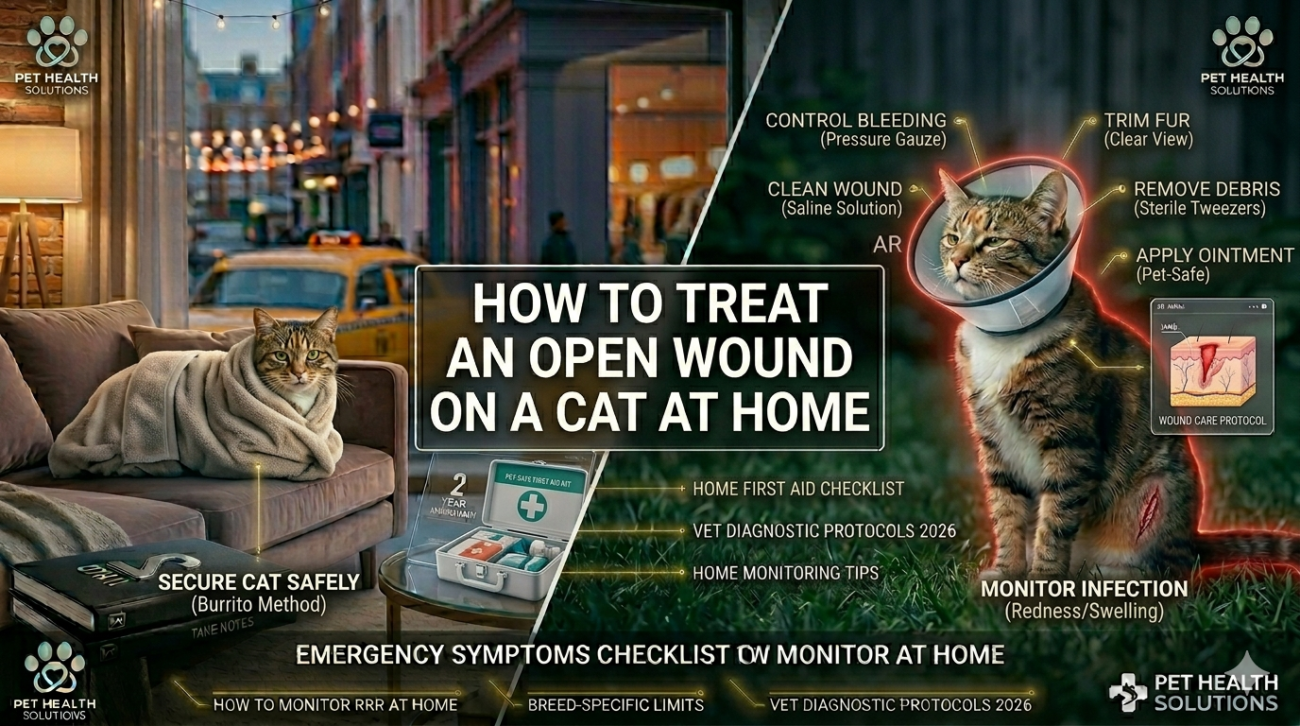
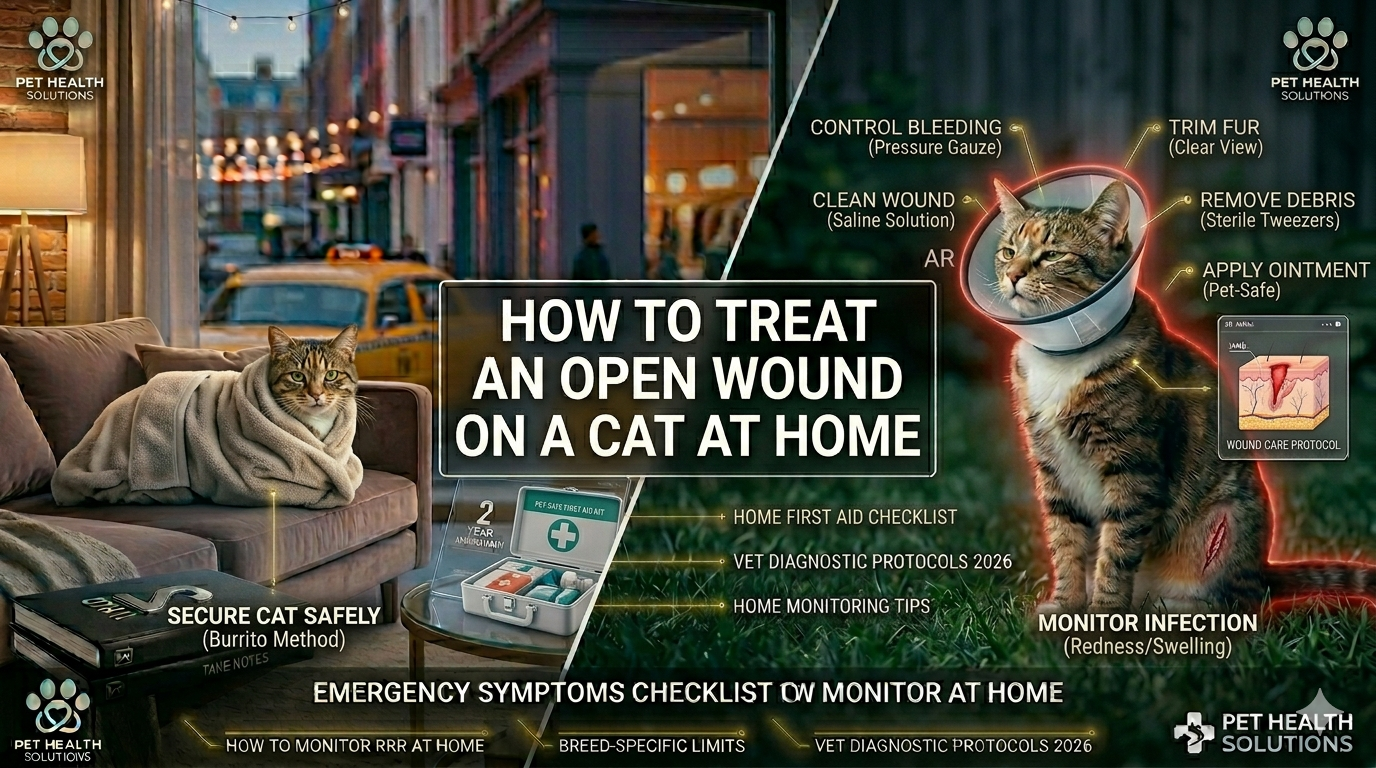
In case there is continuous bleeding, make sure that you take necessary steps to stop it. To do this, use a piece of clean gauze and apply some pressure on the wound. Do not keep checking the wound since this will start the process of bleeding again. It is important to make sure that your pet stays quiet and still while this process takes place. If the bleeding doesn’t stop, you should seek help from a professional vet immediately. Alcohol and hydrogen peroxide must be avoided during this procedure since these agents will only enhance the pain and cause further tissue damage. Appropriate hemorrhage control facilitates safe wound care.
Proper Cleaning of the Wound
Once you have controlled the hemorrhage, it is important to clean the wound appropriately so as to eliminate any debris or bacteria from the wound. It is recommended that you either use clean warm water or sterile saline solution. You should gently wash the wound and do not scrub it. If there is any visible debris in the wound, you may use clean gauze to clear it out. The cleaning agent should not contain any harsh chemicals that may irritate your pet’s skin.
Application of Antiseptics
The application of safe antiseptics is crucial for lowering the risk of infections. The antiseptics used on cats should not contain any harmful substances like alcohol and other chemicals. You can place the antiseptics on a clean gauze or cotton wool before applying it around the wound. Pouring antiseptics directly into deep wounds might hurt your feline friend. Make sure to follow the directions provided with the antiseptics. The use of antiseptics helps to eliminate the growth of bacteria. Do not use human creams and ointments unless they are approved by the veterinarian.
Prevention of Cats from Licking Wounds
The licking of wounds by cats can affect their rate of healing negatively. Therefore, it is important to find ways to discourage your pet from licking its injuries. You can place an Elizabethan or recovery collar on your cat to prevent it from accessing its wounds. The licking process may re-open the wound, making infection more likely. This means that keeping the wound covered will assist in proper healing. It is very crucial to prevent licking for a patient at home with a wound.
Covering of the Wound
There are some wounds that will benefit from being lightly covered to ensure they do not get contaminated by anything or receive any additional injuries. For such wounds, you can use gauze pads along with bandages that can be used if the position of the wound permits. Tight bandages should be avoided since they will inhibit the flow of blood and therefore impede healing. The covering should be changed regularly and kept dry since moisture can attract germs.
Observing Signs of Infection
It is important to observe your cat’s wound for signs of infection while it heals. Redness, swelling, bad smell, and discharge mean that the infection is likely. Your pet will show more pain or reluctance to move in case there is an infection. You need to check the wound twice daily. This way, early signs of infection are easy to detect so you can get treatment before things get worse. Any sign of deterioration means that you need to see a vet as soon as possible. Infections can spread very quickly in cats. Therefore, constant observation of the wound is critical.
Pain Management
Wounds tend to be painful, meaning that your cat may feel uncomfortable. Your cat may hide or become less active than normal. In case your cat seems sensitive to touch, it is experiencing pain. Do not attempt to relieve the pain using human medicines since some medications are harmful to cats. Instead, only rely on prescriptions from your vet. It is best to keep your cat calm. A quiet resting place is essential for relaxation and healing. Pain control is crucial in healing wounds. In case your cat is experiencing great pain, it is recommended to consult the vet for proper guidance.
Nutritional Support for Healing Wounds
Proper nutrition is very helpful in promoting the healing process. It is recommended that you feed your cat nutritious food. Proteins are essential for rebuilding torn skin. Vitamins and minerals are required for healing. It is recommended that you give your cat water in order to promote hydration and healing. A cat should drink adequate amounts of water to heal the wound. If the cat fails to eat properly because of stress or pain, it is advisable to feed it small meals frequently.
Restriction from Physical Activities
You need to ensure that your cat does not participate in physical activities while undergoing wound healing in order to avoid any problems. Running, jumping, or playing will have negative effects on your cat’s recovery since it will increase its risk of further injury. Try to keep your cat in a quiet place where it will be easier for it to recover. In this case, you may consider isolating your cat in another room. It is important that you try to encourage your cat to rest as healing requires time. Remove everything that stimulates your cat into performing some actions, such as running and jumping.
When You Should Consult a Vet
It is crucial to understand when you need to go to a vet for professional assistance. This way, you will avoid further issues associated with your cat’s injury. If your cat has a deep wound, profuse bleeding, or exposed tissues, do not hesitate and take your pet to the doctor right away. A vet will make sure that your pet is cleaned, medicated, and treated for any wounds if there are any. Being prompt will prevent your cat from developing further complications. Learning when to see a vet is necessary to ensure safe recovery.
How to Prevent Your Cat from Getting Wounds Again
You can prevent future injuries by making changes in the environment where your pet lives. Ensure that your house does not contain anything harmful. If you let your cat go outside, then you must pay attention to its movements or take it out with you. It is also important to brush and bathe your cat regularly so that you could discover any wounds in time. Proper vaccination is also crucial for preventing infections. Avoiding cat fights will be helpful as well.
Providing Emotions for Cats Recovering from Injuries
The cat that suffers from injuries can feel stressed and insecure about its well-being, so it is important to provide proper emotional support to your furry friend. You should talk quietly and keep everything around peaceful. It will be helpful to spend some quiet time nearby your pet. You should not force any contacts, but it is recommended to stay in the same room all the time because stress can affect its recovery significantly. Therefore, providing your cat with a comfortable atmosphere will contribute greatly to its well-being.
Conclusion about Treating Open Wound in Cats at Home
Treating a wound on a cat needs to be done properly. Thus, you need to clean the injured area carefully, control the situation and ensure no infections occur. Although most of the minor wounds can be treated at home successfully, severe cuts and injuries will always require professional help from veterinarians. Quick actions are essential. Most wounds will heal provided appropriate attention is paid to them. As a pet owner, it is crucial for you to take all necessary measures that will ensure your cat heals well without complications.